
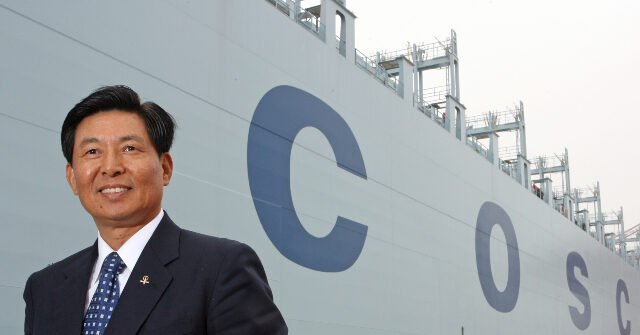
Chinese state-run shipping giants COSCO and CMES have quietly stopped sending their oil tankers through the Strait of Hormuz and the Bab el-Mandeb, two critical maritime chokepoints that have come under increasing threat from Iran and its Houthi proxies in Yemen, according to industry executives and ship tracking services cited by Reuters on Tuesday.
The move, which follows consultations between the companies and China’s central government, marks a significant shift in how the world’s largest importer of crude oil is navigating the escalating conflict in the Middle East. It also underscores the growing risk premium attached to shipping routes that carry a substantial share of global oil supplies.
CMES First to Abandon Hormuz
According to sources familiar with the matter, CMES—short for China Merchants Energy Shipping—was the first to abandon the Strait of Hormuz in late July, although the decision has not been formally announced. Chinese executives who spoke on condition of anonymity told Reuters that CMES has informed its investors that other shippers have also decided not to risk the Bab el-Mandeb strait, which is threatened by Houthi attacks. However, CMES does not appear to have made a final decision on that route.
The two companies together operate more than one hundred Very Large Crude Carriers (VLCCs), with a combined capacity exceeding 200 million barrels of oil. A state shipping company executive told Reuters that while the ships “remain engaged,” they have been forced to take much longer routes to avoid the conflict zone, a development that has frustrated refinery customers hungry for crude.
Ship-to-Ship Transfers Emerge as Workaround
To keep the oil flowing, a new alternative is gaining traction: ship-to-ship (STS) transfers in the Gulf of Oman, which lies outside Iran’s immediate attack range. According to ship tracking service Kpler, this method involves collecting oil via STS transfers and then bringing the cargoes back to China. A Chinese shipping executive said the results so far have been encouraging, citing “low risk and good profits.”
Saudi Aramco Follows Suit
The shift is not limited to Chinese companies. On Tuesday, Saudi Arabia’s national oil company, Saudi Aramco, began loading tankers at its Strait of Hormuz ports and offering supplies via STS transfers to Asian buyers, with the transfers expected to take place in the Gulf of Oman near the UAE port of Fujairah.
The Saudi offers suggest that Aramco is confident in its ability to slip oil through the Strait of Hormuz without suffering Iranian attack, or that it has already done so successfully. Either way, buyers in China and Southeast Asia are expected to welcome safe delivery of heavy Saudi crude without exposing themselves to the risks of Iranian aggression.
Tracking the New Routes
Ship tracking data from Vortexa shows that four of COSCO’s VLCCs, plus one operated by CMES, loaded oil via STS transfers off Fujairah in July. A dozen more vessels are scheduled to perform similar transfers by mid-September, indicating that the practice is becoming a standard workaround for the region’s instability.
The retreat from these chokepoints represents a notable shift for China, which has historically maintained close economic ties with Iran and has been a major buyer of Iranian oil despite US sanctions. The decision to avoid the straits suggests that even Beijing, which has often shielded Iran from international pressure, is now prioritizing the safety of its commercial fleet over diplomatic considerations.
For the global oil market, the development adds another layer of complexity. The Strait of Hormuz is the world’s most important oil transit point, handling roughly one-fifth of global petroleum consumption, while the Bab el-Mandeb is a critical route for tankers headed to Europe and North America via the Suez Canal. Any prolonged disruption could have significant implications for supply chains and prices.
The use of STS transfers in the Gulf of Oman offers a temporary solution, but it is not without its own risks. The region remains within range of Iranian missiles and drones, and the transfers themselves require careful coordination to avoid detection or attack. Still, for now, Chinese shippers appear willing to accept these risks as a lesser evil compared to transiting the straits themselves.
The situation remains fluid, and it is unclear whether the Chinese state shipping companies will eventually return to the straits or make their alternative routes permanent. What is clear is that the maritime landscape of the Middle East is being reshaped by conflict, and the world’s largest oil buyers are adapting in real time.
Source: www.breitbart.com — https://www.breitbart.com/middle-east/2026/08/18/chinese-state-shipping-companies-back-away-chokepoints-threatened-iran/