
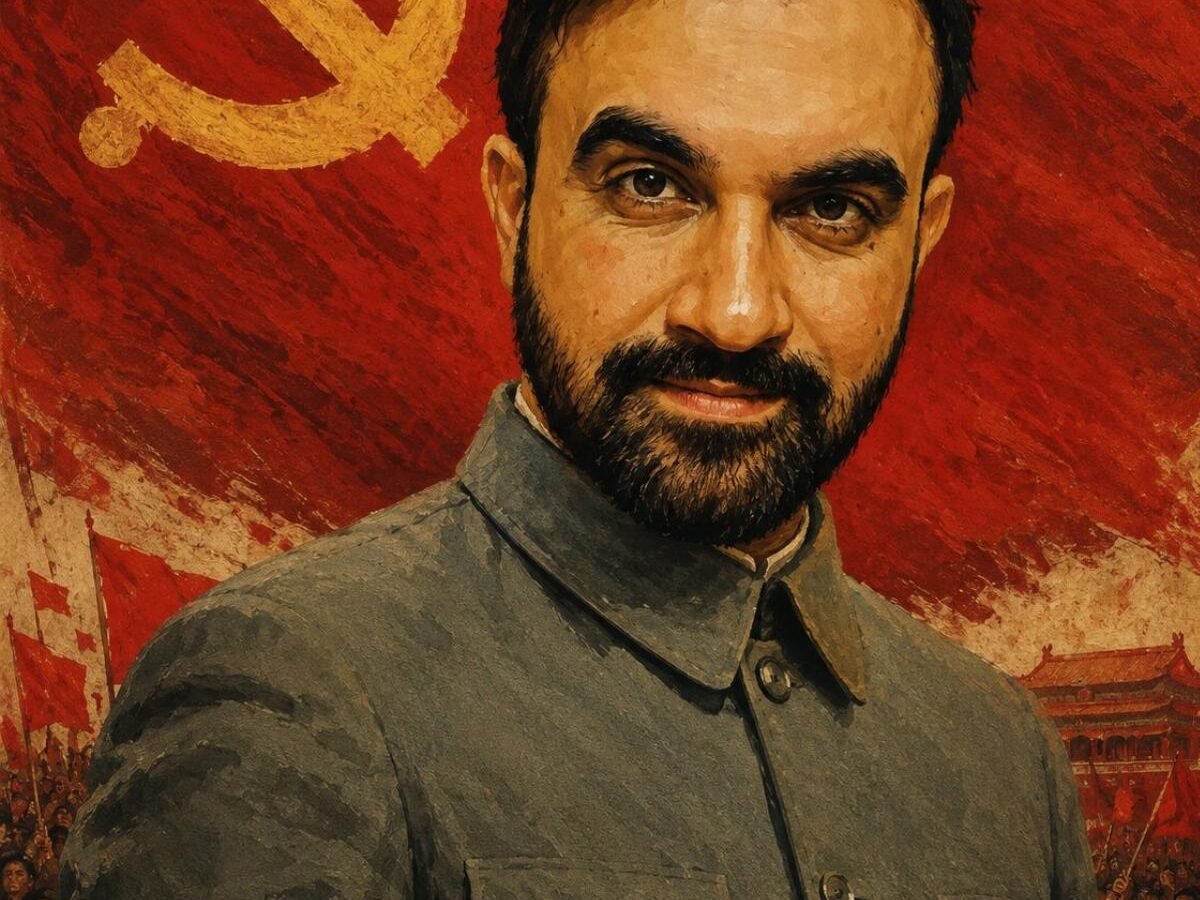
Twenty-five years after the attacks of September 11, 2001, the skyline of New York City has been rebuilt, but according to a new analysis in American Thinker, the city’s political soul has undergone a more troubling transformation. The article, written by Kim Ezra Shienbaum, argues that the city once defined by its resilience has become a staging ground for a political movement that increasingly aligns with the ideology of the very enemies who attacked it.
At the center of this shift is Zohran Mamdani, whose rapid rise to the mayor’s office has made him, in Shienbaum’s words, “not merely a mayor” but “an audacious symbol of an ideological movement” that has outgrown New York. From his expansive view of the office to his globalist agenda, Mamdani’s tenure has been marked by a series of controversies that critics say prioritize foreign causes over local concerns.
A Mayor with a Global Agenda
Mamdani’s foreign policy entanglements have drawn particular scrutiny. He called for the execution of an International Criminal Court warrant against Israeli Prime Minister Benjamin Netanyahu during the UN opening ceremonies—a move that was quickly rebuffed by President Trump, who stated emphatically that Netanyahu “will not be arrested, in any way, shape, or form, while in the United States of America.” Undeterred, Mamdani continued to brand Netanyahu a “war criminal” on television and social media, while critics note he has remained silent on figures like Putin and Assad.
His administration’s “Commissioner for International Affairs” attempted to schedule a meeting with Iran’s ambassador to the UN, which was aborted by the State Department after it had already voided a meeting with Colombia’s first socialist president. These actions prompted House Republicans to request a Justice Department investigation under the 1799 Logan Act, which bars individuals and local officials from conducting independent foreign policy.
Religion and Culture at the Forefront
Mamdani has also brought religion and culture into his public role in ways that critics find troubling. His inaugural speech celebrated halal cart vendors, his policy of equal city services for undocumented immigrants was framed through the example of the Prophet Mohammed’s hijra, and his FIFA map of NYC’s ethnic enclaves featured a “Little Palestine” designation. Perhaps most controversially, he invited Mahmoud Khalil—a Columbia University pro-Hamas organizer under a deportation order—to celebrate iftar at Gracie Mansion.
During the 250th anniversary of the United States, Mamdani delivered what American Thinker describes as “his own version of patriotism” from behind George Washington’s desk at City Hall. He told newly naturalized citizens they hold “the power to determine what America means,” but his vision was far from the nation’s founding principles. He spoke of an America of “calloused, dirt-streaked hands” exploited by oligarchs, of “masked agents” snatching undocumented neighbors, and of a nation that “belongs only to those with the right accent or the right shade of skin.”
This rhetoric, the article argues, is not a celebration of American values but an indictment—framing patriotism as defiance rather than loyalty. Mamdani portrays American institutions as instruments of oppression, recounting his aunt’s fear of wearing her hijab in the subway as evidence of a post-9/11 era of systemic bias.
Opposition Builds
The backlash has been building. The Republican gubernatorial candidate in 2026 has called on New Yorkers to turn their backs on Mamdani at 9/11 memorial services. Giovanni Galante, whose wife was killed in the attacks, has gathered nearly 100,000 signatures on a petition to ban the mayor from the commemorations. Staten Island Italians and other European immigrant groups left off the “ethnic enclaves map” have booed him, as have pro-police factions.
Legal challenges are piling up: bodega owners are planning a lawsuit, landlords are contesting a city-endorsed rent freeze, and homeowners are suing over a pied-à-terre tax rollout that allegedly exposed the data of 900,000 residents. Nearly a thousand small to mid-size businesses have moved to the Sunbelt, and corporations are trimming workers.
A Civilizational Confrontation?
Shienbaum’s piece taps into a broader anxiety about migration, multiculturalism, and the future of Western democracy. It invokes the Muslim Brotherhood’s influence, the “weaponized migration” of Muslims into Europe and North America, and warns of a “new form of settler colonialism” that imposes Muslim culture onto host populations. The article concludes with a stark question: “Will New York City wake up before it becomes, in all but name, the Islamic Republic of NYC?”
Whether Mamdani’s politics represent a genuine threat to constitutional government or simply a progressive shift in urban politics remains a matter of debate. But American Thinker‘s analysis suggests that the city at the heart of the 9/11 attacks is now, in its view, a cautionary tale about the fragility of Western values.
Source: www.americanthinker.com — https://www.americanthinker.com/articles/2026/08/the-islamic-republic-of-nyc/