

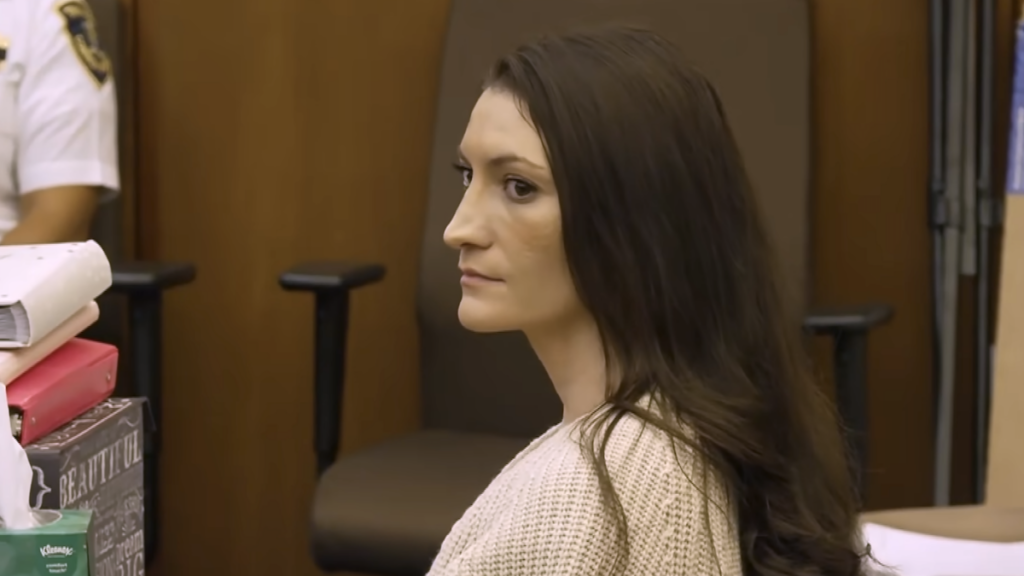
The trial of Lindsay Clancy, the Massachusetts mother accused of killing her three children in 2023, has sparked a wave of sympathy—and more than $1 million in donations to her parents, according to The Federalist. But the outlet argues that this support reveals more about the donors than about Clancy herself, raising unsettling questions about how circumstances are used to justify the unthinkable.
In a recent column, The Federalist notes that Clancy’s supporters have swapped pink pussy hats for pink T-shirts, rallying behind a woman who faces charges for the deaths of her children. The $1 million raised for Clancy’s parents, the outlet argues, is akin to rewarding an actress who credits killing her offspring with advancing her career—a comparison meant to highlight what the outlet sees as a disturbing moral inversion.
The Federalist’s central question is not whether Clancy was pro-abortion, but what her supporters believe about when it is morally acceptable to take innocent life. The outlet posits that the women rallying behind Clancy may be finding justification for ending innocent life elsewhere in the life cycle, drawing a direct line to abortion rights rhetoric.

A Slippery Moral Slope
The column argues that invoking mental illness to mitigate responsibility is morally equivalent to invoking “health care” to justify abortion when a woman feels childbirth would cause undue stress or derail her career. Under this framework, the prohibition on ending innocent life becomes conditional: “It is wrong—unless circumstances make it permissible.”
The Federalist points to research on homicidal violence, noting that many people condemn murder in principle while identifying circumstances where they find it acceptable. In the Clancy case, supporters appear to argue that even the irreversible act of strangling three children—one after another with resistance bands—is defensible given her mental state.
The column draws stark historical parallels, invoking the Nazi regime and the National Socialist Women’s League. It suggests that the rationalization of Clancy’s alleged actions mirrors the broader societal acceptance of abortion, which the outlet describes as the “methodical murder of more than 65 million unborn human beings since Roe v. Wade.”

Empathy for the Perpetrator
According to The Federalist, the Clancy case highlights a dangerous trend: when sympathy for the perpetrator eclipses compassion for the victims, moral judgment becomes inverted. The column argues that this is not unique to Clancy, pointing to the “Luigi Girls” who rallied around Luigi Mangione, the man accused of killing UnitedHealthcare CEO Brian Thompson in December 2024.
For Mangione’s supporters, hatred of corporate America and the health insurance industry transformed a cold-blooded killer into a folk hero. The Federalist sees a common thread: murder is deemed wrong—unless the victim is despised, unless mental illness mitigates responsibility, or unless a woman’s circumstances justify ending a pregnancy.
The column warns that this slippery slope could extend to other vulnerable groups. If circumstances can justify ending innocent life, the outlet asks, what happens when the elderly, the infirm, or political enemies are deemed psychologically distressing—and their elimination becomes defensible?
Who Decides?
The trial’s defense argues that Clancy committed the act while in the grip of a deeply disordered mind. But The Federalist raises a critical question: who determines when a disordered mind is sufficiently disordered to excuse criminal responsibility?
This tragedy may be unique, the column acknowledges, but the permission it establishes is unlikely to be narrow. As the West becomes increasingly inclined to exploit heartbreak and use “empathy” for exceptional circumstances to excuse the unthinkable, the vulnerable—both inside and outside the womb—have no voice in deciding whether the circumstances invoked to justify their deaths are sufficient.
The Federalist concludes with a chilling prediction: circumstances change, the people deciding change, justifications multiply. The question remains—who on the ever-expanding list of disposable humans is next?
Source: thefederalist.com — https://thefederalist.com/2026/08/25/lindsay-clancys-pro-abortion-fans-care-more-about-her-circumstances-than-her-children/