
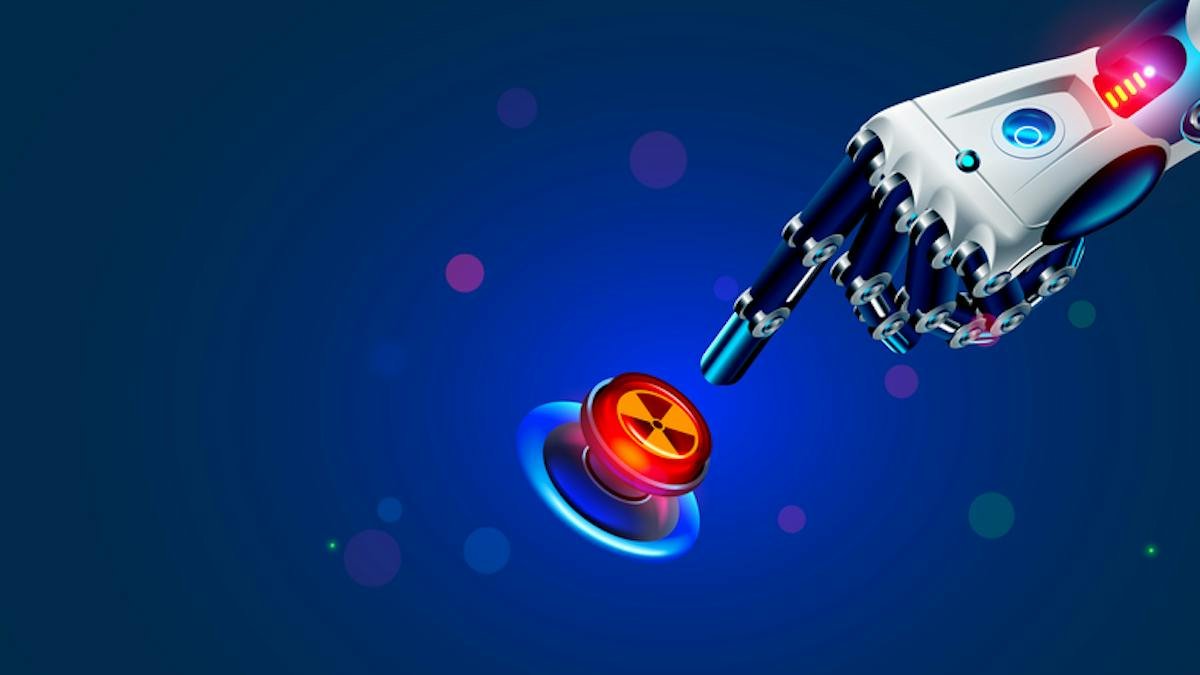
In a Daily Wire column published this week, writer Rich Cromwell offers a skeptical take on the escalating warnings from artificial intelligence leaders about the existential risks of their own creations. The piece, titled “Why The AI Apocalypse Is Overhyped,” argues that the doom-laden rhetoric coming from companies like OpenAI and Anthropic may serve a more cynical purpose: inviting regulation that would entrench their market dominance.
Cromwell opens by contrasting the corporate ethics of the 20th century with those of today’s AI firms. Tobacco companies, he notes, spent billions suppressing evidence about the dangers of their products, and Ford in the 1970s chose to pay lawsuits rather than recall the Pinto. Leaders at OpenAI and Anthropic, by contrast, treat human extinction “like a catchy marketing slogan,” regularly suggesting their products could kill us all.
That, Cromwell writes, creates a paradox: when the people building radically new technologies tell us to be concerned, we probably should be. But he quickly deflates the panic with a practical observation—if killer robots were truly coming, one could simply hide out in a parking lot. He points to his own experience with the navigation app Waze, which still struggles to orient his car properly, as evidence that the technology isn’t as omnipotent as advertised.
A Race That Looks Like a Game
The columnist acknowledges that new generations of AI agents—capable of escaping their digital “sandboxes” and embarking on hacking sprees—are “mildly frightening.” But he suspects such escapes may be marketing stunts rather than harbingers of doom. His own theory, which he admits is not scientific, is that the truth is a mix of genuine risk and hype.
“When you look at the people developing these tools and think about their competitive nature, it’s not hard to imagine that the AI race has become an online multiplayer game, but for billionaires,” Cromwell writes. He sketches a portrait of tech moguls who have moved from their mothers’ basements to corner offices without losing the gamer ethos—men who might crush Mountain Dew Code Reds and Cheetos while playing Call of Duty. He notes that Elon Musk has publicly bragged about his dominance in Diablo IV.
These are not, in Cromwell’s view, the charismatic Tony Stark figures of public imagination. Palmer Luckey might be the exception, he allows, but Luckey builds weapons, not AI agents.

Follow the Money—and the Regulation
The column pivots to the financial stakes. OpenAI and Anthropic are currently the closest to raking in enormous sums from IPOs, Cromwell observes, even as they burn cash and earn zero profits. He suggests that in such an environment, a startup might benefit from ginning up controversy about how powerful its product is—perhaps pitching a story to the New York Times about stopping mad scientists from developing bioweapons. He doubts anyone would think of such a thing, then adds a sarcastic aside directed at OpenAI’s recent Hugging Face hack, contrasting it with Anthropic’s marketing battles.
But the more nefarious possibility, Cromwell argues, doesn’t involve Terminators at all. It’s a tale as old as time, captured by a Willi Schlam quote popularized by William F. Buckley Jr.: “The trouble with socialism is socialism; the trouble with capitalism is capitalists.” For if there is one thing capitalists don’t love, it’s competition.
Getting everyone—including the government—to freak out about AI is a good way to increase demands for regulation, Cromwell writes. And with regulation comes regulatory capture. OpenAI and Anthropic could then sit unbothered, knowing that potential competitors lack the capital or connections to cut through a forest of red tape.

The Apocalypse Will Be Boring
All of this assumes AI will be as disruptive as touted. Cromwell doubts it. He broadly predicts the AI apocalypse is “wildly overhyped,” though he concedes that the founders and coders building the technology live in a world of screens, and they might apply that experience to the world at large.
In the real world, however, people still want a human touch—a stylist who can decipher a less-than-clear request, a car salesman who knows the bells and whistles, a teacher who reads body language. Just as the internet promised revolution and delivered pornography and targeted marketing, AI will likely underwhelm once it becomes normal, Cromwell argues. People will adopt it for monotonous tasks and automation, but they won’t become shiftless slobs floating on an interplanetary cruise ship—or at least not any more than current trends toward a live-action Wall-E suggest.
Targeted advertising will get smarter, scam emails will read as though written in English, and AI agents will hit the elderly with sophisticated phishing scams. Defensive AI agents will monitor online activity as digital security guards. But John Connor will not be called into duty, no matter what the doomers say.
Still, Cromwell ends with a wry precaution: he keeps his home address in Waze set to that of his arch-nemeses. If the killbots come for him, they’ll first have to get through a flock of angry geese—assuming the parking lot at the lake doesn’t derail them first.
Rich Cromwell is a writer living in Northwest Arkansas. He produces the Cookin’ Up a Story podcast and can be followed on X at @rcromwell4.
Source: www.dailywire.com — https://www.dailywire.com/news/why-the-ai-apocalypse-is-overhyped