
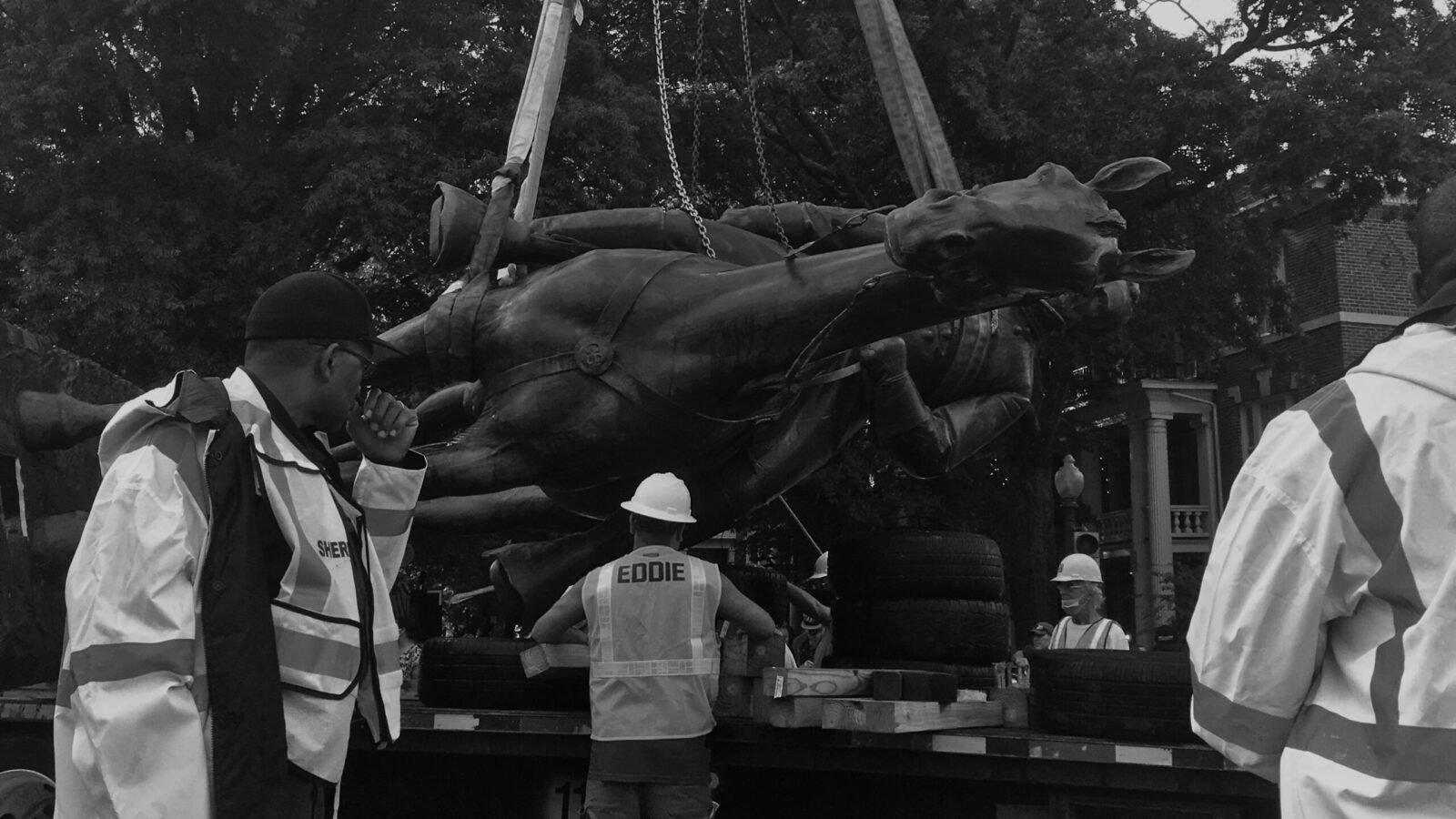
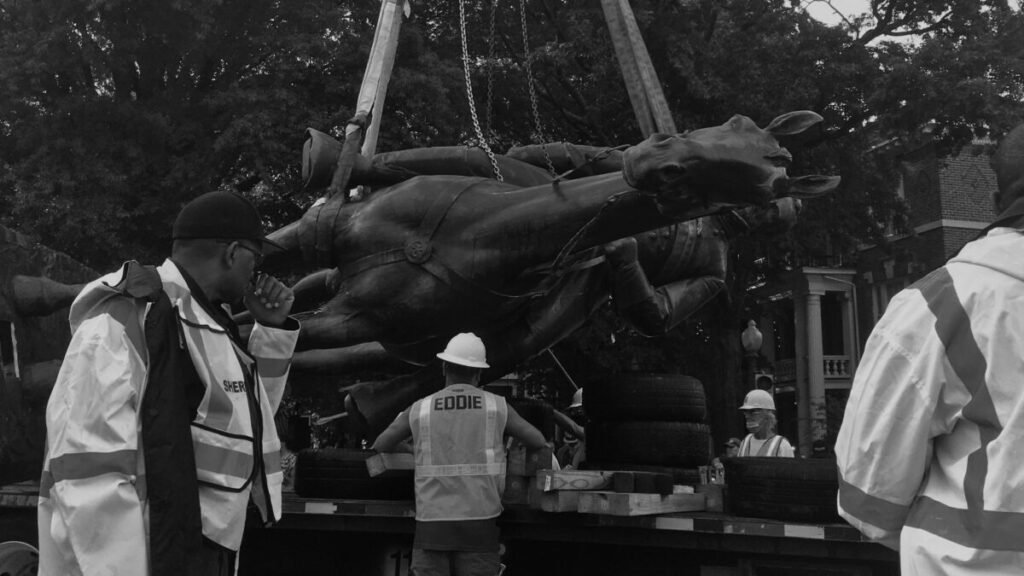
In a move that underscores the ongoing battle over American history and heritage, Virginia Democrats removed the final three Confederate statues from Richmond’s Capitol Square on Friday. The statues—of Gen. Thomas “Stonewall” Jackson, Gov. William “Extra Billy” Smith, and Dr. Hunter Holmes McGuire—were taken down after the state’s Democrat-led government passed a budget in June mandating their removal.
The removals have ignited fresh controversy, with critics charging that the action represents a Soviet-style revisionism and a broader cultural offensive, while supporters argue the monuments are relics of a painful legacy that should no longer occupy public spaces.
A Long-Awaited Removal
According to The Federalist, the statues were torn down as part of a budget directive passed in June, with crews capturing the removal of the Jackson statue on video. The Jackson statue, cast in 1875, was the oldest of the three, planned before the Civil War ended. English admirers of the general funded it shortly after his death from pneumonia following a shooting at Chancellorsville in 1863. The statue of McGuire, a wartime surgeon, was built in 1904.
This week’s action leaves no Confederate monuments on Capitol Square, eliminating symbols that have stood for over a century.
Critics Decry Cultural Erasure
Opponents of the removals frame the decision as part of a wider assault on American culture. The Federalist characterizes the move as a demonstration that “left-wing forces have not relented in their war on American culture and heritage,” and draws a direct line from the statue removals to other cultural struggles, including what it describes as “the crazy rioting and censorship of the early 2020s.”
The outlet also points a finger at Gov. Abigail Spanberger, D-Va., describing her as a “self-proclaimed moderate who lied to the electorate to obtain power, only to usher in the most abusive government Virginia has ever seen.” According to The Federalist, the playbook used in Virginia is one that Democrats across the country will likely replicate, warning that “these statue removals are once again only the beginning of a broader offensive against the American people.”
Historical Complexity Highlighted
In reporting the removals, The Federalist offers a detailed defense of the figures memorialized, arguing that they were more complex than modern critics acknowledge. For instance, while The Washington Post has called Jackson a “lifelong defender of slavery,” The Federalist points to his Sunday school for enslaved and free Black students, which emphasized Bible teaching and encouraged literacy. Jackson’s wife Anna reportedly said, “His interest in that race was simply because they had souls to save.”
The article also notes that some of Jackson’s slaves, such as Albert and Amy, allegedly asked Jackson to purchase them so they could work toward freedom. In the case of Amy, who became ill, the Jackson family cared for her. Another slave was described as an orphaned girl with a learning disability.

McGuire, too, receives a historical defense. According to Fox News’ David Marcus, McGuire was a wartime surgeon who saved many lives and contributed humanitarian principles later codified in the Geneva Convention, including treating doctors aiding soldiers as noncombatants and releasing prisoner-of-war doctors. These ideas, developed under Jackson’s command, were later incorporated into the Winchester Accord.
Critics of the removals, The Federalist argues, ignore these details because “the toppling of the statues, in and of itself, is the win” for Democrats.
Supporters Frame Removal as Necessary Context
Supporters of the removals, however, see them as a necessary step to address historical wrongs. Democrat state Sen. Mike Jones said the statues needed to come down because of the “white only, colored only pictures in my mother’s scrapbook,” a personal reminder of a segregated past. He suggested that the statues should “put ’em in a museum, put a greater historical context around them.”
The Federalist dismisses such rationale as the decisions of people “who have no concept of history at all,” particularly in the case of McGuire, whose humanitarian legacy is highlighted as a counterpoint.

Political Context and Broader Implications
The removals come at a politically charged time, with midterm elections on the horizon and a perceived rise in left-wing movements. The Federalist notes that Republicans may face a rocky midterm cycle, while a “nascent communist movement” is spreading in certain parts of the country, citing successful Democratic Socialists of America candidates. The outlet invokes a quote from Vladimir Lenin about exploiting rifts and opportunities, suggesting that Democrats see an opening to advance their agenda.
The article warns, ominously, that “the riots, grooming, and race wars are sure to follow.”
Future of the Statues
Unlike the statues removed from Charlottesville in 2017—one of which was melted and destroyed, the other defiled and contorted into a “demonic chimera” in Los Angeles—the Richmond statues have been handed over to the Shenandoah Valley Battlefields Foundation, which will decide their ultimate fate.
Keven Walker, the group’s CEO, expressed a more conciliatory view, stating, “Preservation is more about the future than the past, and ensuring the preservation of the Capitol Square monuments is a part of that clear vision. At the core of all we do is the belief that our shared history can unite the people of our nation; that there is strength and inspiration for our own times to be found in the struggles of the past.”
The move has reignited a national conversation about how to handle Confederate memorials, with battles over such symbols continuing in statehouses, city councils, and public squares across the country.
Source: thefederalist.com — https://thefederalist.com/2026/08/31/communists-destroy-statues-then-people-in-virginia-theyre-running-out-of-confederate-statues/