
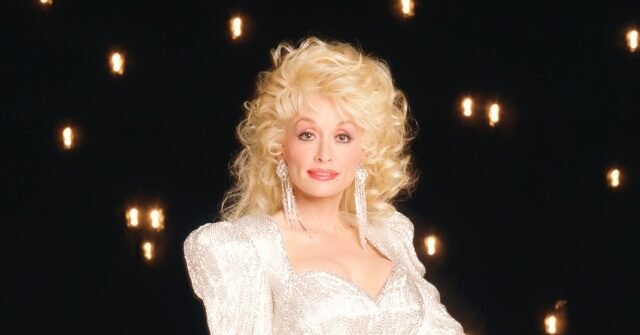
It’s been nearly four years since I first stood in the Country Music Hall of Fame and Museum in Nashville, surrounded by the relics of country royalty. Johnny Cash’s dark suits, Loretta Lynn’s gowns, Reba McEntire’s stage wear — all there, each telling its own story. But it wasn’t until I pushed past Elvis Presley’s 1960 Cadillac limousine, with its 24-karat gold trim and diamond-dust paint job, that I found the display that stopped me cold.
A gaggle of visitors had gathered around one costume, phones raised, jostling for a photo. When the crowd finally parted, there it was: one of Dolly Parton’s thousands of outfits, featuring arguably the most famous bustline in the world. It was a moment that captured something essential about the late singer’s enduring hold on the American imagination — not just the affection people feel for her, but the sheer astonishment at her unwavering commitment to the spectacle of show business.
How does a woman with giant bleach-blonde hair, a silhouette that announced itself before she entered a room, and a waistline that seemed almost mythical manage to make it all look effortless, with not a hint of vulgarity? That’s the genius of Dolly Parton’s image-making — a craft she honed deliberately, even defiantly, over a career that reshaped country music and left a permanent mark on American culture.
A Look Built on Purpose, Not Accident
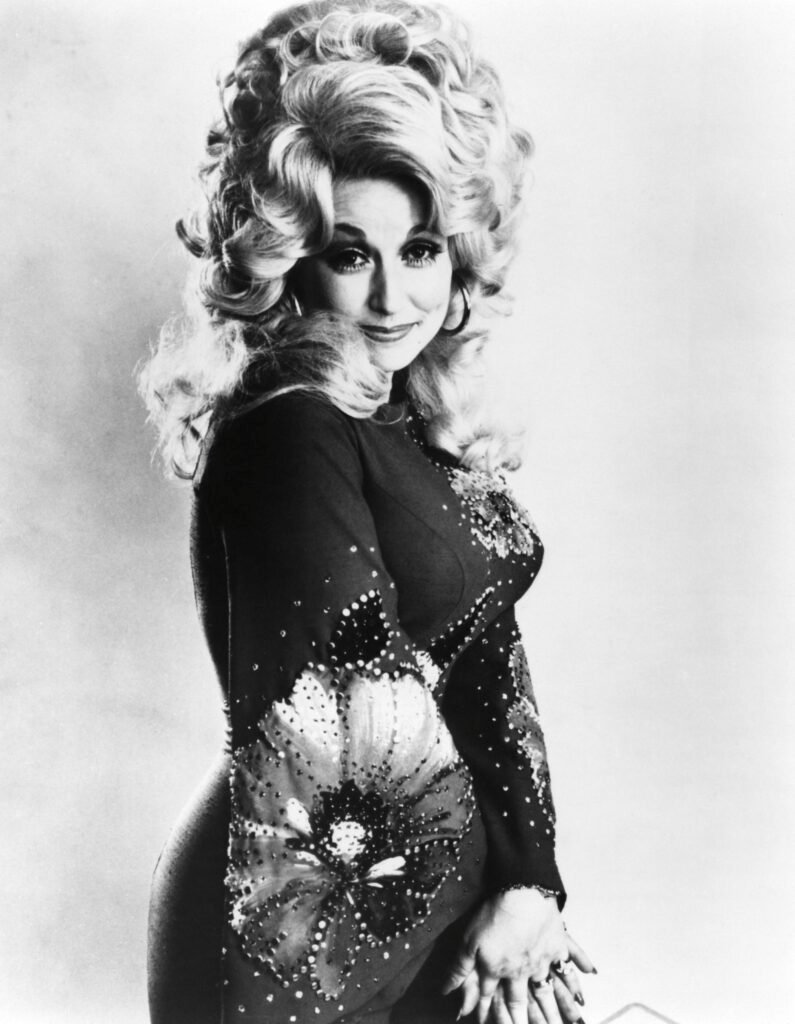
In a piece for TIME magazine, Parton explained exactly how she constructed her look, rejecting the advice of those who told her to tone it down. She never bought into the notion — which she described as a dated feminist trope — that high glamour, sparkle, and a big bouffant would make her a clown in a man’s world. Instead, she leaned fully into her own caricature.
“When I started wearing that big hair and my flamboyant clothes and my boobs sticking up, a lot of people said, ‘Dolly, you need to dress down. Nobody’s ever going to take you serious as a songwriter or a singer if you look like that, because you look more like a hooker than you do a singer,’” she recalled. “I said, ‘Well, tough. This is who I am. They’ll get used to it!’”
That defiance became the foundation of a style that was about far more than fashion. For Parton, the rhinestones and the towering hair were ultimately a declaration of selfhood — a way of looking that no other woman had attempted before, and that no one else could replicate.
Eighty Photos, One Unforgettable Career
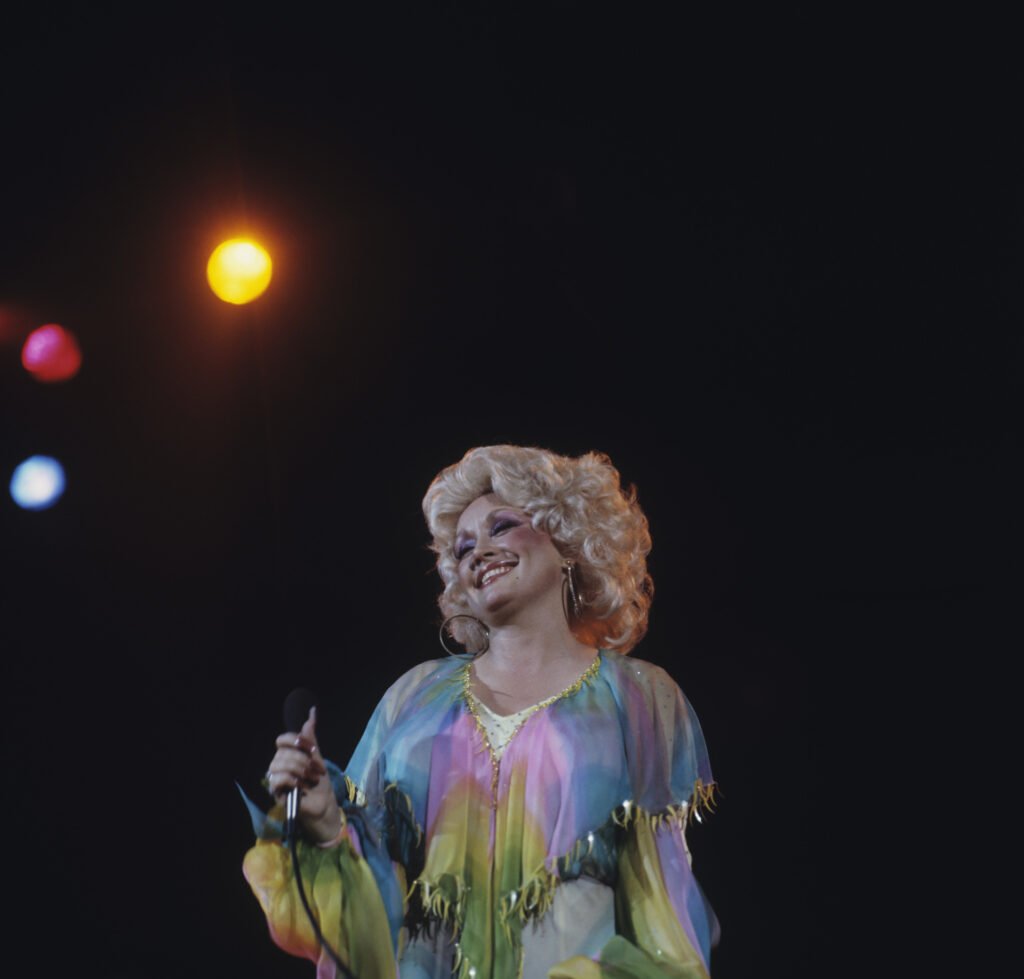
A new retrospective — a collection of 80 photographs spanning Parton’s career — brings that philosophy into sharp focus. The images trace her from the early days of her career to her final public appearances, showing how her aesthetic evolved while remaining unmistakably hers.
The collection includes a 1978 performance at London’s Hammersmith Odeon, where she appears in full rhinestoned glory, and a late-1970s portrait in Los Angeles that captures the signature blend of glamour and approachability. There are shots from the set of her 1987 variety show Dolly, where she shared the stage with Oprah Winfrey, and a 1989 studio portrait from Lake Tahoe that shows the polish of her later years.
Some of the most striking images are the candid ones: Parton at a 1981 outdoor concert, microphone in hand, her dress catching the light; Parton backstage at the 53rd Academy Awards in 1981; Parton at the premiere of Nine to Five in December 1980, just as the film was making her a crossover star. There’s also a 1977 photo of Parton with Andy Warhol at Windows on the World in New York — an odd-couple pairing that now reads as a meeting of two icons who understood the power of constructed personas.
From Rhinestone to Dollywood
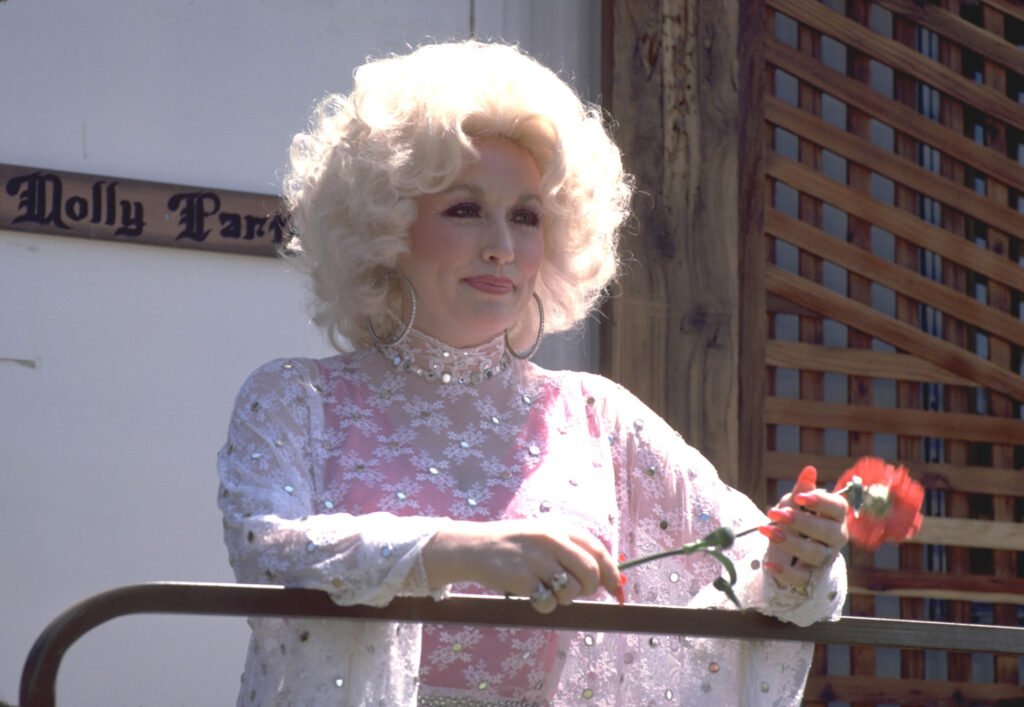
The photos also capture the expansion of Parton’s empire beyond music. A 1994 image shows her at a Calvin Klein fashion show during Fashion Week in New York — the country girl from the Smokies sitting front row at a high-fashion event, a testament to her cultural reach. Another from 1993 captures her at the 8th season grand opening of Dollywood in Pigeon Forge, Tennessee, the theme park that would become a pilgrimage site for her fans.
Throughout it all, the style remained constant: the blonde hair, the curves, the sparkle. Whether she was being honored by CBS in Harlem in 1985 or performing at the Rosemont Horizon in 1986, Parton never wavered from the look she had chosen for herself.
The 80-photo collection serves as a reminder that Parton’s influence extended far beyond country music. She made it acceptable — even aspirational — to be unapologetically theatrical, to embrace glamour without irony, and to insist on being taken seriously on your own terms. In an era when stars are often manufactured and image-consciousness is expected, Parton’s authenticity stands out as the real thing.
As the museum crowd in Nashville showed, the fascination with Dolly Parton’s style hasn’t dimmed. The rhinestones may have been the surface, but what they represented — a commitment to being oneself, no matter what anyone else thought — was the real substance. And that, perhaps, is why the photos remain so captivating: they document not just a fashion sense, but a philosophy.
Source: www.breitbart.com — https://www.breitbart.com/entertainment/2026/08/26/fashion-notes-dolly-parton-in-80-photos/