
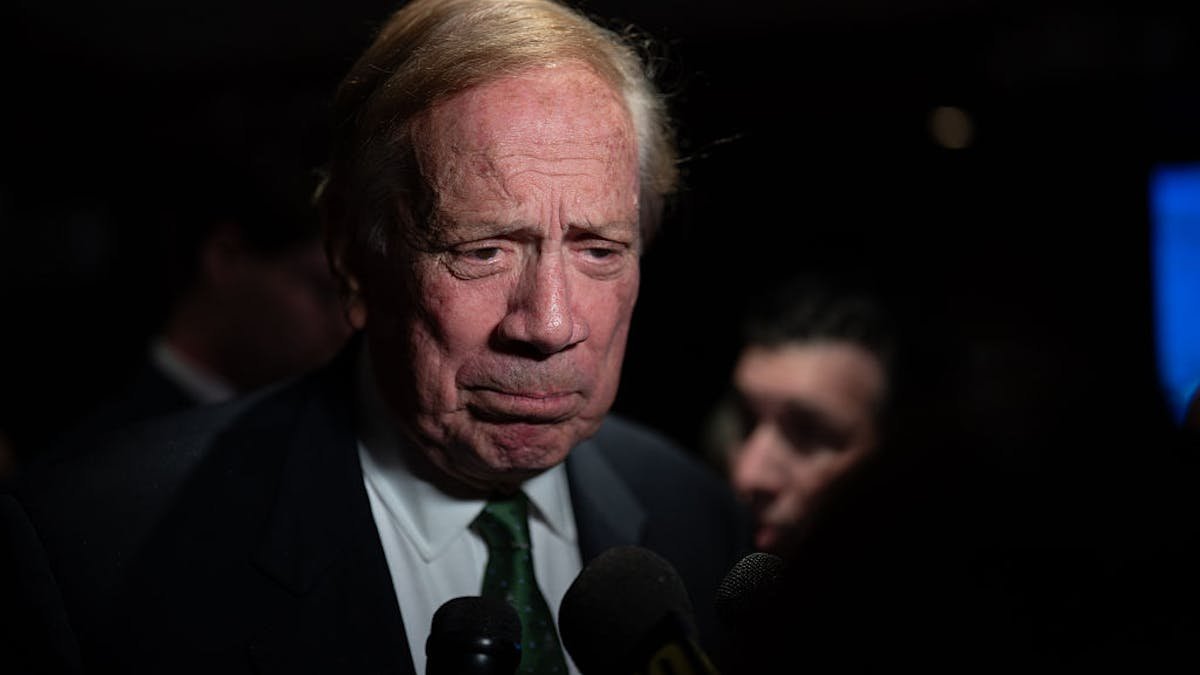
Former New York Gov. George Pataki revealed that he is suffering from a lung disease linked to the toxic dust he breathed in at Ground Zero after the September 11, 2001, terror attacks. The disclosure came just days before the 25th anniversary of the attacks, which killed nearly 3,000 people and sickened thousands more who responded to or worked at the site in the months that followed.
Pataki, a Republican who served as governor from 1995 to 2006 and was the last member of his party to hold the office, told the New York Post that he was diagnosed about five years ago with restrictive airway disease. The condition, which has been widely reported among first responders, volunteers, and others exposed to the pulverized concrete, glass, and other hazardous materials that filled the air after the Twin Towers collapsed, can cause scarring and inflammation in the lungs, making it harder to breathe over time.
“I just look at it as I’m one of the lucky ones,” Pataki said. “You know, 25 years later, I feel great. I have this minor residual impact from that time. But compared to so many others, I consider myself very lucky.”
He said his own symptoms are relatively mild, but he acknowledged the toll the exposure has taken on others who were at the site for long stretches. “The people who were with me at Ground Zero over and over for months after those attacks, many of them have serious illnesses, far more serious than anything I might be experiencing,” he added.
Pataki Joins Giuliani in Revealing 9/11-Related Illness
Pataki is not the first high-profile New York Republican to go public with a 9/11-linked health battle. Former New York City Mayor Rudy Giuliani, who was in office during the attacks and spent considerable time at Ground Zero, revealed a similar restrictive airway disease when he was hospitalized with pneumonia earlier this year. His spokesperson at the time noted that the condition made even routine illnesses like the flu or a common cold far more dangerous for those who suffer from it.
Pataki’s revelation adds another name to the long list of people whose health has been affected by the toxic cloud that hung over lower Manhattan in the weeks after 9/11. According to the World Trade Center Health Program, more than 130,000 people are enrolled for monitoring and treatment of 9/11-related conditions, including cancers, respiratory diseases, and mental health issues. Many of those enrolled are police officers, firefighters, and construction workers, but the program also covers office workers, residents, and others who were in the area.
Pataki’s comments also served as a reminder that political leaders who were in positions of authority during the attacks remained in the public eye as the nation prepared to mark the somber anniversary.
Pataki Criticizes NYC Mayor Mamdani Over Attendance at 9/11 Memorials
In the same interview, Pataki weighed in on a brewing controversy surrounding New York City’s current mayor, Zohran Mamdani, a self-described Democratic socialist who has said he plans to attend the official 9/11 memorial ceremonies. Pataki suggested that Mamdani would not be welcome unless he changed his stance on certain issues and distanced himself from individuals with controversial views on Israel and terrorism.

“If he says he will have nothing to do with Hasan Piker, and if he says he will condemn the statement, ‘globalize the intifada,’ then I would have no problem with him being here,” Pataki told the Post, referring to the left-wing Twitch streamer and a phrase that has been used in pro-Palestinian protests, which critics see as endorsing violence against Israelis.
Mamdani’s past associations have drawn criticism from some quarters. He has appeared alongside progressive figures who have expressed sympathy for Hamas and other militant groups, and his statements on the Israel-Gaza conflict have been condemned by some Jewish leaders and pro-Israel advocates. Pataki’s remarks reflect a broader sentiment among some New Yorkers who feel that Mamdani’s presence at a ceremony honoring the victims of Islamist terrorism would be inappropriate given his past positions.
However, Mamdani has indicated he intends to attend the memorials anyway, and he has not backed away from his past statements or associations.
Mayor’s Office Sparks Outrage Over Ceremonial Pen Gesture
Pataki’s criticism came as Mamdani faced fresh backlash over an incident that occurred on Friday, when he signed declarations officially recognizing 9/11 as a Day of Remembrance and discussed security measures in the event of a future attack. After the signing, Mamdani handed the ceremonial pen to a city official who, according to reports, has direct ties to individuals linked to the 9/11 attacks. The gesture immediately drew sharp rebukes from across the political spectrum, including from Pataki and other former officials who have spoken out about the city’s handling of the anniversary.

The official in question has not been named in initial reports, but the move was widely interpreted as a provocation, particularly given the proximity to the 25th anniversary of the deadliest terror attack on American soil. Pataki did not directly address the pen incident in his remarks to the Post, but his comments about Mamdani’s fitness to participate in the memorials suggested he shared the outrage.
In his interview, Pataki framed his own health struggle in the context of the broader sacrifice made by Americans in the wake of 9/11. He noted that he was one of the many people who rushed to Ground Zero in the hours and days after the attacks, not to rescue survivors — that effort was already over — but to assess the damage and begin the long process of recovery. Like countless others, he did not wear protective gear for the entire time he spent there, a decision that would later have health consequences.
“You don’t think about the long-term effects when you’re there in the moment,” he said. “You’re focused on the task at hand. But the dust got into everything — your lungs, your clothes, your car. It was unavoidable for anyone who was there for any extended period.”
Pataki’s diagnosis adds to the growing list of public figures and first responders who have contracted illnesses from the toxic dust. Researchers have linked the dust to a range of conditions, from chronic cough and asthma to pulmonary fibrosis and various cancers. The World Trade Center Health Program has covered thousands of cases, but many people continue to develop symptoms years after exposure, meaning the full scope of the health crisis may not be known for decades.
As the 25th anniversary ceremonies approach, Pataki’s message was clear: the effects of 9/11 are still being felt, not just in the memories of those who lost loved ones, but in the bodies of those who answered the call. He said he considers himself fortunate, but he urged others to remain vigilant about their health.
“If you were there, get checked,” he said. “You may not feel anything now, but the damage could already be done. It’s better to know.”
His remarks also serve as a reminder that the political battles over 9/11’s legacy are far from over, as New Yorkers prepare to honor the dead while also confronting the ongoing health and political consequences of that day.
Source: www.dailywire.com — https://www.dailywire.com/news/new-yorks-last-republican-governor-has-9-11-related-illness