
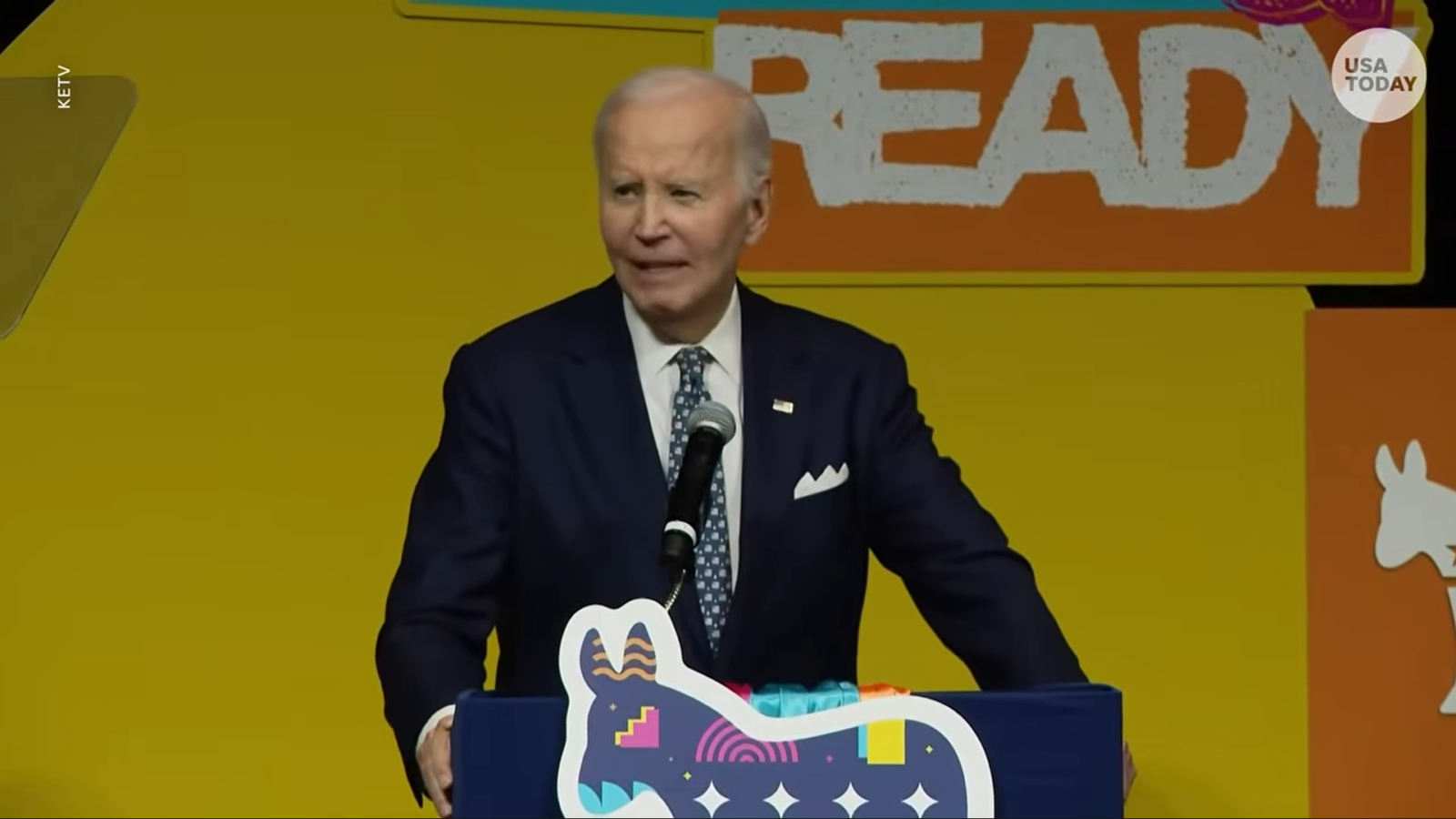
A federal appellate court has denied former President Joe Biden’s request to prevent the release of audio recordings and transcripts from conversations he had with his memoir ghostwriter before becoming president, according to The Federalist.
The D.C. Circuit Court of Appeals issued a 2-1 ruling on Monday rejecting Biden’s emergency motion for an injunction to block disclosure of materials from his 2016-2017 discussions with writing partner Mark Zwonitzer while preparing his 2017 book. The majority opinion came from Chief Judge Sri Srinivasan, an Obama appointee, and Judge Gregory Katsas, a Trump appointee, while Judge Florence Pan, appointed by Biden, dissented.
“We accordingly conclude that Biden has not shown a likelihood that the requested materials must be withheld from disclosure,” the majority wrote in their decision.
Origins of the Legal Dispute
The legal battle over these materials dates back to 2023, when then-Attorney General Merrick Garland appointed Special Counsel Robert Hur to investigate Biden’s handling of classified materials during and after his vice presidency. The Biden Justice Department acquired the audio recordings of Biden’s conversations with Zwonitzer under an agreement limiting their use to the special counsel’s investigation, and prepared transcripts of those recorded conversations.
Hur’s investigation, completed in 2024, concluded that no criminal charges were warranted despite his team discovering records related to foreign policy in Afghanistan and handwritten notes involving sensitive intelligence. Federal prosecutors justified the decision not to charge Biden by noting that the then-president “would likely present himself to the jury, as he did during our interview with him, as a sympathetic, well-meaning, elderly man with a poor memory.”
“It would be difficult to convince a jury that they should convict him — by then a former president well into his eighties — of a serious felony that requires a mental state of willfulness,” prosecutors wrote at the time.
Freedom of Information Act Request
In 2024, the Heritage Foundation and Mike Howell, president of Heritage’s Oversight Project, filed a Freedom of Information Act request to obtain the audio recordings and transcripts. The Biden Justice Department initially withheld the bulk of the requested materials, citing several FOIA exemptions.
The situation changed in February 2026, when the Trump Justice Department reversed course and indicated it intended to disclose the materials, with redactions, to the plaintiffs and the House Judiciary Committee. Biden then filed legal action seeking a preliminary injunction to block their release. The U.S. District Court for the District of Columbia denied his request last month.
Court’s Reasoning
In rejecting Biden’s emergency motion, Srinivasan and Katsas outlined several qualifications the former president must meet before such relief can be granted, including demonstrating a likelihood of success on the merits of his arguments and showing he would likely suffer irreparable harm without an injunction. After evaluating Biden’s arguments, the two appellate judges concluded he had not made the necessary showing.
“The central question on the merits is whether Biden is likely to succeed in showing that a FOIA exemption applies to the requested materials and that the Privacy Act thus bars their disclosure,” the court stated. “While the requested recordings were not government records when originally created by Zwonitzer and Biden in connection with the preparation of Biden’s 2017 memoir, it is undisputed that they became subject to FOIA’s disclosure mandate when the Special Counsel obtained possession of them as part of his investigation.”
The majority also dismissed Biden’s claims that the Justice Department’s decision to disclose the recordings and transcripts violated the Administrative Procedure Act. The judges agreed with the district court’s assessment that Biden’s arguments were unlikely to succeed, noting that the DOJ had demonstrated awareness of its position change, explained that the shift was based partly on making additional redactions to the requested materials, and reasonably weighed the interests at stake.
Dissenting Opinion
In her dissent, Judge Pan argued that Biden is not required to prove his entire case at this stage of proceedings, and that the appellate court’s task should be to balance the equities as the litigation moves forward rather than conclusively determining the parties’ rights. She criticized the majority for not addressing what she characterized as a “mootness problem” and for focusing exclusively on Biden’s likelihood of success on the merits.
“I would consider the preliminary-injunction factors more flexibly under the well-established ‘sliding scale’ approach, which provides that when the other equities weigh in a movant’s favor, and he can show irreparable harm, he ‘need not necessarily show a 51% likelihood of success,'” Pan wrote. She added that she disagreed with her colleagues’ evaluation of Biden’s likelihood of success on the merits.
The D.C. Circuit panel stayed its decision until August 3 to give Biden time to consider filing another appeal.
Source: thefederalist.com — https://thefederalist.com/2026/07/21/appeals-court-shoots-down-bidens-bid-to-hide-recordings-of-memoir-interviews/