
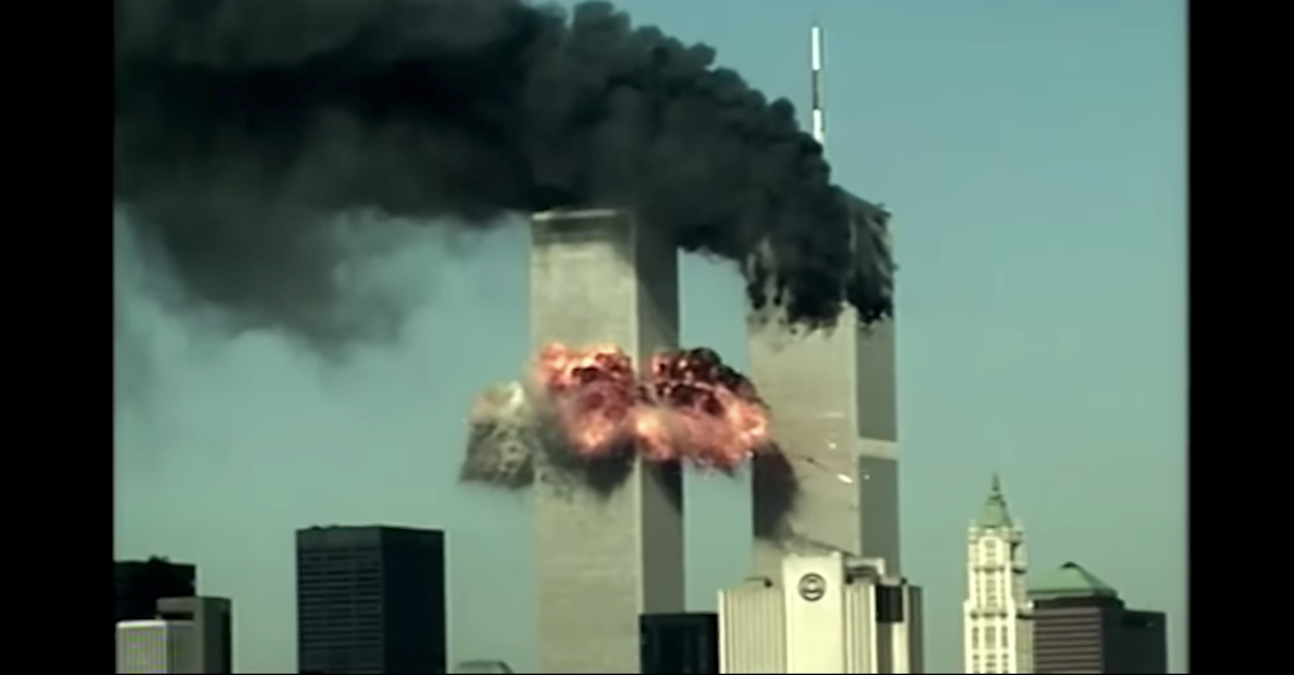
Twenty-five years after the September 11 attacks, The Federalist is marking the anniversary with a pointed argument: that the United States misread not only the Muslim world but itself, and that the secular assumptions guiding its response led it into a conflict it is now losing.
In a piece published on the anniversary, the outlet contends that the attacks “inaugurated a religious war that we have lost, or at least are in the process of losing” — a failure the essay attributes to a Western commitment to what it calls a “secular liberal account of the world” that dismissed religion’s role in shaping cultures and societies.

An Argument About Translation
The essay leans on a parallel argument from Ayaan Hirsi Ali, who wrote in Tablet that when facing “an adversary for whom the public order was explicitly theological, and for whom the separation of sacred and political authority was itself an offense against God,” the West did what its intellectual framework permitted: it translated theology into categories it found easier to handle.
The Federalist applies that critique to the policy choices that followed the attacks. Rather than treating the conflict as a clash of fundamentally different religious and cultural orders, the piece argues, American leaders treated the divide as material — a matter of economic opportunity, U.S. support for Israel and similar factors — and responded accordingly.

The specific consequences the essay lists are stark. Instead of confining the response to punishing regimes that harbored al-Qaida, it says, Washington launched regime-change wars and prolonged occupations aimed at bringing democracy to the Middle East. Instead of restricting immigration from Muslim-majority countries, it increased it — a move the piece frames as an effort to prove America was not racist. And instead of concluding that not all cultures and religions are compatible with American society, it doubled down on multiculturalism and on a conception of the country as an idea rather than a people with a shared culture shaped by Christian moral norms.
‘An Idea, Not a People’
At the center of that critique is a claim about how the Bush-era foreign policy establishment understood America itself. The essay argues that President George W. Bush believed the nation amounted to little more than a set of propositions about governance — free markets, rule of law, individual freedom — with nothing distinctive about the American people as such. That view, in the essay’s telling, made Iraqis and Afghans seem interchangeable with Americans: give them elections, schooling for women and economic assistance, and all would be well.

But the piece insists the error ran deeper than a misreading of the Middle East. “We got Islam wrong after 9/11, yes,” the essay says. “But even more we got the Christian West wrong.” It argues that what the West took to be neutral, procedural tolerance was in fact a particular inheritance of the Christianity that shaped Western civilization — one that, in the author’s account, simply did not exist in the Islamic world.
From that premise, the essay draws a pair of conclusions about the two large-scale experiments of the post-9/11 era: importing large Muslim populations into Western countries, and exporting Western political institutions to the Muslim world. Both were meant to vindicate the liberal multiculturalist thesis, according to the piece. Twenty-five years on, it argues, they have proven the opposite — that Muslims in the West “do not assimilate,” and that Western institutions “do not work” in the Muslim world.
A Call to Repudiate, Not Reform
The essay’s prescription is not a course correction but a repudiation. If the quarter-century since 9/11 teaches anything, it argues, it is that the multiculturalism the West has embraced over the past 40 years has been “a grave mistake, perhaps even a fatal one.” The country should return to understanding itself not as a blank slate or a mixture of the world’s cultures and religions, but as a specifically Christian nation ordered around Christian moral claims.
The author concedes uncertainty about whether Americans are ready to accept that conclusion, acknowledging it would require rejecting a secular liberal ideology that has been ascendant for a long time. But the essay closes on a note of insistence: the Muslim world, it says, is not the way it is because of material inequalities or American foreign policy — it is the way it is because of culture and religion. The same, the piece argues, is true of the West, and it is time to act accordingly.
The essay appears amid a broader reconsideration on parts of the right of the post-9/11 settlement, including the wars, surveillance programs and immigration policies that followed the attacks. The Federalist appended a fundraising appeal to the piece, soliciting tax-deductible donations to its Real Journalism Fund.
Source: thefederalist.com — https://thefederalist.com/2026/09/11/9-11-exposed-the-weakness-of-a-post-christian-west/