
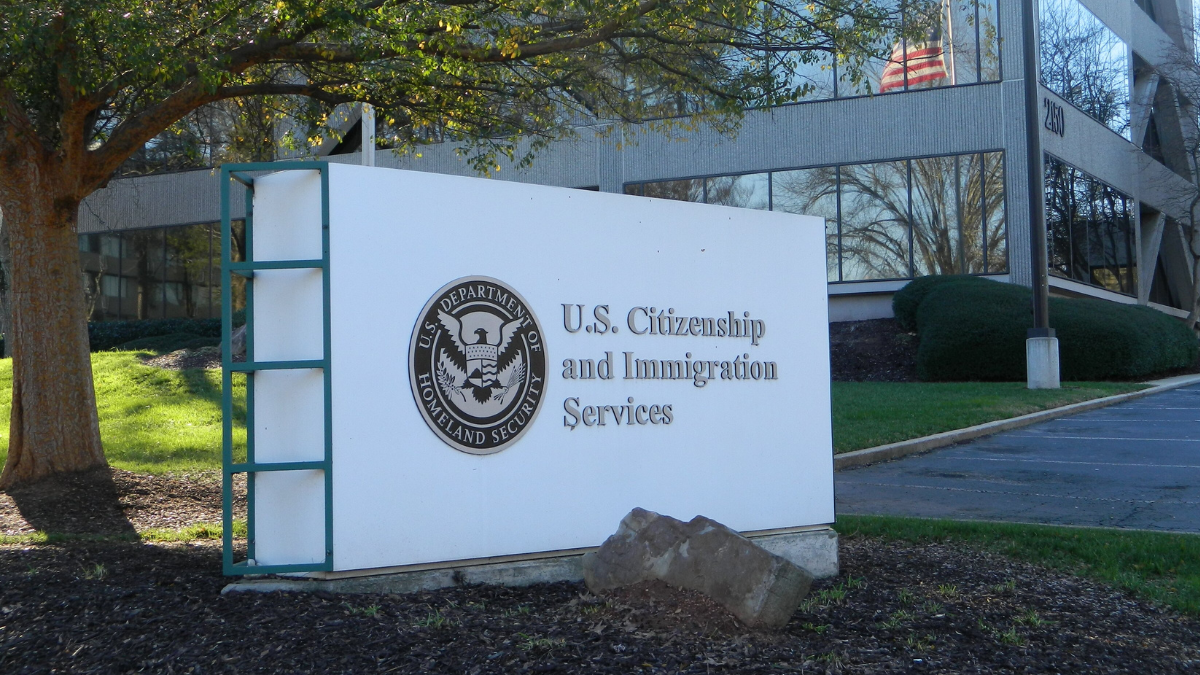
A former federal immigration enforcement officer is warning that the government’s massive paperwork backlog has transformed the simple act of filing an application into what he calls a “gigantic mass migration loophole.”
Writing in The Federalist, the veteran — who says he spent 24 years enforcing U.S. immigration law — argues that a stamped receipt from U.S. Citizenship and Immigration Services (USCIS) showing a pending application now functions as the most effective way for someone with a weak case to remain in the country.
How the clock stops
Under the Immigration and Nationality Act, a nonimmigrant who files a timely, non-frivolous request to extend or change status before their authorized stay expires stops the accumulation of unlawful presence for as long as the request remains pending. Congress capped that pause at 120 days, assuming the government would decide most cases within four months. That assumption no longer holds.
USCIS is currently carrying more than 11 million pending cases, with a net backlog above 6 million that the agency acknowledges are within its own control to decide, according to the essay. The author stresses that the pause applies regardless of the merits of the underlying application — a weak filing stops the clock just as effectively as a strong one.

The result, he argues, is that applicants can file, wait years for a decision, lose, and still walk away having banked years of protected presence — time to marry, secure an employer petition, or find another legal door. If the application is ultimately approved, the authorization is retroactive and the gap disappears. If it’s denied, the unlawful-presence clock only starts on the day of denial.
“Either way, filing buys time,” he writes. “That isn’t a loophole somebody found. It’s how the machine is built.”
A deliberate strategy or an accident?
The former officer is careful to avoid overreaching. He says he is not claiming to know the intent of individual filers, and he acknowledges that no honest statistic can measure intent. He also concedes the agency itself bears significant responsibility for the backlog’s growth.
“Who caused the backlog is a fair fight, and I’ll leave it one,” he writes.
But he insists the core problem is the incentive structure: when the mere act of filing any non-frivolous application earns years of lawful-presence cover, the system will always generate more filings than any agency can clear. “The design rewards standing in line, not winning at the end of it,” he says.
The only guardrail is that tolling applies only to non-frivolous applications — defined as having an “arguable basis in law and fact,” not “filed for an improper purpose.” But with millions of cases in the queue, there is no meaningful screen for improper purpose at intake, the author argues. The test, if applied at all, comes years later, long after the benefit of delay has been collected.
Proposed fixes: flip the presumption, cut categories, add retroactive penalties
The essay calls on Congress to remove the incentive by reversing the current presumption. Instead of automatically pausing the unlawful-presence clock for any filing, the government should require an affirmative finding at intake that an application clears a threshold showing of merit.
“Today the pause is automatic and the screening is theoretical. Reverse that,” he writes.

He also recommends stripping certain categories from tolling eligibility entirely, citing serial extensions of stay, changes of status filed in the closing weeks of an authorized admission, and classifications with the highest overstay rates. He would limit tolling to one pending application per period of admission, preventing applicants from “daisy-chaining” paperwork into years of protected time.
Additionally, he urges retroactive consequences for losing applicants: if an application is denied as frivolous or filed for an improper purpose, unlawful presence should run retroactively from the day the authorized stay expired, not from the day of denial. Under that rule, banked time would not just stop accruing — it would never have existed.
Removal system also implicated
The same logic, he says, belongs in the removal system, where frivolousness sanctions already exist in regulations but go essentially unused. Appeals, he argues, currently function as a second visa, allowing removable individuals to delay their cases and become harder to remove simply through the passage of time.
“A receipt should never stand in for a case, and a docket number should never stand in for status,” he writes. “Until Congress makes that true, the smartest move for a weak applicant remains the easiest one. File, and wait.”
The piece is a commentary, not a news report, and The Federalist does not provide additional reporting on the data cited. The essay’s claims about the backlog’s size and the effect of tolling are based on the author’s own experience and public USCIS figures as described in the piece.
Source: thefederalist.com — https://thefederalist.com/2026/08/17/the-feds-massive-paperwork-backlog-creates-a-gigantic-mass-migration-loophole-1/