
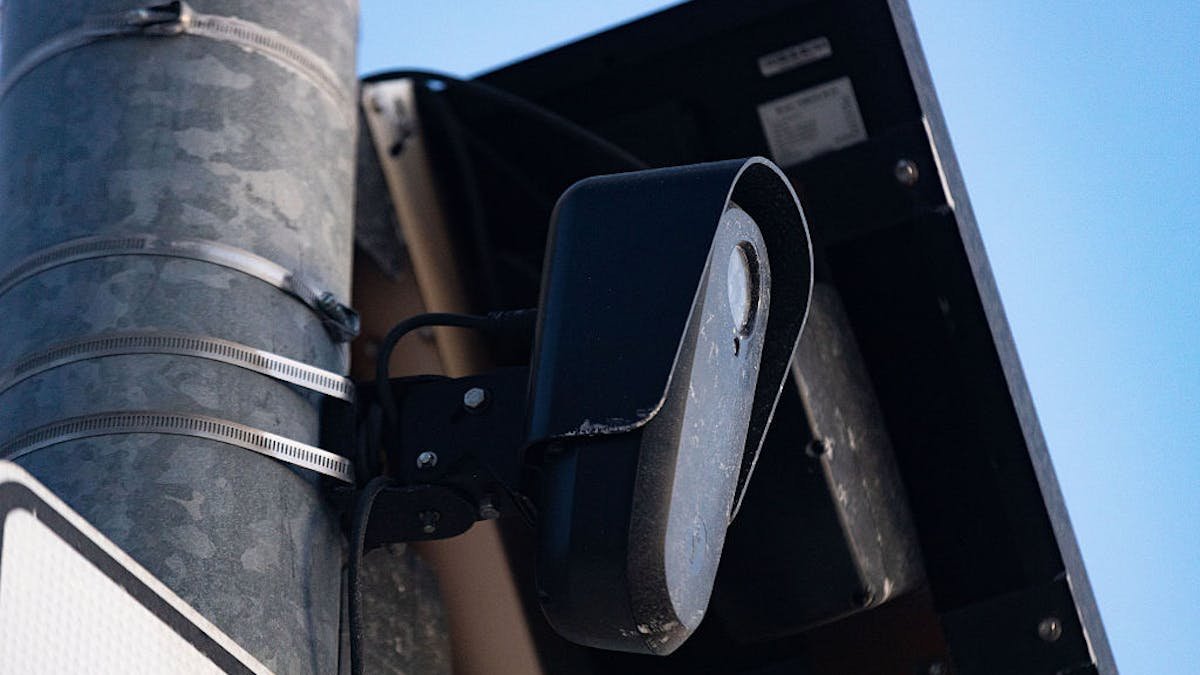
Across the country, a growing backlash against automated license plate reader cameras has led some cities to pull the plug. But in at least three cities this summer, the cameras’ absence coincided with crimes that remain unsolved — and local authorities say the technology they once criticized is now sorely missed.
In El Cerrito, California, the city council voted 3-2 in June not to renew its contract with Flock Safety, the Atlanta-based company whose network spans 120,000 cameras across 49 states. By August, all 40 cameras had been removed. Forty-eight hours later, a man was fatally shot at an intersection where two Flock cameras had sat until the day before.
According to local reporting cited by the Daily Wire, investigators were forced to rely on a resident’s home security footage, but the suspect’s license plate was unreadable. It was only through a neighboring agency’s still-operating Flock cameras that they identified the vehicle. The shooter and getaway driver remain at large.
In Framingham, Massachusetts, the story followed a similar arc. The city ended its Flock contract in June after a months-long resident campaign. Months later, a 39-year-old man was killed in a hit-and-run. The driver fled and has not been identified, despite investigators obtaining a description of the vehicle.
Framingham’s own transparency records show that during four years with the cameras, police cited Flock in more than 200 reports — often to track down the city’s most wanted suspects. Those same records now highlight how recent cases might have relied on the discarded technology.
Houston presented a different wrinkle. There, the cameras weren’t dismantled by policy but by vandalism. Over the past month, someone cut down several Flock cameras, including three that police said could have identified a man who tried to lure a child into his car.

“Unfortunately, some person that’s not really cool with the license plate reader technology chose to cut the three down,” Houston Police Chief Noe Diaz said.
The cases underscore a tension at the heart of the national debate over Flock and similar surveillance tools: They help solve crimes, but they also raise serious privacy concerns — and sometimes, authorities can misuse them.
Flock founder Garrett Langley defended the technology, saying in a statement that the company’s mission is to eliminate crime. “Every day, Flock helps solve crimes that would otherwise go unsolved. From finding missing children, to solving murders, violent crime, and recovering stolen vehicles, Flock gives investigators leads they didn’t have before,” Langley said. “That impact is why we started Flock, and it drives every decision we make about how this technology should be built and governed.”

Langley and his company have faced scrutiny this summer after reports emerged that some officers have abused access. In Florida, police officer Christopher Goodson allegedly used Flock cameras to track his estranged wife’s car more than 700 times without authorization, between September 2024 and June 2026, according to reports cited by the Daily Wire.
That scandal has fueled criticism from both sides of the political aisle. Senator Bernie Sanders (I-VT) asked, “Do we want to live in an America where AI companies like Flock can work with the government to track our every movement?” Senator Josh Hawley (R-MO) called the network an “unprecedented national surveillance network,” adding that Americans do not surrender their privacy rights when they drive to work, drop their kids off at school, or go to church.
The White House has yet to take a stance. President Donald Trump told Daily Caller correspondent Reagan Reese earlier this month that the issue is under review: “You know, you have pros and cons, right? It’s being studied right now. We’ll have an answer sort of as to our views on it over the next couple of weeks.”
As cities weigh renewals, the El Cerrito, Framingham, and Houston cases provide a real-world test of what happens when the cameras go dark. Proponents, like Langley, argue the technology is essential for solving crimes that would otherwise go cold. Critics, including Sanders and Hawley, contend that the privacy costs outweigh the benefits.
For now, the debate continues — but for families of victims in these three cities, the absence of Flock cameras has left unanswered questions.
Source: www.dailywire.com — https://www.dailywire.com/news/what-happened-when-flock-cameras-went-dark