
Flock Safety, the private company behind a vast network of AI-powered license plate readers across the U.S., on Thursday announced a series of privacy-focused reforms after months of mounting backlash and reports of law enforcement abuse of the surveillance technology.
According to Fox Business, which first reported on the company’s announcement, the changes include cutting the standard data retention window from 30 days to just seven, making an optional abuse-detection feature mandatory for all law enforcement agencies, and giving local departments more control over how their data is shared with other jurisdictions.
Data Retention Cut to Seven Days
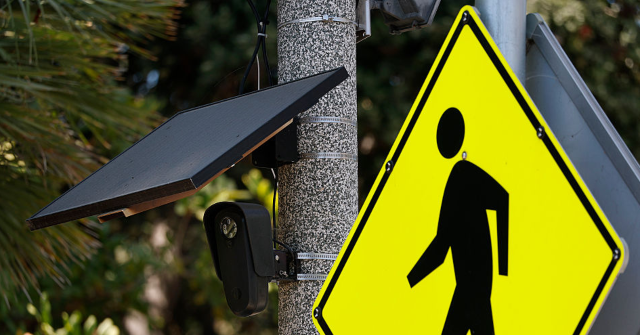
The most significant change is the reduction in how long Flock retains the data captured by its more than 119,000 cameras nationwide. Previously, all footage and license plate data was stored for 30 days before being deleted. Now, that data will live on Flock’s servers for only one week.
The company is also introducing a feature called “Evidence Mode,” which will allow law enforcement agencies to preserve data for longer periods if needed for investigations, based on state and local policies. Law enforcement agencies have often countered privacy concerns by pointing to the technology’s role in catching criminals, and the new feature is designed to accommodate that need without requiring blanket long-term storage.
New Controls for Sharing and Search
Another new feature will allow law enforcement agencies to choose which types of offenses they are willing to share with other municipalities. The company gave an example: “City A could allow City B to search its cameras for a stolen vehicle or violent crime while blocking searches related to immigration enforcement.”
This shift comes amid concerns that data collected by Flock cameras in one jurisdiction could be used by agencies elsewhere for purposes the originating community might not support, such as immigration enforcement. The new controls are intended to give local departments more say over how their data is used beyond their own borders.
Mandatory Abuse Detection
The reforms also target reports of law enforcement officers using the technology for personal or malicious purposes, including stalking romantic partners. A key part of that effort is making the company’s “Audit Assistance” framework mandatory for every law enforcement customer. Previously, the feature, which flags abnormal search behavior, was optional, and Flock reported that only a third of agencies had turned it on.
Now, when the system detects abnormal activity, the user is locked out in real time until an administrator reviews the searches. Flock said it is “moving to more proactively address and root out misuse of technology.” The company will also require a reason for every search.
In July 2025, Flock rolled out an optional case code requirement. That will now become mandatory for all searches, though there will be an override option for “genuine emergencies,” such as missing children cases.
“A search without a reason is a search that shouldn’t happen in the first place, and now Flock’s system automatically treats it that way,” the company told Fox Business.
Backlash Persists
The reforms come as criticism of Flock’s technology has intensified. Mayor Glen Jacobs of Knox County, Tennessee, has become a prominent voice calling for a national moratorium on the spread of Flock’s cameras. The American Civil Liberties Union (ACLU) has also been sharply critical, and in a statement dismissed the new measures as “a thinly veiled PR attempt to counter communities’ genuine privacy concerns with its mass surveillance system with largely hollow security promises rather than an earnest effort to address them.”
Concerns about long-term data storage and the potential for misuse have been central to the backlash. Reports of officers using the technology to stalk romantic partners have further fueled public distrust, and the company’s new safeguards are aimed directly at preventing that kind of abuse.
Despite the criticism, Flock maintains that its technology has been a force for good. The company said that last year, its cameras were involved in roughly 1 million investigations and helped locate approximately 10,000 missing people.
The changes announced Thursday represent a significant shift in how Flock operates, but whether they will be enough to appease privacy advocates and local officials remains to be seen. The company’s acknowledgment of the need for reform underscores the growing tension between the benefits of surveillance technology and the risks it poses to civil liberties.
Source: www.breitbart.com — https://www.breitbart.com/pre-viral/2026/08/13/flock-safety-announces-new-privacy-measures-after-backlash-reports-of-law-enforcement-abuse/