
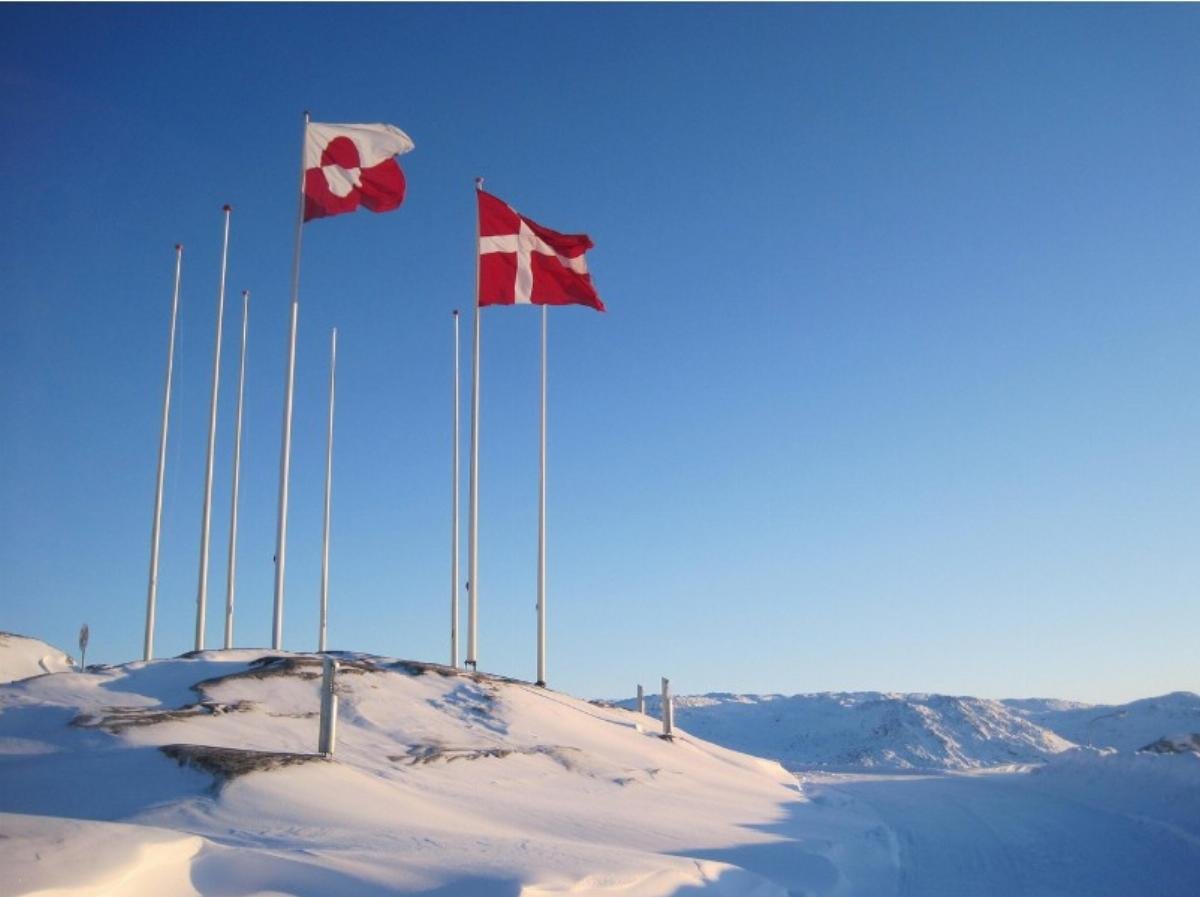
When Danish and Greenlandic officials signed a new defense agreement with the United States this month, Greenland’s prime minister, Jens Frederik Nielsen, called it a “win, win, win agreement.” But writing in American Thinker, retired career diplomat Stephen Helgesen suggests the celebration may be premature — and that the deal, while a diplomatic success for Copenhagen, leaves the United States with far less than the sweeping control the Trump administration had appeared to demand.
Helgesen, who spent 25 years in the U.S. Foreign Service under four presidents and now lives in Denmark, describes the agreement as a dusting off and modernization of the revised 2004 accord, rather than the comprehensive rewrite the White House had pushed for over an 18-month period. The result, he writes, is “an agreement that is going to give all parties a huge hangover as the implementation phase begins.”
What the Deal Actually Contains
According to Helgesen’s analysis, the agreement does grant the United States some concrete new rights. It explicitly authorizes the U.S. to modernize and expand its existing facilities at Pituffik Space Base — formerly Thule Air Base — and to re-establish two other pre-existing installations at Narsarsuaq and Mestervig. Those base improvements, he notes, had previously required negotiation under the old agreement.
But beyond those specifics, the text largely preserves the consultative framework that has governed the U.S. military presence on the world’s largest island for decades. Under the 2004 agreement’s Point 3.b, the U.S. must still “consult” with Denmark and Greenland before establishing new defense areas, and it cannot unilaterally declare that a new area is necessary. The new agreement, Helgesen writes, does not resolve who holds final decision-making authority; it merely lays out an escalation path under which unresolved consultations rise to the deputy minister level after 90 days, then to the minister level.
The same consultative requirement applies to unmanned military installations under Article V, and to basing, overflight and territorial water access under Article VI. On overflight, the text allows U.S. operations “without restriction except as mutually agreed upon by the Parties” — language Helgesen reads as requiring Danish and Greenlandic consent. Access to and within territorial waters, meanwhile, is “as is agreed by the parties at any given time.”
Article VII, covering security of defense areas and espionage prevention, commits the parties only to an “intend to cooperate” standard. Additional access and movement within those areas remains subject to “agreement of the parties,” and any response to threats must be “mutually” determined. As Helgesen summarizes it, the provision offers “no clear right of the U.S. to exercise its judgment.”
A ‘Mountain of Swiss Cheese’ on Investment
The article Helgesen flags as most vague is Article X, dealing with foreign direct investment. The Trump administration had claimed a measure of control over who invests in Greenland and in what sectors — including rare earth mineral mining. The new agreement, by Helgesen’s reading, does not address purely commercial investments in non-defense areas at all. It speaks instead of threats to national security and “public order,” and it grants preferential access to companies from NATO and EU member states whose activities “would not constitute a threat to national security or public order.”
Danish authorities retain the right to apply their own investment screening laws. The article requires “close consultation” — but leaves the modalities for that consultation to be determined by “relevant parties,” without specifying who those parties are or who decides what is acceptable. That ambiguity, Helgesen contends, is where the deal’s problems will surface. When fully implemented, he writes, the 2026 accord will resemble “a Greenland-size mountain of Swiss cheese that offers more holes to jump through or hide in to escape the inevitability of more problems than the old agreement had.”
Article IX, which addresses the establishment of military installations by third states, does restrict non-NATO countries from setting up their own facilities — but leaves the door open if the parties agree, and provides no course of action in the event of disagreement.
Force Majeure Left ‘Just Outside the Door’
One notable omission, according to Helgesen, is any grant of force majeure to the United States. The agreement does not confer it, he writes, but it “could leave the possibility of the U.S. implementing it, waiting just outside the door.” He notes that force majeure clauses can suspend contractual obligations without liability, but only under narrow conditions: the triggering event must fall within the contract’s wording, be beyond the affected party’s control, and genuinely prevent or seriously obstruct performance. War or government prohibitions, he writes, are the kinds of events typically contemplated.
Helgesen’s broader point is that the deal, despite the favorable framing in Danish media, does not represent an American victory on the administration’s own terms. It recognizes the importance of monitoring and cooperation in the Arctic and, in his view, does help make Greenland safer from “adversaries” such as Russia and China. But it is not an agreement that reinforces the claim that anything short of absolute U.S. control is unacceptable. Near the end of the piece, he invokes an old diplomatic joke — how many diplomats does it take to change a light bulb? None, because they are all too busy trying to decide how to make it opaque.
Whether the agreement’s ambiguities prove manageable or become, as Helgesen predicts, a source of recurring friction, the implementation phase will test both sides. For now, the retired diplomat’s assessment is a caution against declaring victory too early — and a reminder that in Arctic security, clarity is often the first casualty.
Source: www.americanthinker.com — https://www.americanthinker.com/articles/2026/09/greenland-deal-after-the-party-comes-the-hangover/