
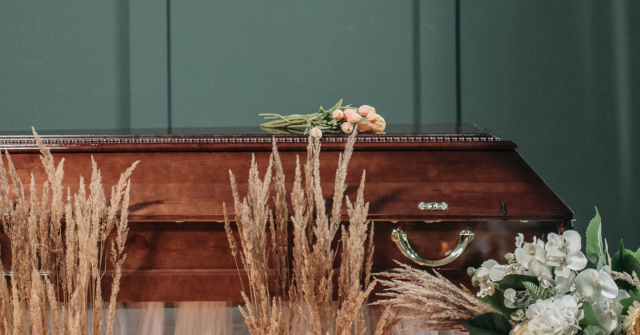
A family in rural Guatemala is grappling with an event that has startled their community and drawn widespread attention online: a 15-year-old girl sat up inside her own casket during her wake, hours after relatives believed she had died.
According to reporting from news.com.au, Yuleidy Ixcotoyac lost consciousness while riding in a car with her father, Pastor Abraham Ixcotoyac, who was driving her toward a hospital. The teen had reportedly been suffering from chest pains when the episode occurred on a Saturday. Her father pulled over, checked for a pulse and breathing, and said he could not find any signs of life.
Believing his daughter was dead, he decided against continuing the trip to the hospital. As WION reported, no confirmed diagnosis or death certificate was ever issued for the girl, yet the family moved forward with funeral arrangements roughly eight hours later.
In Guatemala, burying the dead soon after death is a common practice. The family purchased a coffin and placed the teenager inside it at their home in El Jocote.
A Mother’s Cry, Then Movement
What happened next is described by the family as nothing short of extraordinary. While the girl’s mother stood over the casket looking at her daughter, she said she noticed movement and insisted the girl was not dead.
“When I was crying on top of her casket, we opened the window, and she was moving, she was waking up, and suddenly she sat up,” the mother recalled, according to the accounts cited in the reporting.
Video footage of the moment circulated widely, showing the teenager upright as friends and family gathered around. In the clip, one person holds a cup to her mouth while others clap and shout, “Hallelujah!”
Yuleidy is now recovering at home. She later told reporters that the pain had come on suddenly. “My heart started hurting really badly, it felt heavy and then I blacked out, like I fainted,” she said.
The teenager reportedly said she “thanks God” she is alive.
Online Reaction and a Word’s Odd History
The story prompted a wave of commentary on social media, where users seized on the literal meaning of the word “wake.” One person wrote, “And that is why it is called a ‘Wake,'” while another said, “There are a few steps missing here before the wake? lol.”
The term, as Britannica notes, refers to an ancient religious rite in which mourners stay awake to watch over the body of a deceased person the night before burial. The custom traces back to the British Isles, where the original purpose was rooted in a belief that evil spirits might harm or steal the corpse. Family and friends kept watch to protect the body; the Anglo-Saxons called the practice lich-wake, with lich meaning corpse.
The case raises uncomfortable questions about how death was determined in this instance — a determination made by a grieving father at the roadside rather than by medical professionals, and one that was never formalized with documentation. The family’s decision to proceed with a funeral without a death certificate is not uncommon in areas where access to medical care and official services can be limited.
For now, the family is focused on the teenager’s recovery, and the community that gathered to mourn is instead celebrating what they describe as a second chance at life.
Source: www.breitbart.com — https://www.breitbart.com/latin-america/2026/10/13/watch-teenager-wakes-up-inside-her-own-casket-at-funeral-in-guatemala/