
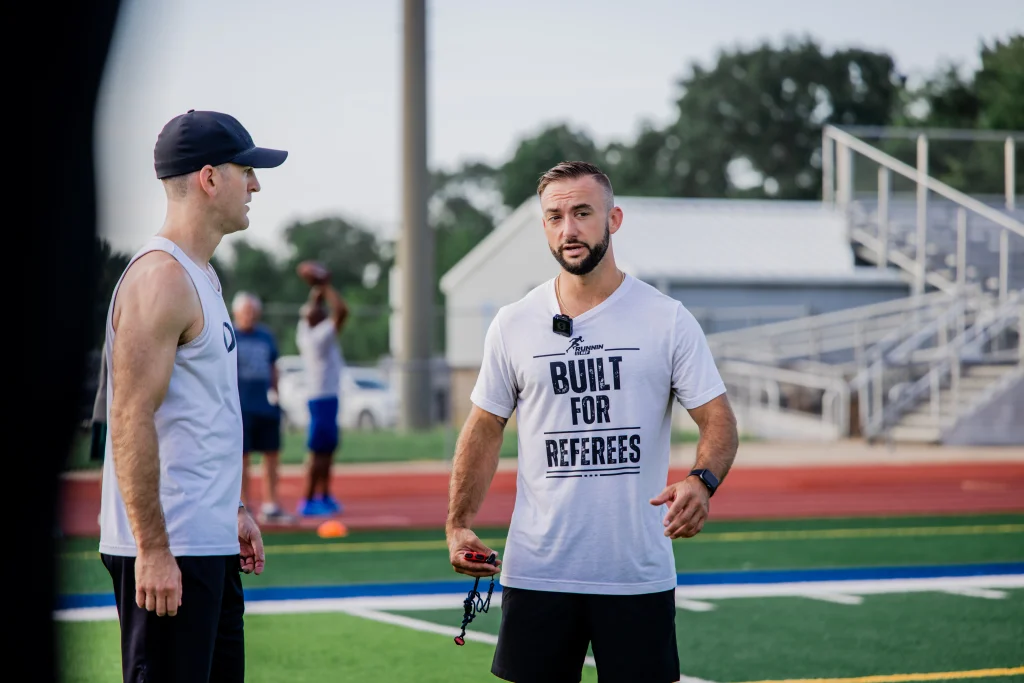
When NFL umpire Larry Smith went down with a non-contact quad injury during a London game in October, it was a stark reminder—not just of the physical challenges players face, but of the unseen athleticism demanded of the league’s officials. Smith’s tear, which sidelined him for the rest of the season, underscored a reality few fans consider: NFL referees train like elite athletes just to keep pace with the game.
Not Just Whistles & Stripes
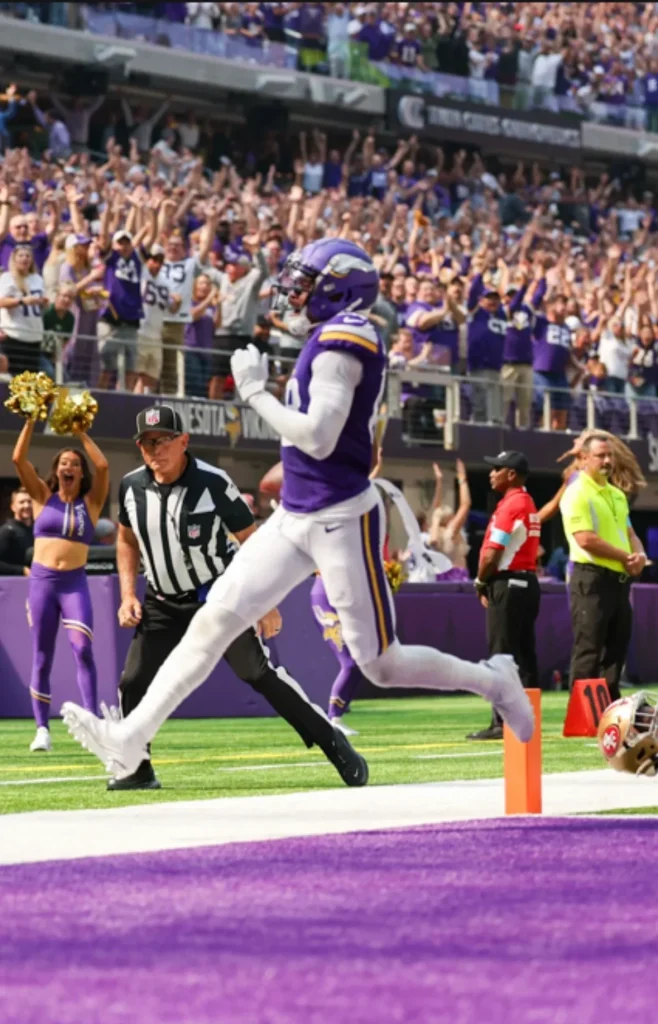
Unlike the stereotype of out-of-shape refs, NFL officials must pass rigorous fitness benchmarks before stepping onto the field. According to NASO president Bill Topp, the league mandates preseason tests that assess speed, agility, and weight—with requirements adjusted for age. “You have to get in position to see plays correctly,” Topp explained. “That demands serious conditioning.”
Training Like the Pros
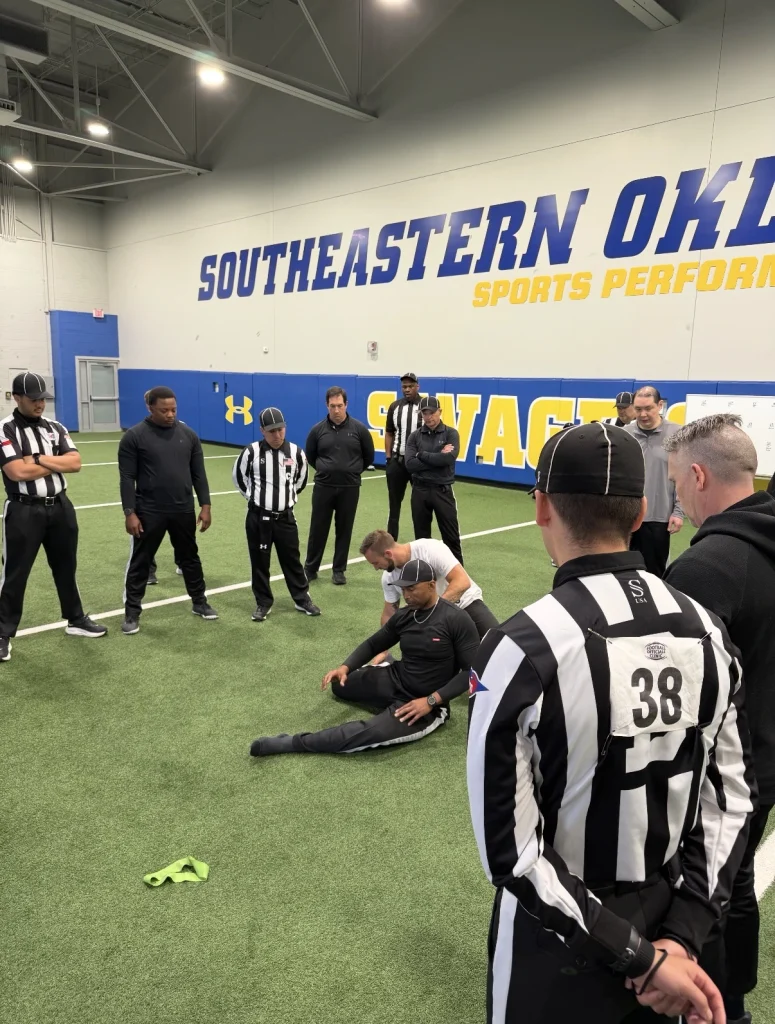
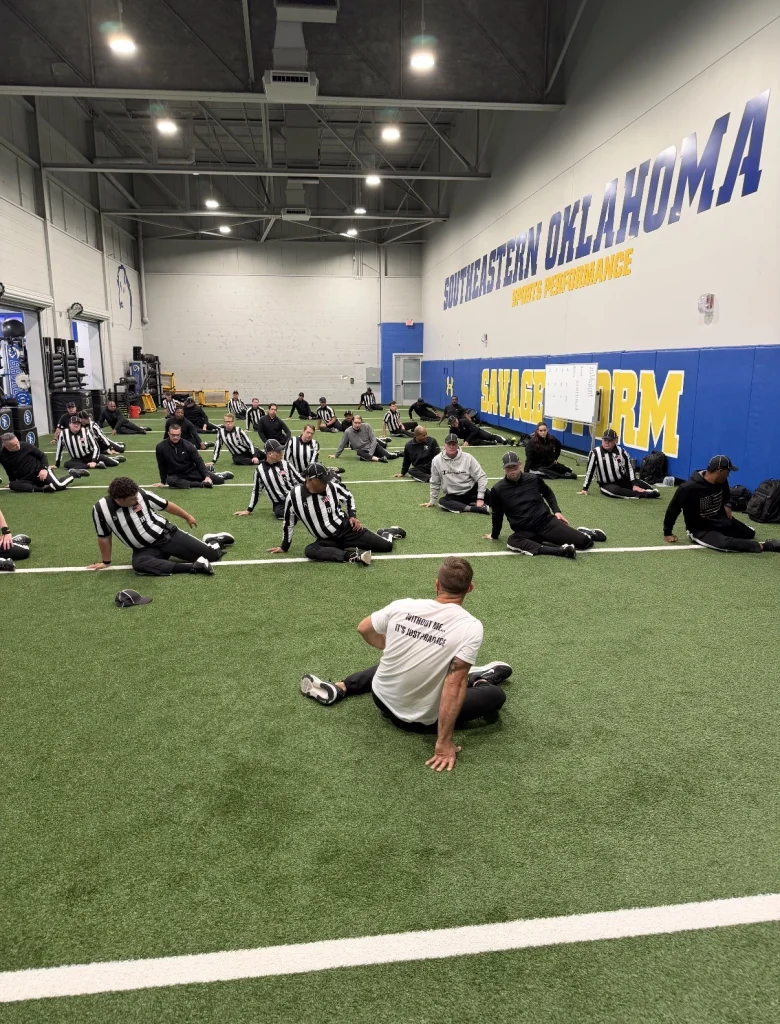
Austin Ardrey, founder of the officiating-focused Runnin’ Ref program, trains refs much like NFL players—through structured phases of strength, conditioning, and mobility work. Offseason focuses on building endurance; preseason ramps up intensity. “We’re not just breaking a sweat,” Ardrey said. “Every drill mimics game movements: sprints, stops, lateral shuffles.”
Six Grueling Miles Per Game
Retired NFL side judge Rick Patterson, a 30-year veteran who officiated three Super Bowls, estimated covering six miles per game—not in a straight line, but through bursts of acceleration, abrupt stops, and sharp pivots. “It’s stop, start, twist, jump,” he said. The punishment took its toll: Patterson eventually needed two shoulder replacements—one just three days after a playoff game—and two knee surgeries.
Injury Risks Beyond Collisions
While player collisions can happen (especially for umpires near the scrum), most officiating injuries stem from repetitive stress. Achilles and patellar tendinitis, hamstring strains, and plantar fasciitis are common, per Ardrey, who prescribes targeted exercises like single-leg squats and heel drops to fortify vulnerable areas.
No Breaks, No Substitutions
Unlike players, officials can’t tap out for a breather. “They don’t get a break on third down,” Ardrey noted. Coupled with the mental strain of split-second calls, it’s a endurance test—one that, as Smith’s injury proved, demands year-round athleticism beneath those black-and-white stripes.
Source: www.dailywire.com — https://www.dailywire.com/news/stripes-strength-structure-inside-the-intense-physical-preparation-of-nfl-refs