
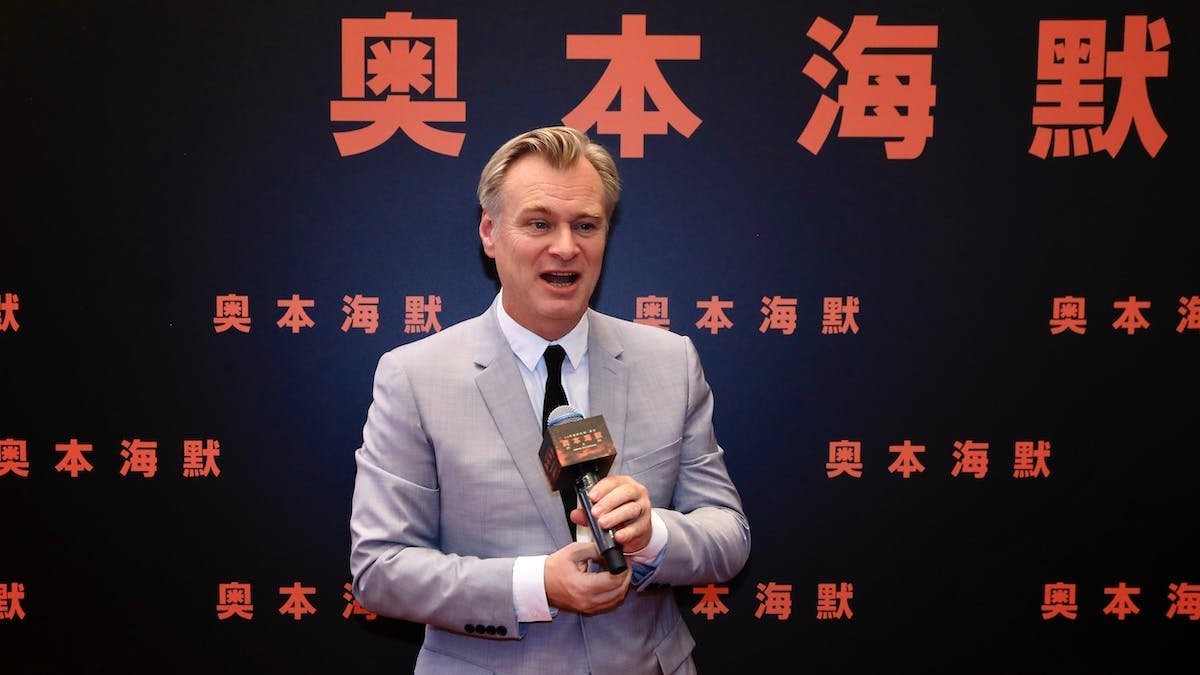
During the press tour for The Odyssey, Christopher Nolan’s itinerary included the usual late-night antics—Jimmy Fallon, cast members playing Cyclops-themed beer pong. But it was a quieter, more consequential stop in Beijing that has rippled through political and cultural circles: a nearly 20-minute interview with Zhong Shu, a political philosophy Ph.D. student, that quickly went viral in the West.
Zhong, an educated classicist, came prepared with pointed questions drawn from Western civilization’s own foundational texts. She invoked Thucydides and the fall of Athens to probe hubris. She asked whether the gods in Nolan’s film were mere projections of the human psyche. She challenged Nolan on whether he had intentionally ‘Christianized’ Homer—and, most sharply, she asked whether a story that once celebrated Odysseus as a cunning, noble king had been refitted into one that demands greatness repent.
‘We turn greatness into privileges and we demand apologies for it. That’s a fact of Hollywood,’ Zhong stated, before asking Nolan if he agreed. Nolan’s response was striking in its candor. He said that in a democratic age committed to equality, storytellers must manage the audience’s built-in resistance to greatness—and yes, they must apologize for it, or the audience rejects the story. He described the dynamic not with defensiveness, but with the matter-of-fact tone of an engineer explaining a load-bearing wall. This is simply how the mechanism works, he seemed to say.
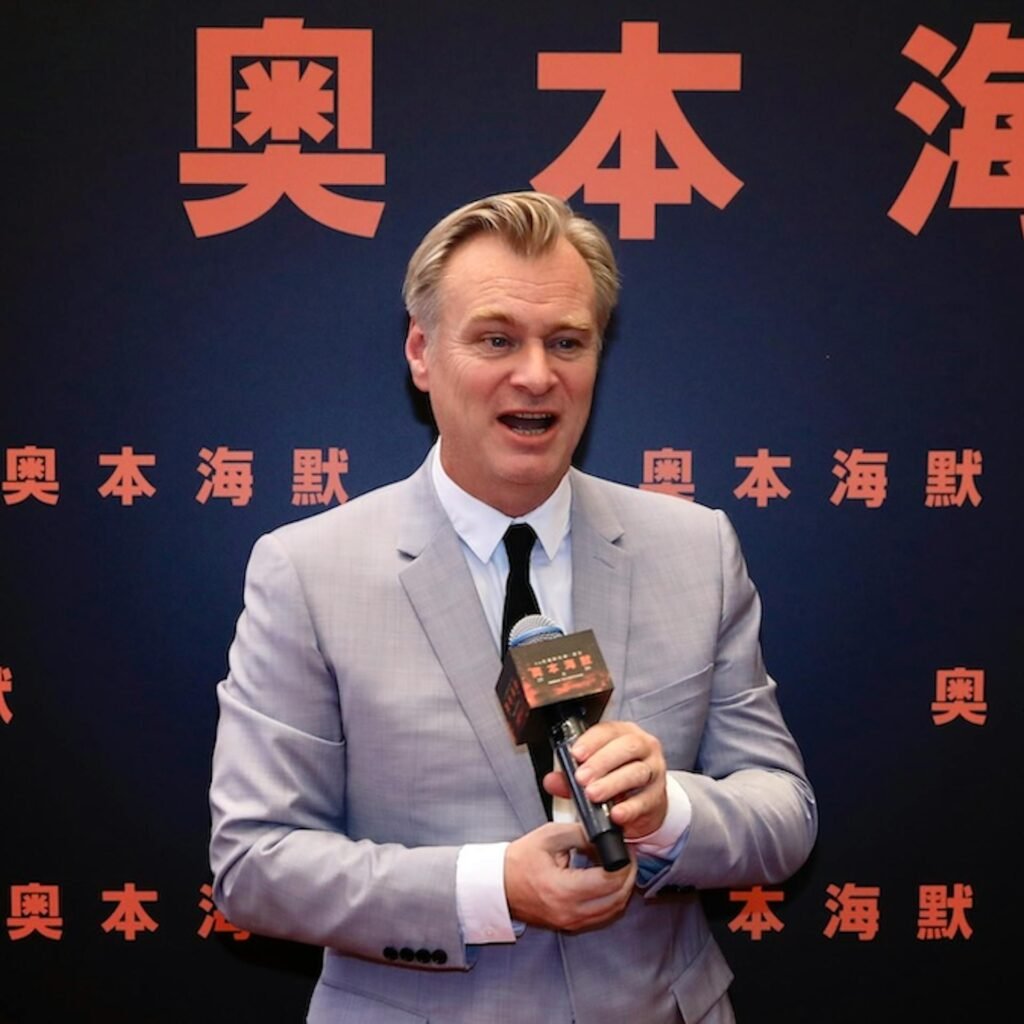
The exchange crystallized what some observers describe as a new ‘arms race’ between the U.S. and China—a narrative cold war in which each civilization is grappling with its relationship to the guiding stories of the past, and which culture’s values will shape the future.
A Quiet Chinese Courtship of Western Classics
The Beijing interview was not an isolated incident. For years, China has been quietly investing in the study of Western classics, even as American and European universities have increasingly focused on critiquing, subverting, and deconstructing those same texts.
In November 2024, Beijing hosted the first World Conference of Classics, drawing 600 participants and scholars. A congratulatory letter from Chinese President Xi Jinping was read aloud by the Communist Party’s propaganda chief, and a new Chinese School of Classical Studies was established in Athens. Peking University and Renmin University have also built classics programs over the past decade.

A key figure in this intellectual movement is political philosopher Liu Xiaofeng, who spent the 2000s importing ‘Great Books education’ into Chinese universities—at precisely the moment Western universities were de-emphasizing the canon. Three of his students now lead a classics division inside the Chinese Academy of Social Sciences. While there is no evidence of a direct relationship between Liu and Zhong, her approach and line of questioning were clearly influenced by his philosophy.
The Chinese government’s interest in Western classics is strategic. As early as the 1990s, Chinese political scientist Wang Huning concluded after a tour of American universities that ‘nihilism has become the American way, which is a fatal shock to cultural development and the American spirit.’
Chinese officials have reportedly concluded that the modern West abandoned its own inheritance by deconstructing its foundational myths and values—and that now is the time to build where the West has faltered. The government’s belief in the power of foundational stories is so strong that it has even banned time-travel stories from primetime television, out of fear that the notion that core myths could be critically reassessed might cause civilization to self-destruct.

Hollywood’s Confused Nostalgia
The Nolan interview also highlighted a broader cultural moment in the U.S. Hollywood has been in a state of confused nostalgia for years, churning out prequels, sequels, and reboots that alternately celebrate and deconstruct classic fairy tales and modern mythic heroes. Nolan’s decision to return to a 2,800-year-old epic suggests a desire to reconnect with something older—even as he acknowledged the need to apologize for its heroes.
That tension is not confined to the entertainment industry. A new alternative to the SAT and ACT has been gaining traction across America: the Classic Learning Test, developed by Jeremy Wayne Tate and a bipartisan network of educators and philosophers. The test emphasizes understanding of the ‘Great Books’ and foundational myths of the West. Defense Secretary Pete Hegseth has called it the new ‘gold standard’ of tests and is working to make it the norm at West Point.
The Stakes of the Story Arms Race
Both superpowers, it seems, have arrived at a shared admission: civilizations run on stories. Stories are the operating system of a society—they give a people not bound by blood a shared identity, shared values, shared customs, and a way to mark their days.
That lesson was learned during the 20th-century Cold War, which was not just a conflict between economic theories but a civilizational collision between different guiding stories about God, human nature, and the purpose of life. As some have half-jokingly wondered over the years, perhaps Rocky IV is what finally beat the Soviets.
Zhong’s probing of Christian notions of repentance was particularly sharp. Nolan, by his own admission, was not trying to convey the historic Christian emphasis that ‘whoever wants to become great among you must be your servant.’ Jesus was not claiming that greatness is inherently a byproduct of privilege requiring repentance, but that the shape of greatness should resemble self-sacrificial virtue. That, the article argues, is the central guiding story of Western civilization.
Whatever civilization rediscovers that truth first, the author concludes, will be the one that averts civilizational armageddon and stands the test of time.
Source: www.dailywire.com — https://www.dailywire.com/news/china-is-stealing-western-classics-while-hollywood-demands-they-apologize