
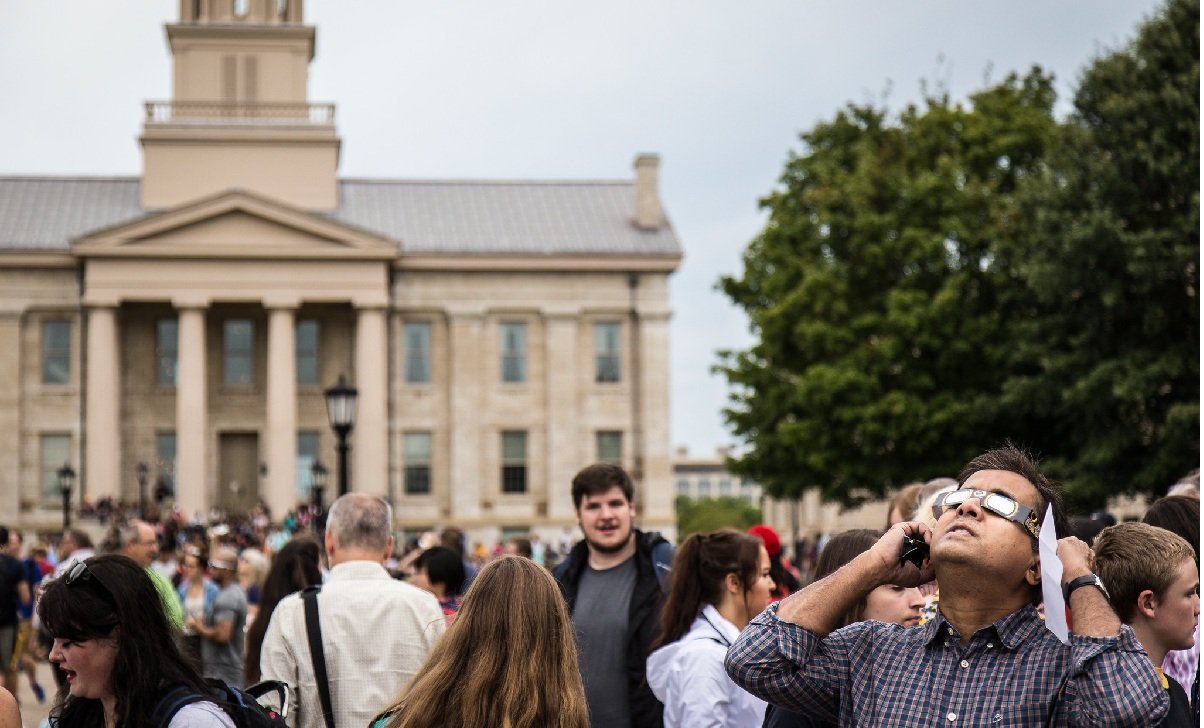
Iowa students seeking a degree from a public college or university will no longer be able to graduate without encountering the Bill of Rights, the Civil War, the Pilgrims and Puritans, or the Depression. This summer the state legislature passed — and Gov. Kim Reynolds signed — a law requiring undergraduates to complete one introductory course in U.S. history and one in American government, according to an account in The Federalist.
The measure is notable not just for what it mandates but for who will design the coursework. At the University of Iowa, the new Center for Intellectual Freedom will develop and run the courses, bypassing the history, political science, and related departments that would ordinarily house them.
A quiet lever of reform
General education — the sprawling set of requirements students satisfy before diving into their majors — rarely draws headlines. It looks like bureaucratic bookkeeping: credit hours, category codes, approved course lists. But The Federalist argues it is among the most effective levers available to conservatives seeking to reshape what students actually learn, because it governs the one part of the curriculum every graduate must pass through.
The traditional model dates to the era when universities began splitting into disciplines and majors. Before specialization took over, the first two years of college introduced a shared body of knowledge: a survey of Western Civilization, U.S. history from the Puritan settlement forward, freshman composition, a foreign language, and basic math and science. A degree meant exposure to the Renaissance, the Founding, and Newton’s laws whether or not a student ever took another course in those fields.
Iowa’s own institutions still describe general education in those terms. Iowa State says its gen ed courses are “designed to establish a strong, intellectual foundation for all specializations,” while the University of Iowa promises that its core requirements “provide students with a broad foundation of knowledge,” per The Federalist’s account. The implication, the outlet argues, is that boutique seminars and narrowly focused special-topics courses shouldn’t qualify — the approved list should be capacious in content and limited in number.
The approved-course lists tell a different story
In practice, the lists are enormous. At Iowa State, 379 courses fall under the Arts and Humanities category alone, according to The Federalist. Some fit the traditional mold, such as “History of Christianity: Early to Medieval” and “Survey of British Literature to 1800.” Others are decidedly narrower — “Racism in American Popular Media,” “Science Fiction,” and “Principles of Sports Media and Communication” among them.
The University of Iowa maintains 11 required areas. Its “Understanding Cultural Perspectives” category offers 70 courses; “Values and Society” offers 69. Bible, classical mythology, and American religion courses count toward the requirements — but so do “Brazilian Culture and Carnival” and “Black Television Culture.” The structure, critics say, lets each student assemble a bespoke curriculum heavy on niche courses with a political tilt.
The new Iowa law narrows that path. Courses centered on a single identity group or built around tendentious themes are disallowed, and students can no longer earn a degree without coursework covering foundational events and documents. Supporters frame it as preserving an American core: the traditions, actions, and expressions that make up the country’s history and political order, taught and tested rather than left to chance.

Indiana’s cost-cutting experiment
Indiana took a different route, and its results illustrate how general education can prop up programs that otherwise struggle to attract students. Last year, state officials moved to consolidate or eliminate departments and programs producing fewer than 15 bachelor’s degree recipients annually, presenting the change as a cost-efficiency measure.
The regulation shifts how a department’s success is measured — from total enrollment in its courses to the number of students who choose it as a primary major. That distinction matters at a large public university like Indiana, which awards more than 8,000 bachelor’s degrees a year, according to The Federalist.
The Department of African American and African Diaspora Studies illustrates the gap. Its faculty page lists 11 professors, but U.S. Department of Education data show only four students graduated with an undergraduate degree in the field in 2024-25. The department stays afloat in part by offering 21 courses that satisfy general education requirements in Bloomington, including “Survey of Hip Hop” and “Contemporary Black Film.”
Students take one of those courses, check off a gen ed category, and move on — rarely proceeding to the major. Yet at year’s end, the department chair can point to overall enrollments as evidence of vitality. The Federalist contends that without the gen ed designation — which effectively channels students into the room — those enrollment figures would shrink considerably.
Survival by requirement
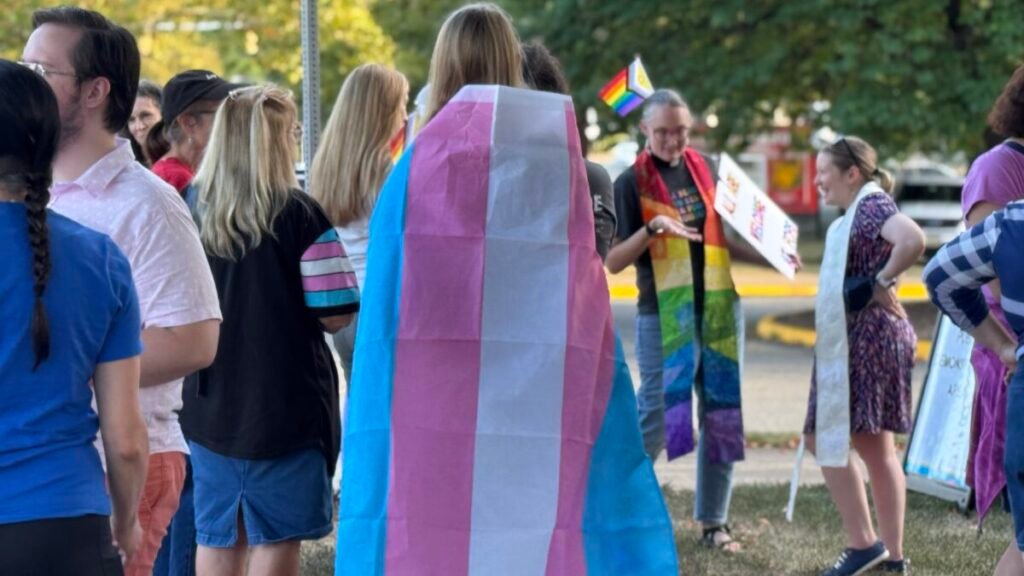
The same dynamic explains why some general education categories carry an explicit political charge, according to the outlet. Rutgers University’s diversity requirement asks students to “explain the processes or histories that create or fail to create just, productive, egalitarian and collaborative societies.” At UMass Amherst, the Social and Cultural Diversity strand promises that students “will gain knowledge of structural and cultural forces that shape or have shaped discrimination based on factors such as race, ethnicity, language, religion, class, ability, nationality, sexuality, or gender.” Studies departments supply those courses.
Such requirements are widespread, and The Federalist argues one of their functions is ensuring certain programs survive. A reform that strips the DEI framework out of general education and substitutes basic civics and history immediately changes the ideological character of the curriculum students encounter.
Shifting numbers, weakening pushback
Conservatives have spent years publishing books and exposés documenting bias in higher education. The Federalist concedes those efforts did little to slow the advance of political correctness. What’s happening in Iowa, Indiana, and a handful of other states, it argues, represents a different approach — working through legislation and accreditation rather than persuasion.
The Washington Post recently ran a story headlined “Why colleges are cutting back Black studies departments,” noting actions in Iowa, Indiana, Texas, and Kansas that closed African American studies programs or merged them into other departments. Protests against the cuts have been notably muted, perhaps, as the Post story noted, because the underlying numbers are so stark: over the past three years, only 700 of the hundreds of thousands of degrees awarded went to African American studies majors.
The Federalist’s conclusion is that students are voting with their feet — and that legislators, seeing the same figures, are acting accordingly. Whether that momentum survives the next round of elections is another question; the outlet acknowledges that many of these victories could be reversed with a change in political leadership.
Source: thefederalist.com — https://thefederalist.com/2026/09/14/how-red-states-are-replacing-woke-college-classes-with-real-education/