
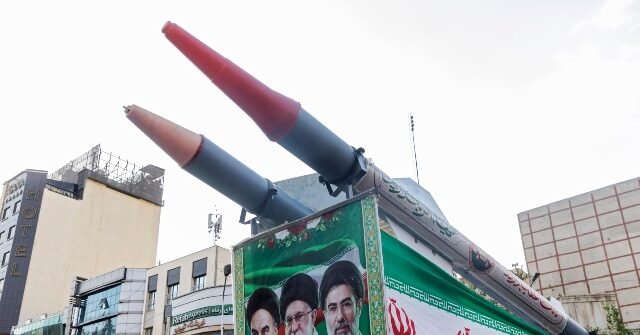
Iran’s supreme leader, who has been largely absent from public appearances in recent months, broke his silence on Monday with a holiday message that took aim at Iran’s Gulf neighbors. According to Breitbart, the remarks came on the occasion of the Prophet Mohammed’s birthday, a date often used for messages of unity and reconciliation across the Islamic world. Instead, the supreme leader used the platform to criticize Saudi Arabia and other Gulf Arab states, accusing them of divisiveness and aligning with foreign powers.
A Message of ‘Unity’ That Divided
The supreme leader’s statement, framed under the theme of “unity,” quickly drew attention for its pointed attacks on Gulf monarchies. While the leader has frequently called for Muslim solidarity against external enemies, this particular address singled out neighboring countries, suggesting their policies undermine Islamic cohesion. Breitbart reported that the message did not name specific leaders but referred broadly to Gulf states that have normalized ties with Israel and hosted foreign military bases, a persistent point of contention in Tehran’s rhetoric.
The choice of the Prophet’s birthday—a celebration of the founder of Islam—was seen by analysts as particularly significant. Instead of extending an olive branch, the supreme leader’s words appeared to deepen the rift between Iran and the Gulf Cooperation Council (GCC) states, which have long viewed Tehran’s influence in the region as destabilizing.
The ‘Missing’ Leader
Observers have noted the supreme leader’s unusually low profile in recent weeks, with no public appearances or state events on his official calendar. Some regional media have even dubbed him the “missing” supreme leader, speculating about his health or political struggles behind the scenes. This holiday message, delivered via official channels but without a live appearance, did little to quell those rumors.
Iranian state media did not broadcast any footage of the leader delivering the address, which is typical for written statements but unusual for major religious holidays, where he often appears before crowds. The lack of a public presence has fueled speculation in foreign press, though Tehran has denied any health concerns, insisting the leader is engaged in routine duties.
Regional Tensions at a Boil
The supreme leader’s remarks come at a time of heightened tension in the Middle East. Iran and Saudi Arabia have been locked in a bitter rivalry for years, backing opposing sides in conflicts from Syria to Yemen. The message also landed as Gulf states continue to deepen economic and security ties with the United States and Israel, moves Iran regards as a direct threat.
Breitbart’s report noted that the supreme leader’s words were likely aimed at discouraging further Arab-Israeli normalization, a process that has accelerated since the Abraham Accords in 2020. By framing Gulf governments as tools of Western and Israeli interests, Tehran hopes to rally domestic and regional support, but the strategy risks further isolating Iran diplomatically.
Reaction in the Gulf
Initial reactions from Gulf capitals were muted, with no immediate official response from Riyadh or other governments. However, commentators on Saudi-owned media were quick to condemn the address, accusing the Iranian leadership of hypocrisy for preaching unity while attacking fellow Muslims. “If Iran wanted unity, it would stop arming militias that destabilize our region,” one analyst told a Gulf news outlet, as cited by Breitbart.
The absence of direct diplomacy between Iran and Saudi Arabia—which resumed talks in 2023 but have made little progress—adds to the volatility. The supreme leader’s message appears to set back any quiet efforts at détente, signaling that Tehran is in no mood for compromise.
Domestic Implications
At home, the supreme leader’s holiday address served a dual purpose: projecting strength abroad while addressing domestic audiences facing economic hardship and protests. By shifting focus to external enemies, the leadership seeks to deflect criticism over inflation and unemployment, which have sparked sporadic demonstrations in recent months.
Yet the decision to use a religious celebration for political attacks may backfire among more conservative clerics, who have traditionally used such occasions to emphasize spiritual values. Some Iranian dissidents on social media, as reported by Breitbart, mocked the address, noting that a message of “unity” that alienates neighbors is contradictory.
The holiday message also coincided with internal debates over Iran’s nuclear program, which remains a sticking point with the international community. Hardliners within the regime have called for a more confrontational stance, while reformists push for renewed negotiations. The supreme leader’s bellicose tone suggests the hardliners currently hold sway.
International Reaction
There has been no official comment from the Biden administration or European capitals, but regional experts expect the speech to complicate any U.S. efforts to broker a broader detente in the Middle East. The United States has sought to reinforce its alliances in the Gulf while maintaining a policy of maximum pressure on Iran, a balancing act that Tehran’s latest rhetoric only makes harder.
Meanwhile, the fact that the supreme leader is still not appearing publicly will keep the rumor mill churning. Some analysts posit that the absence may be deliberate—a tactic to keep adversaries guessing. Others point to power struggles within the Iranian establishment, where succession discussions are reportedly underway. Without a clear successor, the ‘missing’ leader’s role in shaping policy remains as opaque as his physical whereabouts.
The Bottom Line
By choosing to mark the Prophet Mohammed’s birthday with attacks on Gulf neighbors, Iran’s supreme leader has used a moment of potential unity to reinforce divisions. Whether this is a sign of internal weakness or a calculated strategy, the immediate effect is a more polarized region. As the Islamic world celebrated a holiday honoring mercy and community, Tehran authored a message of confrontation—and did so without its leader appearing before the public.
That combination—bellicose words from an increasingly invisible figure—raises questions about Iran’s trajectory, both at home and abroad. For now, the “unity” Iran preaches appears to extend only to those who share its view of the world, with its closest neighbors squarely outside that circle.
Source: www.breitbart.com — https://www.breitbart.com/middle-east/2026/09/01/unity-irans-missing-supreme-leader-uses-mohammeds-birthday-to-trash-gulf-neighbors/