
In 2020, Brittney Gillian and four children—her sister, her daughter, and two nieces, ages six to seventeen—were forced to the asphalt of an Aurora, Colorado parking lot, handcuffed and pinned down by police. Their SUV had been misidentified as stolen based on an automated license plate reader alert that matched the plate but not the vehicle description. The state trooper drew his weapon. The subsequent civil rights settlement paid the family $1.9 million, but the officers faced no charges. That incident, as reported by American Thinker, highlights a growing concern: the proliferation of automated license plate readers (ALPRs) and their potential to enable warrantless surveillance.
ALPR systems are now a fixture of American roads. As of early August, more than 128,900 devices are in operation across 49 states, and that number is climbing. The data they collect—plate numbers, timestamps, locations—is shared with thousands of police departments and agencies nationwide. Citizens, however, have no knowledge of or control over how this information is used. Since warrants are not required for ALPR tracking, most courts have ruled that “mere observation” does not trigger Fourth Amendment protections. But legal experts and rights groups argue that prolonged surveillance could rise to the level of an unreasonable search.
Abuse Is Widespread
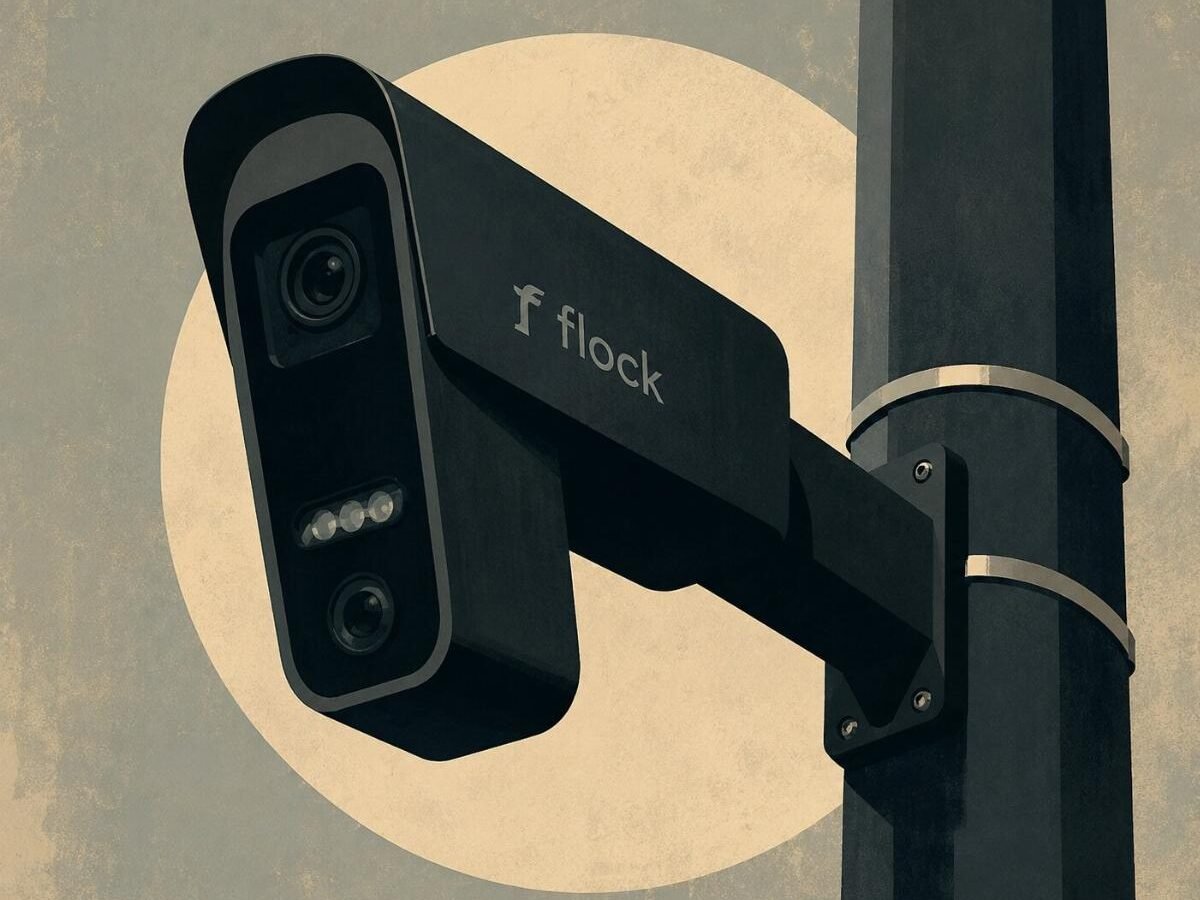
According to American Thinker, at least 50 officers across the country have faced charges for using ALPR data for personal reasons—including stalking romantic interests. These cases are not isolated. “With free access to ALPR data, police officers are predictably the biggest abusers,” the article states. The potential for misuse is compounded by the sheer scope of data collection. Flock Safety, a Georgia-based company, controls 80% of fixed-pole ALPR cameras. It also offers drones, gunshot detectors, mobile security trailers, and data integration software. That means Flock can track almost every citizen.
Corporate partnerships have only intensified the concern. Flock had planned to partner with dashcam maker Nexar to expand its network to 350,000 vehicles across Uber and Lyft fleets. The deal was abandoned after media exposure, but similar efforts continue. BusPatrol, which uses AI to identify bus-safety violations, has installed cameras on thousands of school buses and plans to share access with law enforcement. Companies are lobbying for laws that would legitimize these surveillance networks.
Accuracy and Error
Accuracy remains a major issue. Flock Safety claims a 93% accuracy rate, but an independent police study found a 37% error rate. For innocents, the consequences can be traumatic—as with Gillian and her family—or worse: being pulled into investigations or even erroneous convictions. Police departments, concerned about liability, are mindful of the risk. But the public lacks transparency about how the systems are actually performing.
Beyond Traffic Enforcement
ALPRs are often justified as necessary for catching stolen vehicles or responding to Amber alerts. Yet police have used them for far broader purposes. In Georgia, ALPR data helped a school board determine whether students’ families lived in the district. Elsewhere, officers have used the data to investigate loud-music complaints and even to run background checks on job applicants. These uses fall into grey areas that lawmakers have yet to address.
The technology itself is not new—ALPRs were invented in Britain in 1976—but recent advances in AI and machine learning have amplified their power. Video streams can be analyzed frame-by-frame at high speed. Beyond plate numbers, systems can identify the make, model, color, and other details of millions of cars, integrating them into a detailed picture of a person’s life. Like cellphone location logs, they provide an unsettlingly accurate record of movement.
Resistance Is Growing
Efforts to rein in ALPR use are gaining momentum. The Washington Examiner reported that 54 cities have canceled Flock contracts, and the open-source project DeFlock puts the number at 100. Rights groups are filing lawsuits, lobbying against permissive bills, and demanding a legal framework to govern ALPR data. They argue that no surveillance should be allowed without proper checks and balances.
Law enforcement and intelligence agencies are not backing down. Documents obtained by investigative reporter Dan Boguslaw and 404 Media show that agencies are aware of planned protests around ALPR cameras and have asked police to increase security. Last year, Flock CEO Garett Langley called DeFlock a “terroristic organization”—an apology followed, but security agencies still view the group as similar to vigilantes who vandalize cameras. DeFlock maintains its mission is purely to raise awareness.
Legislation Stalls
Two federal bills have been introduced to address the issue. The PRIVACY Act, sponsored by Congressman Keith Self (R-TX), would require federal agencies to obtain warrants before accessing data collection systems. The Protection Against Mass Surveillance Act, from Rep. Tim Burchett (R-TN), would ban federal purchases and funding of ALPR cameras. “Americans’ Fourth Amendment right to be secure in their privacy does not disappear because of new technology or AI,” Self told American Thinker. “They have a constitutional right to be secure in their persons, houses, papers, and effects, and our government is supposed to get a warrant before invading that privacy.”
Many states are pursuing their own regulations, but a patchwork of local rules may not be enough. Privacy advocates argue that the time for federal action is now. As the backlash grows, the question is whether surveillance technology can be used without trampling the rights it is meant to protect.
Source: www.americanthinker.com — https://www.americanthinker.com/articles/2026/08/what-the-flock-how-one-company-and-its-alprs-enable-warrantless-surveillance/