
Abby Johnson, the anti-abortion activist and former Planned Parenthood director, is pointing to the public response to Lindsay Clancy — the Massachusetts mother accused of killing her three children — as a mirror into the abortion debate. In an op-ed published by The Daily Wire, Johnson, who now leads ProLove Ministries, argues that the outpouring of sympathy for Clancy reveals how American culture has grown accustomed to placing a mother’s suffering above the humanity of her child, in ways that echo the logic of abortion rights.
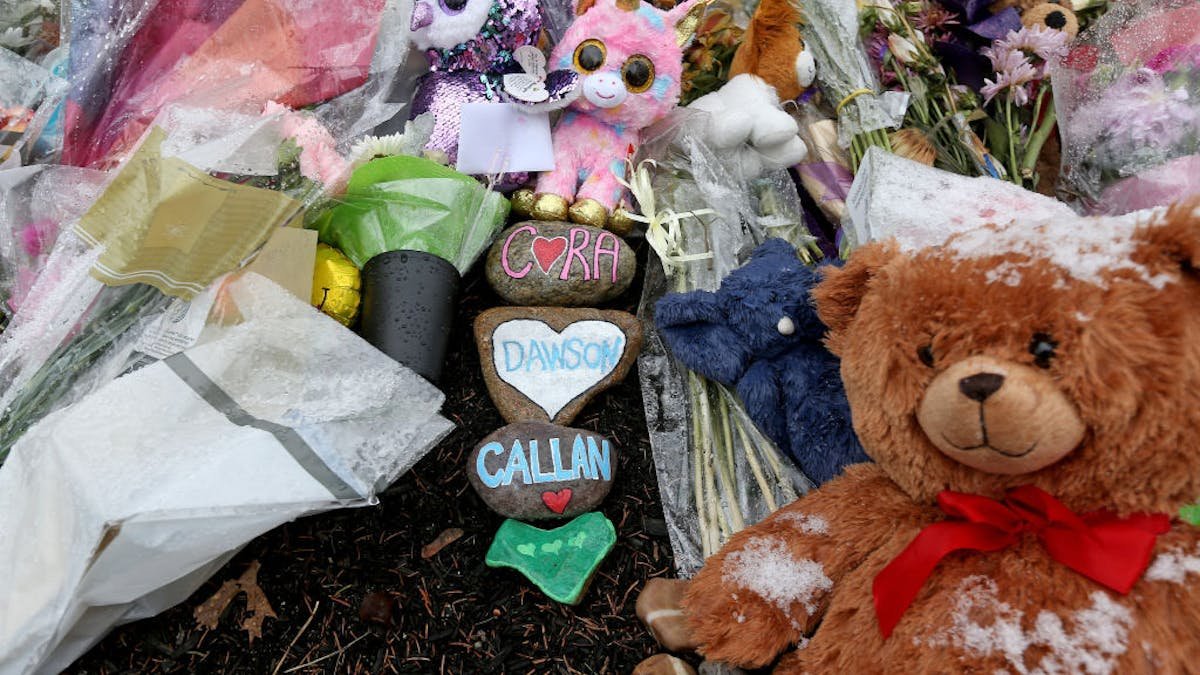
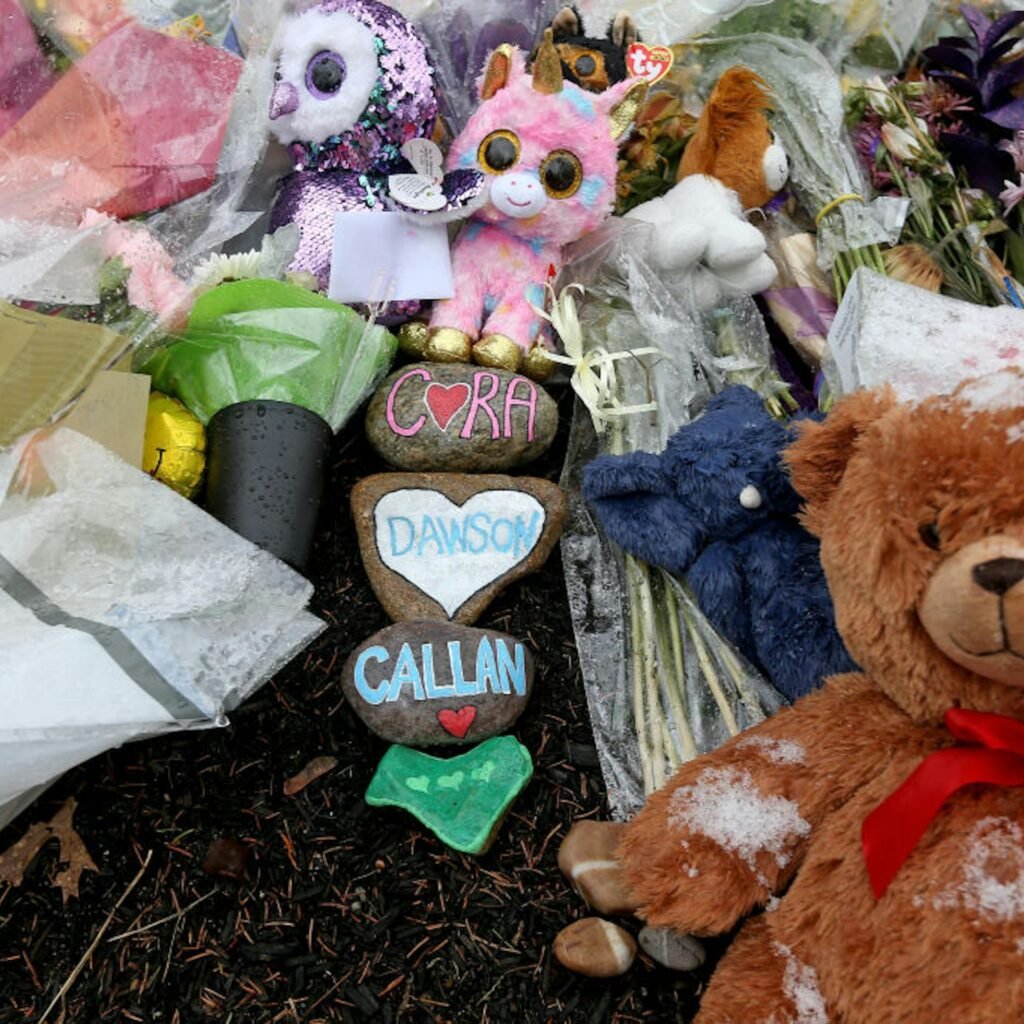
Clancy, 34, is charged with murder in the deaths of her three children — Cora, 5, Dawson, 3, and Callan, 8 months — who were found unresponsive in their Duxbury home on January 24, 2023. She has pleaded not guilty by reason of insanity, with her defense arguing that postpartum psychosis and other severe mental illness left her unable to distinguish right from wrong. Prosecutors have contested that claim, and the case is currently being litigated in a Massachusetts courtroom.
It is not the legal question that Johnson says she is fixated on — she admits she doesn’t have the expertise to judge Clancy’s criminal responsibility. Rather, it’s the “enormous movement of sympathy” that has grown up around Clancy that she finds troubling.
Supporters have gathered outside the courthouse in pink, organized rallies, and flooded social media with defenses of Clancy, often pointing to failures in maternal mental-health care. A fundraiser for Clancy’s parents — who have reportedly spent significant resources supporting their daughter’s defense — has raised hundreds of thousands of dollars.
Johnson, who has said she herself experienced postpartum psychosis after the birth of her daughter, is careful not to minimize the reality of maternal mental illness. “I know that it is real,” she writes. “I know that a woman’s mind can become frighteningly unlike her own after childbirth.” She stresses that women in crisis need real care, not shame.
But Johnson says the cultural response to Clancy has conflated two separate questions: whether Clancy was responsible for her actions, and whether killing her children was objectively wrong. “Mental illness may affect a person’s culpability for an act. It does not change the moral nature of the act itself,” she argues.
What bothers Johnson is that in much of the public conversation, the children appear to have become “almost peripheral.” The rallies, the pink shirts, the viral posts — all centered on Lindsay. The questions being asked are about her mental state, her medication, her doctors, her support system, her sleep. “But I keep wondering,” Johnson asks, “What about the children?”
She says the reflex is not an accident. “American culture has spent more than 50 years precisely developing this moral reflex,” Johnson writes, drawing a direct through-line to the abortion debate.

“When a woman is pregnant and frightened, we are taught to begin with her circumstances,” Johnson explains, listing the typical inquiries: Is she financially stable? Does she have support? Is another child going to derail her education? “And somewhere along the way,” she argues, “the circumstances of the mother become so enormous that the humanity of the child nearly disappears.”
What began as an acknowledgment that a mother’s suffering deserves compassion, she says, has evolved into a willingness to say that suffering can justify the intentional killing of a child. Johnson is explicit that she isn’t calling for an end to compassion for Clancy or any other woman. “Mercy is not something we reserve for people whose sins are socially acceptable,” she writes.
But she draws a sharp line: “Compassion should change how we respond to the woman. It should not change how we describe what happened to the child.”
That principle, Johnson argues, extends well beyond Clancy’s case. She describes a hypothetical woman seeking an abortion who is terrified, abandoned, broke, or devastated by a prenatal diagnosis. “Every one of those circumstances should move us toward her,” Johnson writes. “Feed her. House her. Sit beside her. Pay her bills. Help her find medical care. Hold her while she cries. Help her raise her child if necessary.”

But she adds: “Her suffering should dictate the depth of our response to her. It cannot dictate the value of her child.”
Johnson suggests that the same cultural impulse that leads people to defend abortion access — centering the mother’s crisis — is at play in the public identification with Clancy. “Women hear about a mother who was struggling, frightened, mentally unwell and overwhelmed, and something in us immediately moves toward her suffering,” she writes. “But we have been culturally conditioned to take another step.”
That extra step, she says, is allowing the mother’s suffering to become “the center of the moral universe” until the child becomes “almost invisible.”
Johnson ends with a plea to remember Cora, Dawson, and Callan — children who went to bed on January 24, 2023, in the home where they should have been safest, and who will never grow up. “Whatever happens to Lindsay Clancy now,” she writes, “there will be doctors, attorneys, advocates, family members, and strangers fighting over what should happen to her next.”
The question Johnson leaves with readers is whether the culture can hold two ideas at once: that Clancy may have been deeply mentally ill and deserving of care — and that the deaths of her children were an irreversible wrong. “For more than 50 years,” she writes, “we have been told that compassion requires us to understand why a woman might kill her child. Maybe it is time to remember that compassion also requires us to mourn the child who was killed.”
Source: www.dailywire.com — https://www.dailywire.com/news/what-the-support-for-lindsay-clancy-reveals-about-the-abortion-debate