
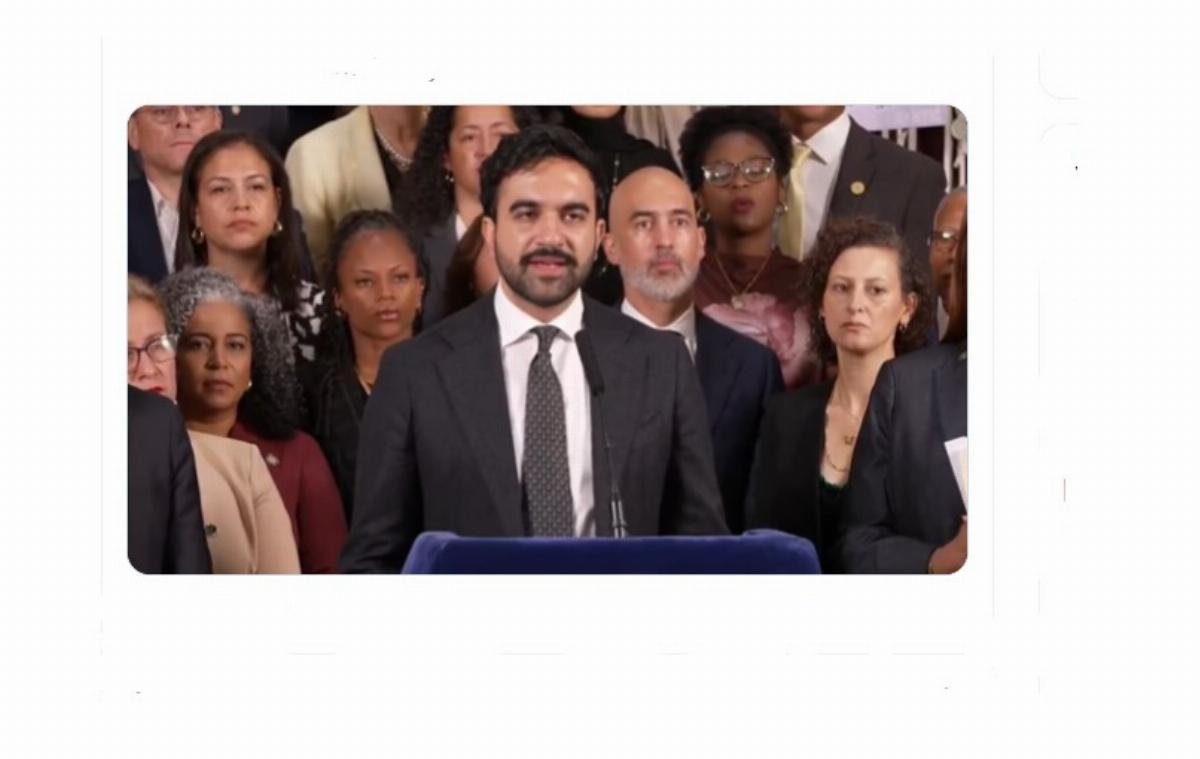
New York Mayor Zohran Mamdani is suing the Trump administration over its new public charge rule, joining five other sanctuary jurisdictions in a legal challenge that pits the city against federal efforts to deny green cards to immigrants who rely on government-funded assistance. The rule, as reported by American Thinker’s Monica Showalter, would allow officials to reject applicants who use programs such as Medicaid, public housing assistance, and the Supplemental Nutrition Assistance Program, known as SNAP.
The lawsuit, filed Monday, was announced by Mamdani, who characterized the rule as “an assault on immigrant families.” Chicago, San Francisco, Santa Clara County, Seattle, King County in Washington, and the Public Rights Project are also plaintiffs in the action led by New York City. A separate case has been brought by a group of state attorneys general, led by New York’s Letitia James, a political ally of the mayor.
Writing for the American Thinker, Showalter frames the showdown not as a debate over immigration policy but as a question of incentives—who pays into the system and who draws from it. She points to a contradiction she sees in Mamdani’s own rhetoric. In one speech, she notes, the mayor praised immigrants as net contributors who “drive our buses and our trains, teach our children how to read, and tend to us when we are sick,” adding that they “fought for the 8-hour workday for fair pay and workplace protections.” Yet in the same address, she writes, he also touted their standing as recipients of government aid they are “entitled to.”
The Old Rules and the New Fight
At the heart of the dispute is a principle that, according to Showalter, dates back to 1882: those likely to become a public charge have long been excluded from admission. She argues that the Ellis Island screening standards—documented, she says, in the Ellis Island National Museum of Immigration—reflected exactly this concern, and that the restriction was only set aside during the Biden years, when, in her telling, an open-borders posture took hold.
City officials counter that the new federal public charge rule lacks clear definitions and guardrails, leaving immigrants uncertain about which benefits could jeopardize their status. Mamdani warned of a broad chilling effect that would extend beyond the families the federal government is targeting. “The new public charge rule seeks to push immigrant families away from the programs that have kept people fed and healthy for decades,” he said. “New Yorkers will be afraid to see a doctor or ask for help they are legally entitled to. That fear will not stop at the families that the federal government is targeting. Families who remain fully eligible for benefits will feel a chilling effect, and all New Yorkers will pay for it.”
Supporters of the rule see the matter differently. A green card, they note, is a direct path to citizenship, and cutting off foreign nationals who use government services from that path is, in their view, a straightforward application of long-standing law rather than a novel restriction.
A Question of Who Pays and Who Draws
Showalter’s critique goes further than the mechanics of the rule. She contends that Mamdani’s defense of immigrant access to benefits conflates two very different waves of migration—the Southern and Eastern European arrivals of the late 19th and early 20th centuries, whom she describes as screened and largely self-sufficient, and the more recent arrivals she says came during the Obama and Biden administrations and who, in her characterization, arrived with a greater likelihood of needing public assistance.
She also argues that city governments have their own incentive to grow migrant populations, since federal and state funding tends to rise alongside migrant counts. That money, she writes, is used not only for aid but also to employ more city and state bureaucrats to administer the programs—an arrangement she says expands the welfare class and the apparatus that serves it.
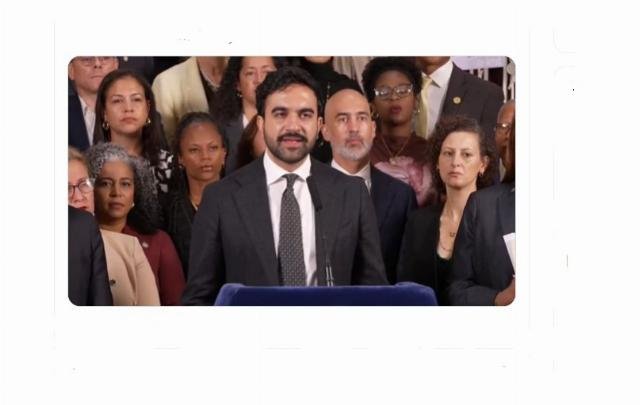
The result, in her view, is a system that loads “wagon riders” onto the backs of “wagon pullers,” a dynamic she calls cynical, unsustainable, and outrageous. She describes the lawsuit and the broader fight as a grab for more of productive American citizens’ resources, dressed up in the emotionally charged language of “people will die!”
And she casts the ultimate motive in political terms: producing dependent Democrat voters. “Cutting off foreigners who use the government services from green cards is cutting off the whole end purpose of importing a foreign underclass, which is to produce dependent Democrat voters,” she writes. In her reading, the mayor’s legal offensive is less about benefits than about expanding his own voting base and entrenching his power.
Where the Case Goes From Here
The legal challenge now joins a growing set of confrontations between sanctuary jurisdictions and the federal government over immigration enforcement and benefits. The administration’s rule would tighten the criteria for what counts as a public charge, giving officials broader latitude to deny green cards and visas to applicants deemed likely to rely on government aid.
For Mamdani and the other plaintiffs, the argument is that the rule’s undefined terms and missing safeguards will deter even eligible families from seeking help, with consequences that ripple across the city’s health and social services. For the rule’s defenders, the measure simply restores a screening standard that existed for more than a century and that, in their view, was abandoned only recently.
Showalter closes by urging readers to support the outlet’s work, warning that “now more than ever, the ability to speak our minds is crucial to the republic we cherish.” Whether courts side with New York City or the White House, the case is likely to become a defining test of how far a municipality can go in resisting federal immigration policy—and of whose account of who pays, and who draws, ultimately prevails.
Source: www.americanthinker.com — https://www.americanthinker.com/blog/2026/09/mamdani-sues-trump-for-ending-his-right-to-import-a-dependent-foreign-underclass/