
Conservative commentator Matt Walsh has built a following picking apart what schools teach—and don’t teach—about American history. His latest YouTube installment, “What Schools Don’t Teach You About the Civil War,” is no exception. But according to J. Robert Smith, writing in American Thinker, Walsh’s take is less a corrective to progressive mythmaking than a familiar echo of the Lost Cause—the post-war narrative crafted by Confederate veterans to defend and ennoble their cause.
Smith, a Southerner of a certain age, notes that Walsh’s interpretation would have felt right at home in the public schools of the mid-20th-century South. “Walsh breaks little new ground,” he writes. The piece reads as a point-by-point dismantling of the video’s central claims.
The Lost Cause, Revisited
After the Confederacy’s defeat, Southern writers and politicians—many of them former Confederate officers—set out to ensure that Northern historians wouldn’t have the final word on the war’s origins. They crafted a competing narrative that recast the rebellion as a noble, principled struggle, personified by the gallant Robert E. Lee.
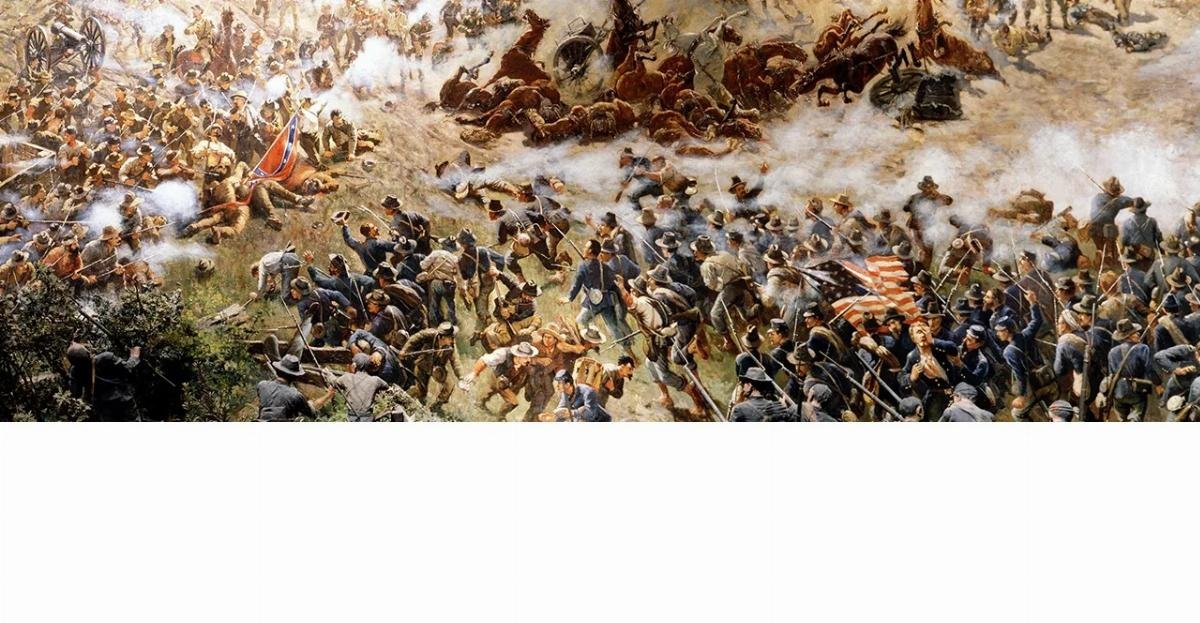
Walsh, Smith argues, leans heavily on that tradition. He highlights Lee’s brilliant victory at Chancellorsville but omits the abject failure at Gettysburg—where Lee ignored the pleas of his second-in-command, James Longstreet, and ordered Pickett’s Charge, a disastrous frontal assault that effectively ended Lee’s offensive capability. Nor, Smith notes, does Walsh grapple with Lee’s inability to outmaneuver Ulysses S. Grant, the Union general who relentlessly pressed the Confederacy’s shrinking resources.
Lincoln: Not the Culprit
Lost Cause apologists have long cast Lincoln as the aggressor, the man who could have avoided four years of bloodshed by simply acknowledging the South’s “right” to secede. Smith dismisses this as a misreading of history.
Lincoln, he points out, was explicit throughout his political career that slavery was constitutionally protected in the states where it existed. He opposed its expansion, not its immediate abolition, and he hoped it would wither over time—a prediction that mechanized agriculture might have borne out, though Jim Crow would likely have persisted well into the 20th century, as it did even after the war.
Southern firebrands of John C. Calhoun’s stripe, Smith writes, treated Lincoln’s election as a mortal threat to their economic and cultural way of life—and slavery was central to that way of life. Lincoln’s eloquent opposition to slavery in the Lincoln-Douglas debates and his Cooper Union address stoked Southern outrage, even if he never advocated for racial equality.
But if Lincoln was secretly plotting to end slavery, Smith asks, why did the border slave states of Delaware, Maryland, Kentucky, and Missouri remain loyal to the Union? Why did western Virginia break away to form a new state? Lincoln’s public position, Smith argues, was more than legalism—it was practical. He understood that pushing abolition would shatter the Union, and his paramount goal was preserving the nation.
The Grant Problem
Lost Cause lore often caricatures Grant as a drunkard and a butcher, a lucky general who won only because of superior numbers. Walsh doesn’t even mention him, Smith notes—a telling omission given that Grant was Lincoln’s indispensable partner in securing victory.
Smith points out that if Union generals were interchangeable, why did a parade of commanders—beginning with George McClellan—fail to exploit the North’s advantages for nearly three years? Grant, he argues, understood the strategic calculus of attrition better than most. He had a warrior’s instincts, like Lee, and had the roles been reversed, Lee likely would have commanded similarly.
Secession: A Contradiction in Terms
The deeper philosophical question, Smith argues, is whether secession is even compatible with the idea of a nation. Walsh, like many Lost Cause sympathizers, treats the Union as a voluntary compact that states could exit at will. But Smith counters that the Constitution was designed to form “a more perfect union”—states ceded their independence and specific powers to create a national government. The United States is not a club where members can check out when it suits them.
Walsh cites the Hartford Convention during the War of 1812 as evidence that secession wasn’t exclusively Southern. Smith allows that New England flirted with the idea, but he notes that the convention didn’t actually endorse secession. More telling, he adds, is the response of two Southern presidents to earlier challenges to national authority: George Washington dispatched federal troops to put down the Whiskey Rebellion in Pennsylvania, and Andrew Jackson threatened force during the Nullification Crisis in South Carolina. Both acts, Smith argues, affirmed the supremacy of the federal government.
When Is Rebellion Justified?
If the federal government becomes oppressive, Smith acknowledges, recourse exists—but it’s found in the Declaration of Independence, which justifies revolution only after “a long train of abuses and usurpations” evincing a design to reduce the people to “absolute Despotism.” Did the thirteen Confederate states meet that standard? Smith thinks not.
“Lost Cause champions often insist that the rebellion wasn’t primarily about protecting slavery. But it was,” he writes, quoting Lincoln’s second inaugural address: “It may seem strange that any men should dare to ask a just God’s assistance in wringing their bread from the sweat of other men’s faces.”
Smith closes by noting that the more perfect union has not worked perfectly—he concedes that power has crept toward the national government since the Progressive Era—but he insists that the remedy is not secession.
Walsh’s video, he concludes, is worth watching precisely because it’s an hour of polished, persuasive revisionism. But for Smith, it’s a history that leaves out too much—and gets the central question wrong.
Source: www.americanthinker.com — https://www.americanthinker.com/articles/2026/08/what-matt-walsh-gets-wrong-about-the-civil-war/