
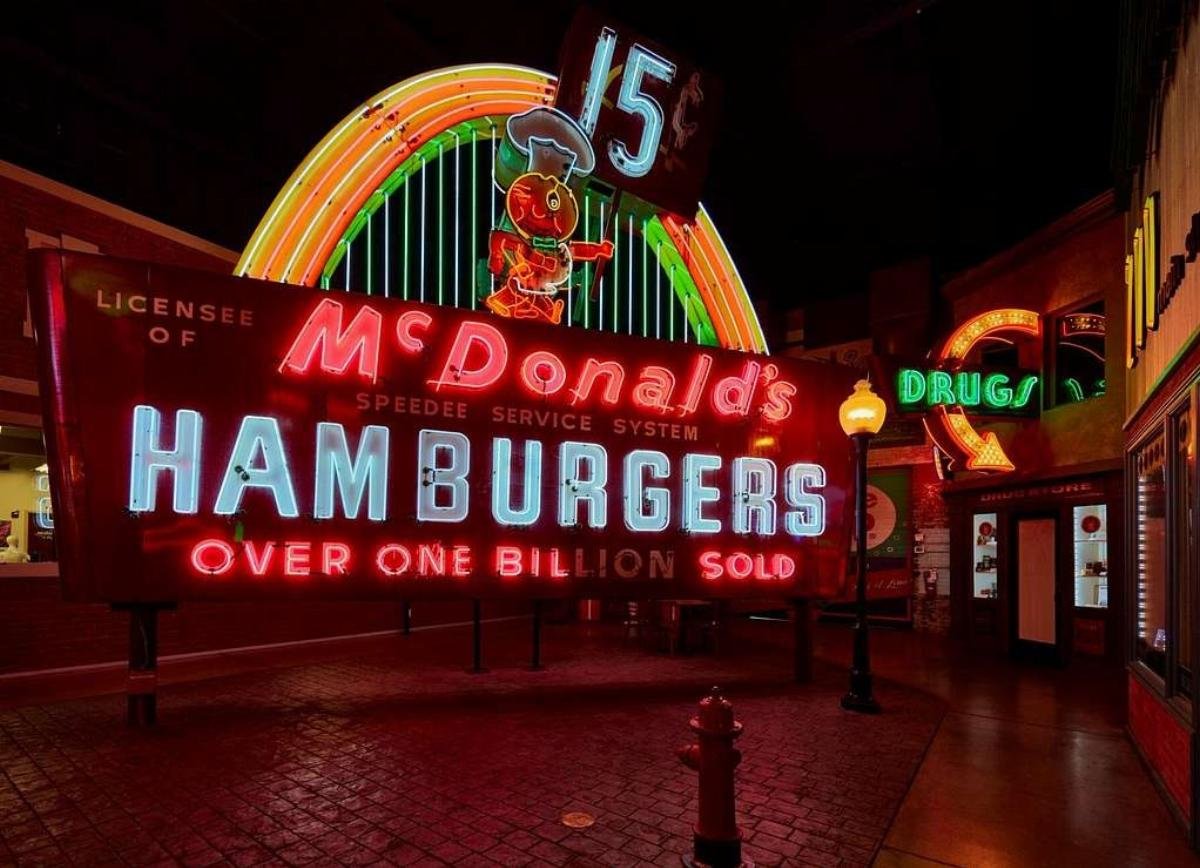
McDonald’s has announced a multi-year employee training initiative alongside plans to invest in franchisee equipment and technology upgrades, according to American Thinker, which framed the move as a vindication of the chain’s unpretentious place in American life — and, not incidentally, of President Donald Trump’s well-documented fondness for its food.
Writing for the outlet in late September, Noel S. Williams described the coming changes as a “robust, multi-year employee training program” paired with capital for franchisees’ kitchens and digital systems. The plan, per the piece, also includes a refreshed restaurant design, upgraded food and beverage offerings, a more consumer-focused operation, and what the outlet characterized as improved hospitality.
The centerpiece of that effort is a customer-service and quality campaign the company is calling “Make It Golden,” which Williams said emphasizes employee training, consistent quality, and superior service. There is no indication in the source material of specific dollar figures, timelines, or the number of restaurants and workers the program would touch.
An unapologetic defense of the drive-thru
What makes the American Thinker piece notable isn’t the corporate announcement itself — it’s the argument wrapped around it. Williams opens by rejecting any suggestion of food snobbery, describing himself as simply “grateful for America’s abundance” and content to choose “the tried (billions of times) and true” over what he calls dubious ethnic cuisine around the corner.
He is candid about the chain’s flaws. Orders come out wrong, in his telling, and often. He recounts a recent standoff at the drive-thru in which a discounted breakfast platter came with a mandatory coffee, despite his having already picked up Starbucks that morning. He told the server to keep the McCafé. The server insisted the coffee had to accompany the discounted meal. A couple of minutes of negotiation followed, cars stacked up behind him, and in the end the server won — leaving Williams with what he described as quite the caffeine surge later that day.
The anecdote is offered as a wry complaint but also as a setup for his larger point: that the people behind the counter, particularly the ones who show up at dawn day after day to open the restaurant, deserve to be thought of as essential workers. It’s a small line, but it’s doing real work in the piece — recasting a fast-food job as a form of civic infrastructure rather than a punchline.
From there the history gets a quick sweep. Generations of hardworking and hungry Americans, Williams notes, have patronized lunch counters, diners, soda fountains, and luncheonettes in search of tasty nutrition. Through all of it, McDonald’s has thrived since the 1940s. Billions served, indeed.
The Trump connection, and a swipe at Cracker Barrel
Williams doesn’t leave the political subtext buried. He draws a direct line from the chain’s blue-collar appeal to Trump, whom he calls “the great President of the commonsense people,” and suggests it’s no wonder the president enjoys McDonald’s unpretentious fare. The reassurance extended to Trump in the piece is that the food is about to get even better — and, in one of the piece’s more colorful asides, that one doesn’t have to drive a garbage truck to enjoy basic but wholesome American offerings.
The contrast Williams wants readers to see is with Cracker Barrel, which he accuses of exhibiting “exclusionary ageism” toward the friendly old farmer leaning on his trusty barrel — an apparent reference to the chain’s recent brand and logo changes, which drew backlash in some conservative quarters. His point is that a fast-food giant improving food quality and service is what focus looks like, while a company tinkering with its heritage imagery is what distraction looks like.
It is, in other words, a culture-war framing of a corporate operations announcement — the kind of move that has become routine as brands get sorted into political camps by their customers. Whether McDonald’s intended any of that is not something the source material addresses; the company’s stated emphasis is on training, consistency, and customer service.
What the piece is really arguing
Strip away the asides and the American Thinker argument comes down to three claims. First, that McDonald’s occupies a genuinely American cultural position — the Golden Arches as civic landmark, not just a logo. Second, that the chain’s workforce deserves more respect than it typically receives, with the early-morning openers cast as essential. Third, that the company’s decision to spend on people and equipment rather than on reinvention is evidence of good instincts that other brands would do well to copy.
That third claim carries an implicit critique of corporate branding culture — the idea that established American chains sometimes damage themselves by chasing reinvention instead of perfecting the basics. Williams doesn’t develop the argument much beyond the Cracker Barrel jab, but the comparison is the engine of the piece.
The piece closes on a broader note about free expression, with the outlet appending its standard appeal for reader donations to support its staff and keep its ideas, as it puts it, heard and its voice strong. That fundraising language sits outside the McDonald’s discussion proper, but it’s a reminder of the venue: this is an opinion outlet writing for an audience that reads a fast-food training program as a story about national identity.
For McDonald’s, the practical story remains the announced investment in training, technology, and restaurant design — details of which the company has yet to flesh out publicly in the source account. For everyone else, the piece is a useful snapshot of how quickly a routine business decision gets recruited into a larger argument about what America is and who gets to claim its institutions.
Source: www.americanthinker.com — https://www.americanthinker.com/blog/2026/09/no-wonder-donald-loves-mcdonalds/