

As the midterm elections approach, no race is drawing more national attention than Michigan’s Senate contest. Political observers say the outcome could serve as a forecast for the country’s future, with the two major party candidates presenting voters with starkly different visions.
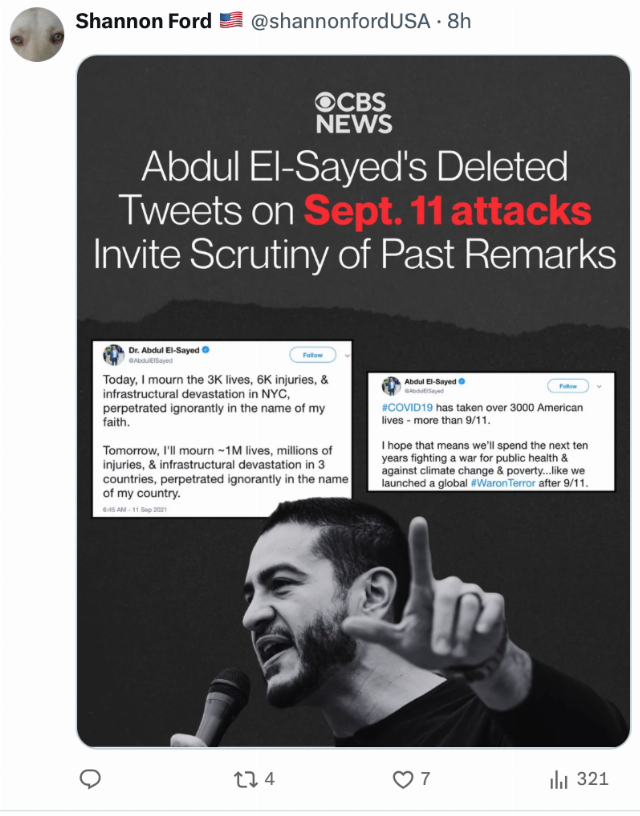
The Democratic nominee, Abdul El-Sayed, has become the center of controversy, particularly for his positions on Israel and his ties to progressive organizations. El-Sayed, who is Muslim, has repeatedly criticized the American Israel Public Affairs Committee (AIPAC), which is largely composed of American Jews, and has accused Israel of genocide in Gaza. His rhetoric has led many Jewish and non-Jewish observers to label him antisemitic, with some calling him the most extreme mainstream party candidate ever to run for the Senate.
El-Sayed has also voiced support for universal health care, a wealth tax—which some legal experts argue is unconstitutional—and the abolition of Immigration and Customs Enforcement (ICE). He has insisted he is not a Democratic Socialist, despite having headlined six events for the Democratic Socialists of America.
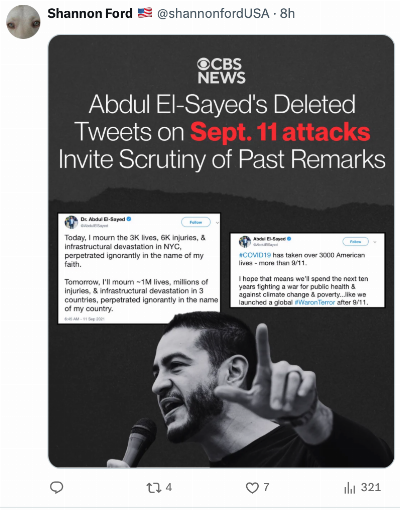
The controversy deepened when El-Sayed invited Twitch streamer Hasan Piker to his campaign events. Piker later faced backlash for making statements suggesting the U.S. deserved the 9/11 attacks, which he later walked back. When criticized, El-Sayed called Piker’s remarks “dumb” rather than condemning them outright, prompting Piker to distance himself from the campaign.
Despite these issues, El-Sayed’s campaign could energize Michigan’s significant Muslim population—estimated at a quarter-million—as well as its Jewish community of roughly 120,000. However, most Jewish voters and many non-Jews view his messaging as concerning, if not outright hostile to Jewish interests.
In contrast, Republican nominee Mike Rogers brings a long career of public service and private-sector experience. Born in Livingston County in 1963, Rogers graduated from Adrian College, served in the U.S. Army from 1985 to 1989, and then worked as an FBI special agent. He later served in the Michigan Senate and represented Michigan’s 8th Congressional District from 2001 to 2015. After leaving Congress, Rogers worked as a cybersecurity professional and business owner.
Rogers’ supporters point to his bipartisan appeal, noting that he is actively courting Democrats and independents who are uncomfortable with El-Sayed’s positions. He recently launched a “Democrats for Mike Rogers” coalition in Detroit.
Rabbi Asher Lopatin of Huntington Woods, who supports Rogers, said that despite disagreements many Democrats have with President Trump’s policies, “for the future, for the long term, it’s much better for Mike Rogers to win this election,” arguing that El-Sayed has “shown contempt for the Jewish community.”
The race highlights a larger national conversation about polarization and the direction of the country. Voters are weighing questions about which candidate is more likely to bring stability, which has a better chance of controlling government spending, and which has had to apologize for or walk back public statements.
With the president’s party historically losing seats in midterm elections and Democrats out-performing Republicans in recent voter turnout, Rogers faces an uphill battle. His support for Trump could also be a liability among some voters. Nevertheless, his supporters argue that his experience and measured approach position him as a steadier hand.
As Michigan goes, so may go the country—that’s what makes this race so consequential. The outcome will signal whether voters prefer a progressive agenda that challenges Israel and embraces expansive government programs or a conservative approach focused on fiscal restraint and traditional national security. The decision rests with Michigan voters, but its implications will be felt nationwide.
Source: www.americanthinker.com — https://www.americanthinker.com/blog/2026/09/a-warning-and-referendum-on-the-future-of-america/