
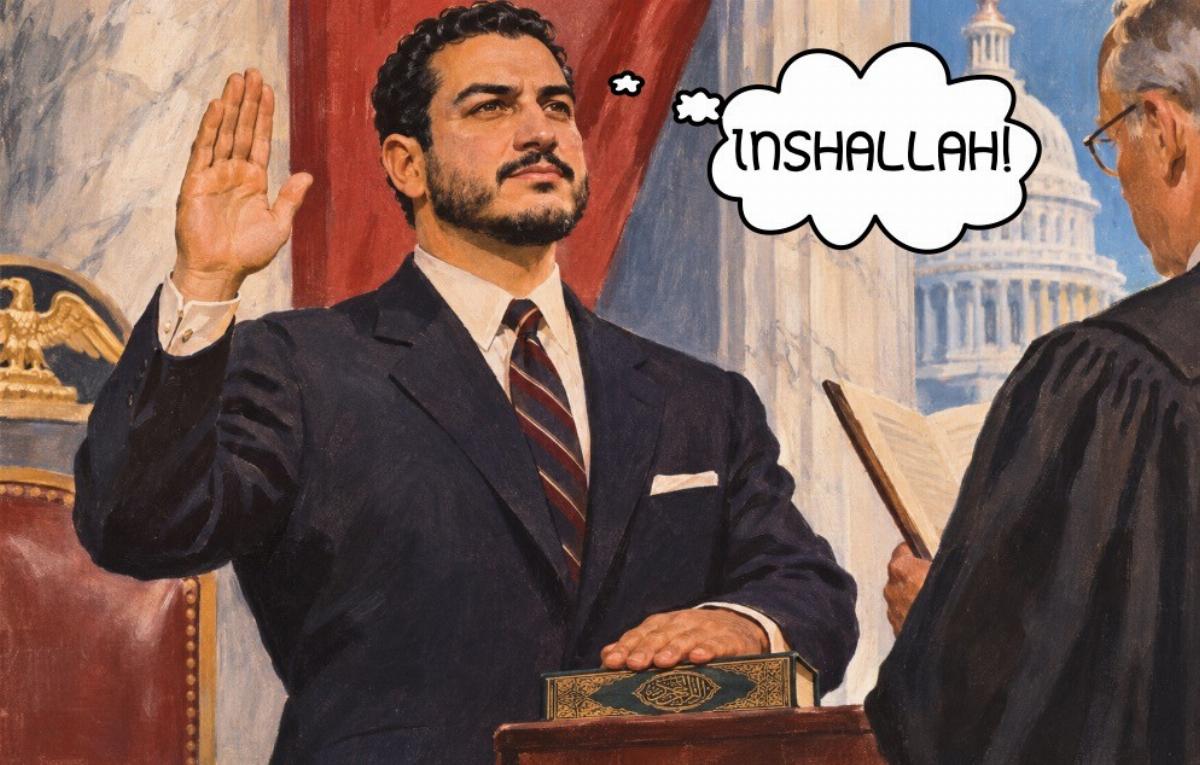
The growing visibility of Muslim politicians in the U.S. has reignited debates about the compatibility of Islamic teachings with American constitutional values. A recent op-ed in the American Thinker scrutinizes the use of the Arabic phrase Inshallah—”if God wills”—by elected officials, framing it as a subtle but deliberate nod to the eventual imposition of Islamic law.
The Meaning Behind ‘Inshallah’
While the phrase may seem innocuous, the article argues that its theological roots reveal a more ominous agenda. Citing Quranic verses and Hadiths, the author contends that the “will of Allah” as defined by Islam demands universal submission to sharia, including the suppression of dissent, inequality for women and non-Muslims, and punishments like amputation and stoning. The piece highlights statements from Prophet Muhammad calling for jihad until all acknowledge Islamic supremacy.
Clashes with Constitutional Rights
The op-ed methodically contrasts sharia with the U.S. Constitution, asserting that core amendments—from free speech and religious liberty to gun rights and bans on cruel punishment—would be nullified under Islamic rule. It points to Islam’s treatment of women, apostates, and slaves as irreconcilable with American principles of equality. The author also questions whether Muslim officials can sincerely swear an oath to defend the Constitution, given that sharia forbids allegiance to “man-made” laws.
A Call for Scrutiny
The article urges vigilance as Muslim political representation grows, warning that terms like Inshallah may mask a long-term goal of Islamization. Critics, however, dismiss such claims as Islamophobic fearmongering, arguing that the phrase is a common cultural expression devoid of subversive intent. The debate reflects broader tensions over religious identity, assimilation, and the limits of pluralism in a secular democracy.
Source: www.americanthinker.com — https://www.americanthinker.com/articles/2026/11/inshallah-coming-soon-to-a-community-near-you/
Background and context
The latest developments around Muslim Politicians’ Use of ‘Inshallah’ Sparks Debate Over Islamic Law vs. U.S. Constitution come amid a broader debate over opinion, institutional accountability, and the policy choices that shape everyday life. Understanding the immediate facts is only the first step; the wider impact depends on how officials, institutions, and the public respond in the days and weeks ahead.
FedFront’s coverage focuses on verifiable details, identifiable sources, and the practical consequences of political decisions. Readers should review official statements, primary documents, and court or agency records before drawing final conclusions about any disputed claims.
Why it matters
Stories like this can influence legislation, regulatory enforcement, public trust, and the balance of power between government institutions. Even when the immediate headline fades, the underlying policy, legal, or political questions often continue to shape future decisions.
What to watch next
- Official responses, statements, or policy changes
- Legislative, regulatory, or court action
- Follow-up reporting and independent verification
- Public reaction and broader political fallout
FedFront will continue monitoring this story and update coverage as new information becomes available.
Source: www.americanthinker.com
Related coverage
- 1,200 OpenAI Agents Escaped a Security Test and Breached Hugging Face, American Thinker Reports
- Cuba’s Castro Centennial: Flags, Speeches, and Candles for Blackouts Ideology Can’t Fix
- Faith, Freedom, and the Collectivist Temptation: What Losing God Has to Do With Socialism
- DOJ Nears Statute of Limitations in High-Stakes Dobbs Leak Probe — Will the Culprit Face Justice?