
The USS Abraham Lincoln, one of the U.S. Navy’s most formidable aircraft carriers, recently found itself in an embarrassing predicament: a jammed sewage system that left toilets unusable and crew members walking up to 1,000 feet to find a working restroom. While a plumbing issue on any ship might be dismissed as a routine mechanical failure, the incident has become a lightning rod in a larger political argument about the state of American military culture and the nation’s priorities in the face of foreign threats.
Writing in American Thinker, commentator Jim Davis argues that this breakdown is not merely a technical malfunction but a symptom of what he describes as a ‘cultural corrosion’ that has eroded naval discipline and readiness. According to Davis, decades of diversity and inclusion initiatives implemented under Democratic leadership have transformed the Navy from a war-fighting institution into a ‘test tube’ for social experiments, leaving the service distracted at a time when adversaries like Iran are focused on plotting against the United States and Israel.
A Symbol of Deeper Concerns
Davis points to the Lincoln’s Command Managed Equal Opportunity (CMEO) team, which investigates discrimination complaints, as evidence that diversity has become a core mission on America’s most visible warships. He also cites Navy-sponsored activities, including celebrations of LGBT Pride Month aboard vessels like the USS Harpers Ferry, and notes that former Chief of Naval Operations Adm. Mike Gilday acknowledged the service had previously limited opportunities based on ‘sexual orientation’ and ‘sexual identity.’
The piece asserts that the Navy’s diversity apparatus, including a POC/LGBT committee, made inclusion the ‘most salient part of Navy culture,’ projecting that message onto its most high-profile platforms. Davis contends that while recent conservative efforts—such as Secretary of Defense Pete Hegseth’s order to remove Harvey Milk’s name from a ship and the Pentagon’s purge of diversity-related web content—may dismantle parts of this apparatus, ‘it cannot erase the fingerprints.’
Critically, Davis links the sewer crisis to the presence of openly gay sailors on extended deployments. He suggests that queer crew members, constrained by limited privacy and disciplinary rules regarding relationships aboard ship, contribute to such breakdowns—a claim that he presents as more than coincidence, though he offers no direct evidence tying the mechanical failure to specific personnel or policies.
Iran and the ‘Inner War’
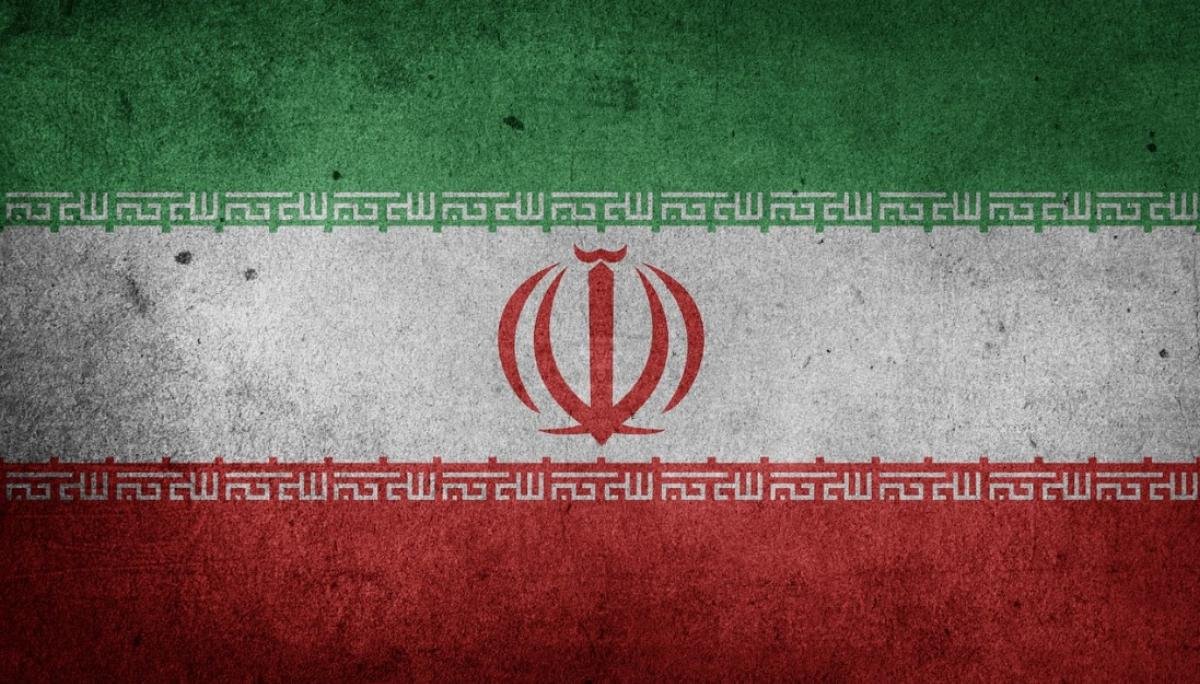
The broader thrust of Davis’s argument is that America’s internal focus on woke cultural issues has come at the expense of confronting external threats. He identifies Iran as the ‘axis’ around which U.S. Islamist adversaries revolve, pointing to Tehran’s support for proxies like Hamas and Hezbollah, its execution of homosexuals, and its chants of ‘Death to America.’ In his view, the mullahs do not debate pronouns or celebrate Pride Month; they are singularly focused on conquest and ideology.
Davis contrasts this with what he sees as a progressive left that demands the military normalize open homosexuality while simultaneously insisting on accommodating radical Islamism. He argues that this combination has produced a military focused inward on social experiments while an external enemy grows bolder. ‘Sharia is incompatible with Western civilization, our constitutional guarantees, and any American statesman’s oath of office,’ he writes.
The author dismisses the notion that Americans fear Islamic fundamentalists, asserting that once they are recognized as enemies, ‘we achieve peace through superior firepower.’ He reserves his criticism for what he calls the ‘lunatic left-wing fringe’—particularly its LGBT component—and ‘intellectual fanatics’ who he says seek to use Islam to open the gates of the West to authoritarianism. Drawing on the cartoon analogy of Pinky and the Brain, Davis describes these groups as ‘the Mass and the Cadre,’ a dynamic he claims is visible in any anti-ICE protest or university campus.
Immigration and Diversity
The piece pivots to immigration, arguing that progressive support for Muslim immigration and LGBT inclusion, combined with opposition to tough scrutiny of Islamist ideology, has been a hallmark of Democratic platforms and NGO advocacy since the Obama era. Davis contends that diversity comes at a ‘frightful cost,’ singling out figures like Zohran Mamdani and Abdul El Sayed as examples of diversity that will prove particularly costly.
He maintains that fundamentalist Islam cannot coexist peacefully and that it is ‘compelled by its own Koran and its own mullahs to conquer and take authoritarian control.’ The solution, in his view, is to bar such individuals from entering the United States. ‘To Islamists, we are the Great Satan, and Israel is the Little Satan,’ he writes. ‘The core of fundamentalist Islam is that America and Israel must be subdued.’
Davis concludes with a sharp rebuke of Democrats, suggesting they could ‘relocate to Beirut, convert to Islam, and send us postcards in Arabic’ if they wish to pursue policies of accommodation. The tone is unapologetically confrontational, framing the debate as a stark choice between national survival and ideological purity.
It’s worth noting that Davis’s claims about the Lincoln’s sewage crisis and its causes are not independently verified, and his causal link between diversity policies and mechanical failures is speculative. However, his piece reflects a broader conservative critique that has gained traction in recent years: that the military’s focus on social issues has undermined its core mission. Whether one agrees with that assessment or not, the intersection of readiness, culture, and foreign threats is a debate that shows no signs of abating—especially as the nation weighs how to respond to adversaries like Iran while managing internal divisions.
Source: www.americanthinker.com — https://www.americanthinker.com/blog/2026/08/the-outer-war-with-iran-and-the-inner-war-with-wokeness/