
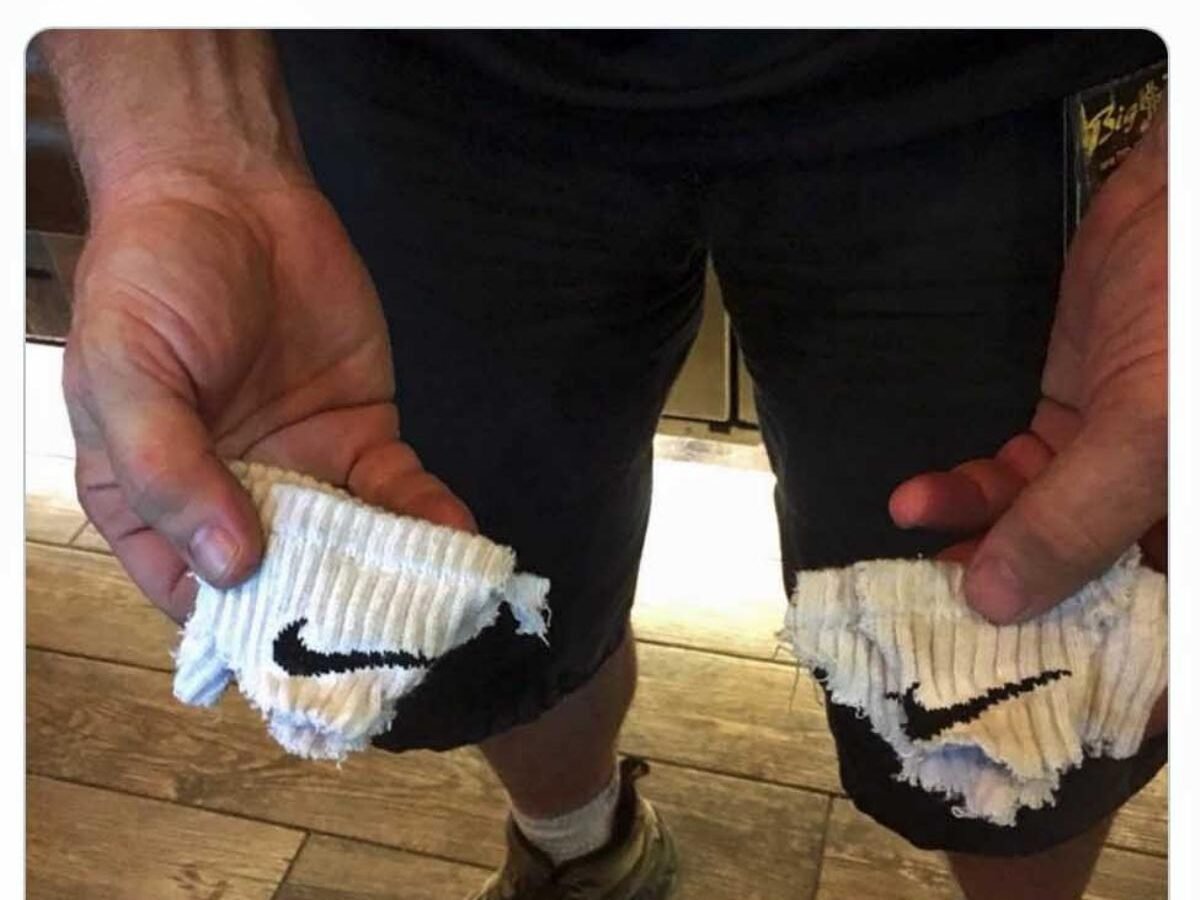
For decades, Nike was the gold standard in athletic footwear — the brand that solved a young runner’s shin splints and revolutionized sports performance. But according to a new commentary at American Thinker, the company’s pivot to woke virtue signaling may have cost it dearly, with its stock now down a staggering 78% from its 2021 all-time high.
The piece, written by Mike McDaniel, a self-described lifelong athlete and former track sprinter, paints a personal picture of what Nike once meant to consumers. He recalls his high school track days racing on cinder tracks measured in yards, suffering from relentless shin splints that coaches dismissed as malingering. It wasn’t until he bought his first pair of Nike Waffle Trainers that the pain mysteriously disappeared — and never returned.
“It was my shoes,” McDaniel writes, noting that his generation had little more than what he calls “Stone Age shoes” that did nothing to prevent orthopedic problems. Nike, he argues, genuinely enabled him to keep running most of his life. Until, in his words, the company became “too successful and arrogant, and went woke.”
The Woke Turn: From Kaepernick to Questionable Slogans
McDaniel’s critique centers on Nike’s embrace of controversial figures and messaging, most notably its $25 million-plus deal with Colin Kaepernick, the former NFL quarterback whose national anthem protests ignited a cultural firestorm. He draws a direct line between that decision and broader pushback from what he terms “Normal Americans.”
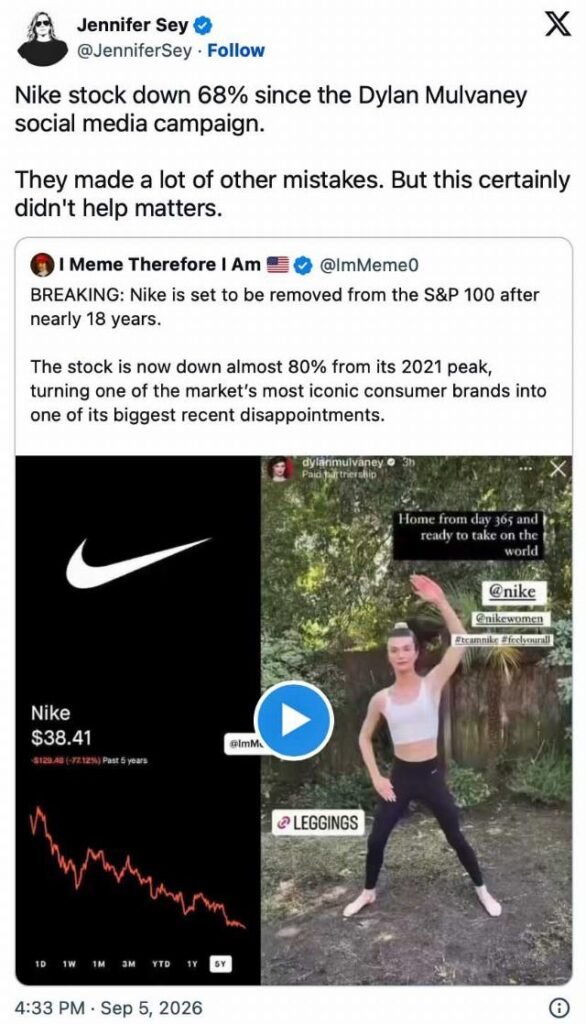
The author points to campaigns with names like “Nikewomen” and “Feelyourall” — messaging he describes as laughable and out of touch with mainstream consumers. He compares Nike’s trajectory to Budweiser’s infamous partnership with Dylan Mulvaney, a transgender influencer, which he argues so badly damaged the beer brand that its products became nearly impossible to give away for a time.
“Did Budweiser imagine Mulvaney would inspire trans to drink Bud?” McDaniel asks rhetorically. “If so, they grossly overestimated the number of trans, to say nothing of trans beer drinkers.”
The Budweiser episode, he notes, prompted a rapid corporate backpedal — “Hey, we never meant that” — but the damage was done and the brand hasn’t fully recovered. Nike, however, doubled down, latching onto every woke personality and cause available.
The Numbers Tell a Brutal Story
The financial picture McDaniel presents is grim. Circa September 2026, Nike’s stock is down 78% from its 2021 peak — the steepest drop in company history. Sales remain under pressure, and there’s no clear catalyst for a near-term rebound, according to the commentary. The company has also been removed from the S&P 100 index.
Fiscal 2026, which ended in May, saw sales fall 1% year over year. While that’s a modest decline for a company with approximately $46 billion in annual revenue, McDaniel argues it signals a company struggling to find its footing.
Yet there are some faint signs of stabilization. In Nike’s fourth quarter of fiscal 2026, cost of sales fell 16% year over year, which supported an improved gross margin of 49.2%, up from 40.3% in the same quarter a year earlier. That drove a 21% increase in gross profit despite the sales decline — a data point some analysts read as an early signal of turnaround potential.
But McDaniel remains skeptical. He notes that The Motley Fool’s Stock Advisor analyst team recently identified its 10 best stocks for investors — and Nike didn’t make the cut.
Has Nike Learned Its Lesson?
The core question McDaniel poses is whether for-profit companies have weaned themselves off what he calls “lunatic virtue signaling” in favor of making profits worthy of shareholders’ investments. His answer, though implicit, is not encouraging.
The author, a USAF veteran and retired police officer with a background in English teaching and fencing, draws a parallel to what he calls “Heinlein’s Crazy Years” — a reference that suggests a period of cultural upheaval and irrationality. He argues that this isn’t a trend to celebrate for an America “so deeply in debt and so riven by political schism.”
Still, he finds a sliver of consolation: “At least Dylan Mulvaney and Colin Kaepernick aren’t likely to be thrust into Americans’ faces quite so much anymore.”
Whether Nike’s decline is fully attributable to its woke marketing decisions or reflects broader market headwinds and competitive pressures is a matter for investors to debate. Notably, the source acknowledges that margins are stabilizing — a potential sign that the company’s cost-cutting and turnaround efforts are beginning to take hold, even as revenue growth remains elusive.
The commentary stops short of declaring Nike permanently damaged, instead framing its current state as a cautionary tale about corporate America’s flirtation with identity politics. The company that once solved a young runner’s shin splints and made athletics accessible to millions now finds itself in the historically unfamiliar position of being a cautionary example in corporate boardrooms.
For McDaniel, the lesson is clear: companies exist to serve their shareholders and customers, not to chase every cultural trend that crosses their path. And while Nike may eventually recover — the $46 billion revenue base and improving margins suggest it has the scale to do so — the damage to its brand reputation among mainstream consumers may be far more persistent than any quarterly earnings report can capture.
As McDaniel notes, the turnaround could present “a rare chance to buy the world’s leading footwear and sports apparel brand at a value price” — but only if profitability continues to firm up and sales eventually recover. That’s a big “if”, and one that will likely depend on whether Nike has truly absorbed the lesson of the past several years.
Source: www.americanthinker.com — https://www.americanthinker.com/blog/2026/09/has-nike-learned-its-woke-virtue-signaling-lesson/