
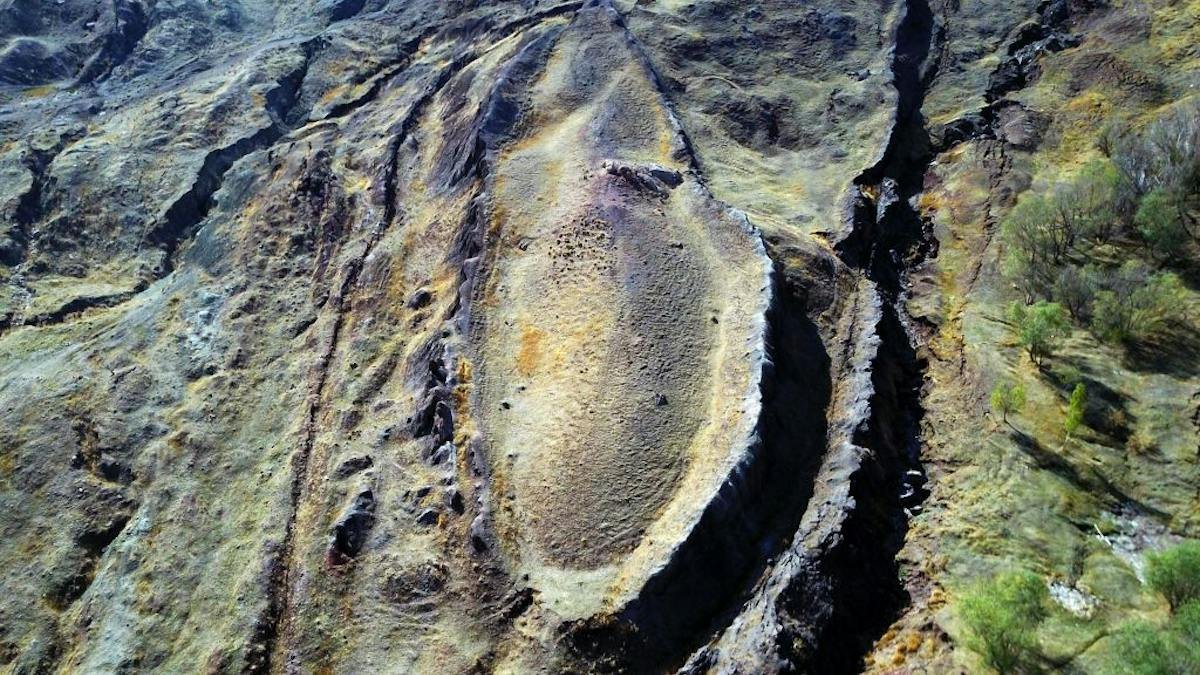
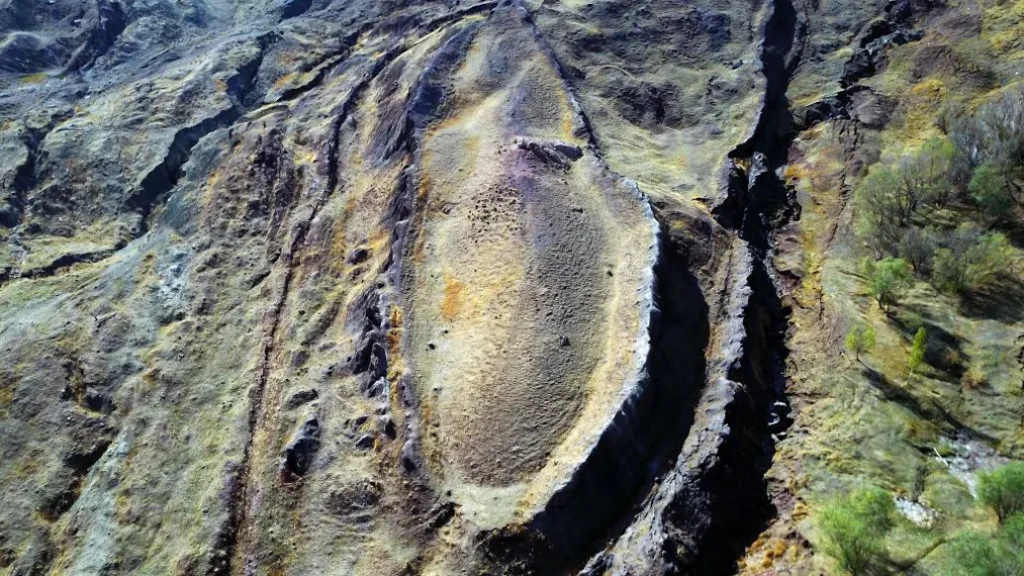
A team of researchers says it has found what it believes is man-made construction buried beneath a boat-shaped mound in eastern Turkey — and they are convinced the structure is Noah’s Ark.
The group, which calls itself Noah’s Ark Scans, announced that ground-penetrating radar and deep-core drilling at the Durupınar Formation, about 18 miles south of Mount Ararat, revealed patterns they say are inconsistent with a natural origin. The Daily Mail reported on the findings Wednesday, and the team’s claims have quickly reignited a debate that has simmered for more than seven decades.
Andrew Jones, the independent investigator who founded the project and has spent nearly 30 years searching for the vessel, acknowledged that radar readings are not infallible. Even so, he argued that the structural patterns his team detected offer what he called groundbreaking evidence of construction buried under layers of mud and sediment.
What the scans reportedly show
According to the team, the survey relied on high-powered radar technology adapted from research originally conducted for the U.S. Air Force. That equipment, they say, allowed them to peer deep into the ground beneath the site and identify large subterranean layers, sizable hollow cavities, and precise linear walls that appear to outline rooms, passageways, and a tunnel network stretching roughly 151 feet.
The most striking find, in the team’s telling, is a distinct band about 20 feet thick sitting some 16 feet below the surface and dividing neatly into three separate layers. For readers steeped in the Book of Genesis, that detail carries obvious resonance: the text describes God instructing Noah to build the ark with lower, second, and third decks.
Jones also pointed to the team’s drilling work, saying the rigs encountered no bedrock or solid limestone. That absence, he argued, undercuts the long-standing skeptical explanation that the mound is simply a natural rock formation shaped by ancient glaciers or mudslides.

Core samples pulled from the site have already brought up sediment that is now undergoing laboratory testing. Lauren Witzke, described as a project insider, said the upper layer of the underground structure has deteriorated over time while lower levels appear intact. She said the team believes it has drilled into a floor of ancient, petrified wood.
The team has also recovered ancient pottery from the surrounding soil that it says dates back to the Copper Age.
A site that has divided observers since 1948
The Durupınar Formation first drew public attention in 1948, when local legend holds that heavy rains and earthquakes exposed its outline to a shepherd. A little over a decade later, a Turkish Army captain spotted the boat shape in aerial reconnaissance photographs, kicking off a decades-long dispute between geologists and Biblical literalists.

Part of the formation’s enduring pull is its size. The site’s measurements line up closely with the dimensions given in Scripture, which describes a vessel roughly 300 cubits long — somewhere between 450 and 515 feet. That correspondence has long been a central plank of the case made by Ark seekers.
Independent scientists, though, have repeatedly characterized the mound as a natural geologic feature. The new claims from Noah’s Ark Scans have not yet been subjected to peer review, and the team has not published its full data set publicly.
Next step: digging
The team says it is moving beyond remote imaging. Plans are in motion for deep physical excavations aimed at recovering samples that can be radiocarbon-dated — a process that, if it proceeds, could provide the kind of material evidence that remote sensing alone cannot.
Whether that dig settles anything is another matter. The search for Noah’s Ark has attracted generations of explorers, and each new round of technology has produced confident claims that later failed to withstand scrutiny. Jones’s crew is betting that this time the instruments, and eventually the shovels, will tell a different story.
For now, the group’s assertions rest on radar returns, drill cores, and the striking three-layer band they say sits 16 feet down. Skeptics will want more than that. The team says it intends to go get it.
Source: www.dailywire.com — https://www.dailywire.com/news/researchers-make-astonishing-discovery-in-hunt-for-noahs-ark