
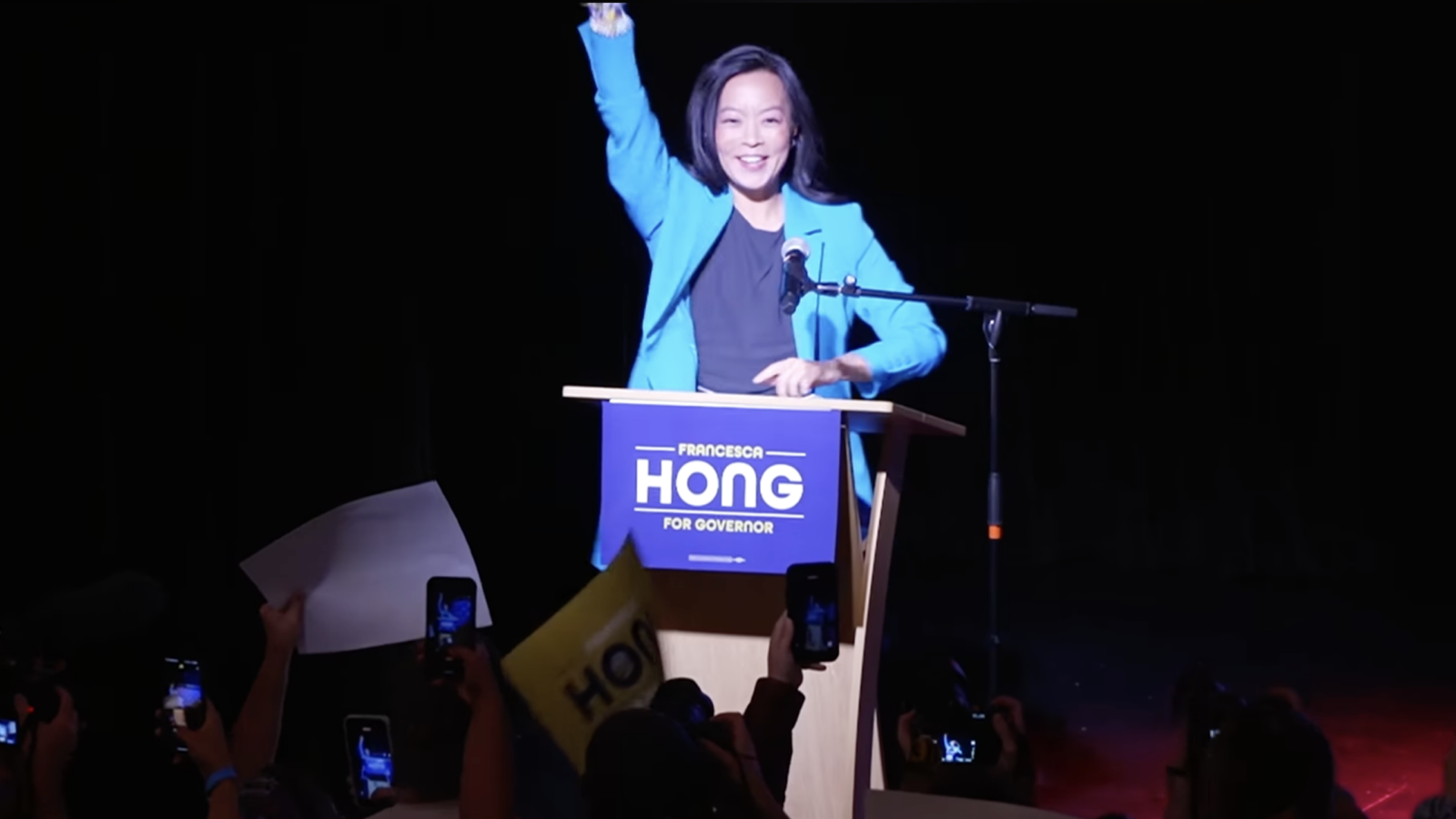
The polling firm that gave failed Wisconsin gubernatorial candidate Francesca Hong a 23-point lead over David Crowley has admitted the numbers were completely made up — part of what it calls a “social experiment” to see how fake polling data could spread through the political ecosystem unchecked.
Median Strategies, which also published a phony poll showing Los Angeles Mayor Karen Bass leading challenger Rick Caruso by nearly 12 points ahead of the November runoff, announced this week that it was shuttering its polling operation and withdrawing all of its previously released data.
“Median Strategies has concluded its polling project and will not publish additional polls,” the company said in a statement. “All previously published polling releases have been withdrawn and should not be cited or treated as genuine polling data.”
The statement continued: “Median Strategies was created as a short-term social experiment examining how purported polling information could enter and spread through the political information ecosystem without independent verification. Thank you for your understanding.”
A pattern of deception in two high-stakes races
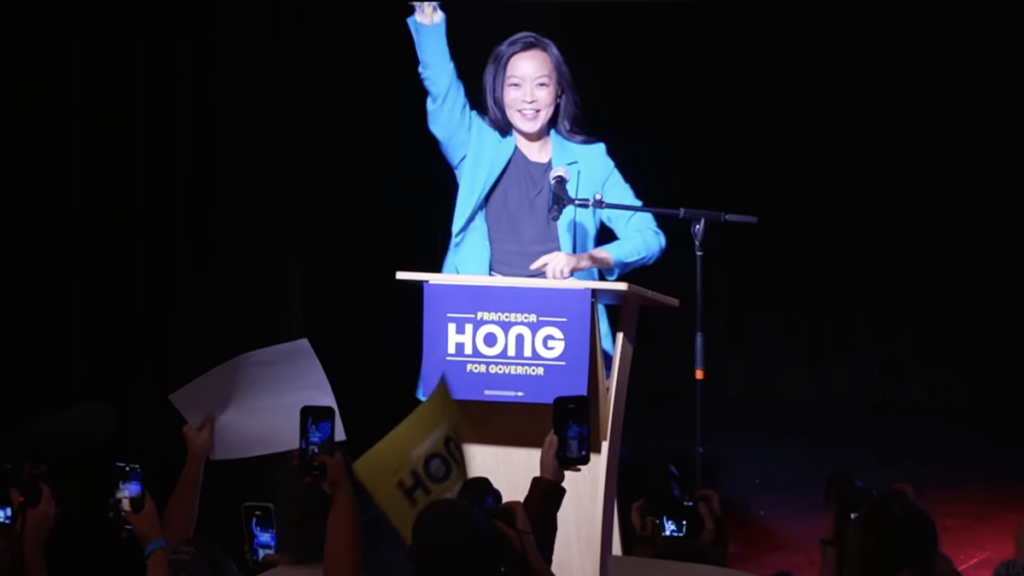
The revelation comes after Median Strategies released a poll in the Wisconsin Democratic gubernatorial primary showing Hong, a self-described communist, with a massive lead over Milwaukee County Executive David Crowley. The poll caught the attention of political observers who were startled by the margin — but few questioned its authenticity at the time.
Similarly, in Los Angeles, the firm published a survey ostensibly conducted between July 30 and Aug. 5 among 560 voters, carrying a margin of error of 4.1 percentage points, that suggested Mayor Bass held a commanding lead over her challenger in the Nov. 3 runoff. That poll was later confirmed by Median Strategies to The Los Angeles Times as also fabricated.
The company has not disclosed who was behind the experiment or what conclusions it drew from the exercise.
Growing public distrust in polling
The admission adds to a deepening crisis of confidence in public opinion research, coming on the heels of several high-profile polling failures in recent election cycles.

In the final weeks of the 2024 presidential race, for instance, the PBS/NPR/Marist poll showed Vice President Kamala Harris leading Donald Trump by 4 points — outside the poll’s own 3.5-point margin of error. The Washington Post reported days before Election Day that Harris had a “big early-vote” lead over Trump. Fortune ran a headline on Nov. 2 declaring: “October Surprise: Trump just blew a huge lead, and the Madison Square Garden Rally started the drop, says top data scientist.”
One pollster even assessed Harris as leading Trump by 3 points in Iowa — a state Trump won by double digits. That pollster later acknowledged it was a “big miss.”
Despite widespread dissatisfaction with the Biden administration, record inflation, a surge in border crossings, and social unrest, the national polls consistently showed Harris winning, and many media outlets took those numbers at face value.
Skeptics pointed back to 2016, when the forecasting community was virtually unanimous in predicting a Hillary Clinton presidency — The New York Times gave her a 90 percent chance of defeating Trump in mid-October of that year.
Pollster John McLaughlin told The Federalist’s Matt Kittle in the aftermath of the 2024 election that some “media pollsters let their bias determine what they see in the polls, and it didn’t have to go that way.”
Questioning the ‘social experiment’ trend
Now, with Median Strategies admitting its polls were never real, the question arises: how many other pollsters are essentially running their own “social experiments” rather than producing genuine data?
The firm’s statement specifically disavowed any future polling and urged the public not to treat any of its past releases as authentic. But the damage may already be done — in Wisconsin, Hong’s supposed 23-point lead may have influenced voter perceptions and coverage of the primary; in Los Angeles, the fabricated numbers may have shaped early narratives about the mayor’s race.
Political analysts say the episode underscores the ease with which fake polling can enter the information ecosystem, especially when outlets and campaigns fail to vet data before amplifying it.
“This is a cautionary tale,” said one election law expert who asked not to be named. “If a fake firm can get this kind of traction, it shows how thin the line is between real polls and pure fabrication in the public mind.”
Median Strategies has not responded to requests for further comment beyond its written statement.
Source: thefederalist.com — https://thefederalist.com/2026/08/18/pollster-that-put-francesca-hong-karen-bass-in-lead-admits-its-a-fake-firm/