
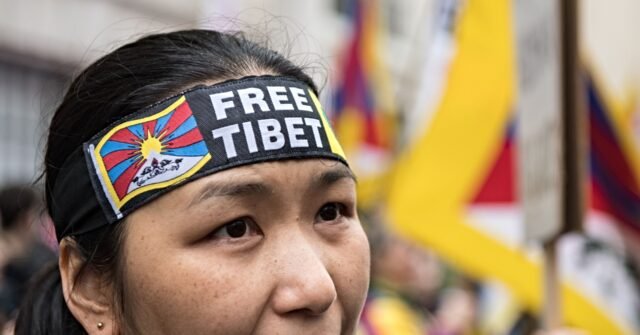
A coalition of pro-Tibetan, Uyghur, Hong Kong, Taiwanese, and pro-democracy Chinese activists gathered in Washington, D.C., on Thursday to protest Chinese leader Xi Jinping’s visit to the U.S. capital, but the demonstration was disrupted when pro-communist counter-protesters confronted the group, according to Breitbart News.
Organizers had expected more than 2,000 Tibetans from across North America to join the events, alongside Uyghurs and Southern Mongolians living under what they describe as oppression by the People’s Republic of China, Hong Kongers who say they lost freedoms under Beijing’s tightening legal framework, Taiwanese concerned about PRC subversion and invasion, and Chinese pro-democracy activists. The schedule included a march through the city, a demonstration outside the Chinese embassy, a rally near Capitol Hill, and a candlelight vigil in Franklin Park.
A Bridge, a Motorcade, and a Confrontation
The confrontation broke out as demonstrators lined a bridge to wave flags and banners while Xi’s motorcade passed beneath them, per Breitbart’s account. Counter-demonstrators attempted to seize flags, destroy banners, and overwhelm the anti-Xi chants by shouting over them.
Breitbart’s reporting said some in the anti-Xi group had urged President Donald Trump to raise China’s human rights record during his meeting with Xi and to press for better treatment of Uyghurs, Tibetans, and other groups. Others called on Xi to step down, and some adopted a tactic that has become a recurring visual jab at the Chinese leader: dressing in Winnie-the-Pooh costumes, recalling Beijing’s earlier suppression of Pooh imagery after critics compared the bear’s physical build to Xi’s.
Competing Loyalties on American Soil
The Straits Times observed that a significant number of Chinese nationals residing in the United States had traveled to Washington specifically for Xi’s visit, making dueling displays of support and criticism difficult to avoid.
“I have an American green card now, but I’m Chinese, so, of course, I’m very excited to see Xi Da Da,” one pro-Xi visitor told the Straits Times, using a colloquial form of address that translates roughly to “Daddy Xi.”
The dynamic reflects a broader concern among security officials in democratic countries: China’s extensive transnational repression network, which employs various methods to intimidate Chinese emigrants into silence. As Breitbart noted, the crudest tool in that kit involves dispatching groups of thugs to harass protesters who speak out against Xi and his government’s abuses.
What the Protesters Want
The D.C. events brought together diaspora communities that rarely appear under one banner. Tibetans, Uyghurs, Southern Mongolians, Hong Kongers, Taiwanese nationals, and Chinese prodemocracy advocates each brought distinct grievances, but their messaging converged on a single demand: that Washington not let human rights concerns slide during Xi’s visit.
Whether Trump raised those issues in his meetings was not confirmed in the source material. What is clear, based on Breitbart’s reporting, is that the street-level confrontation between Xi’s supporters and his critics played out in full view of the American public — a reminder that Beijing’s political conflicts increasingly extend far beyond China’s borders.
Security analysts have long warned that transnational repression campaigns pose a challenge to countries that host Chinese diaspora communities, because the tactics range from legal intimidation and family pressure to physical harassment. The bridge confrontation in Washington fits the most visible end of that spectrum: a direct, in-person clash between those willing to protest and those sent, or moved, to drown them out.
For the organizers who had planned months of events around Xi’s visit, the disruption did not appear to end the demonstrations. Breitbart reported the scheduled march, embassy protest, Capitol Hill rally, and vigil were all on the agenda. The vigil in Franklin Park, in particular, was intended as a quiet close to a day of visible dissent — the kind of peaceful assembly that organizers say Beijing and its supporters abroad would prefer not to see at all.
Source: www.breitbart.com — https://www.breitbart.com/asia/2026/09/24/chinese-communists-attack-tibetans-protesting-against-xi-jinping-in-d-c/