
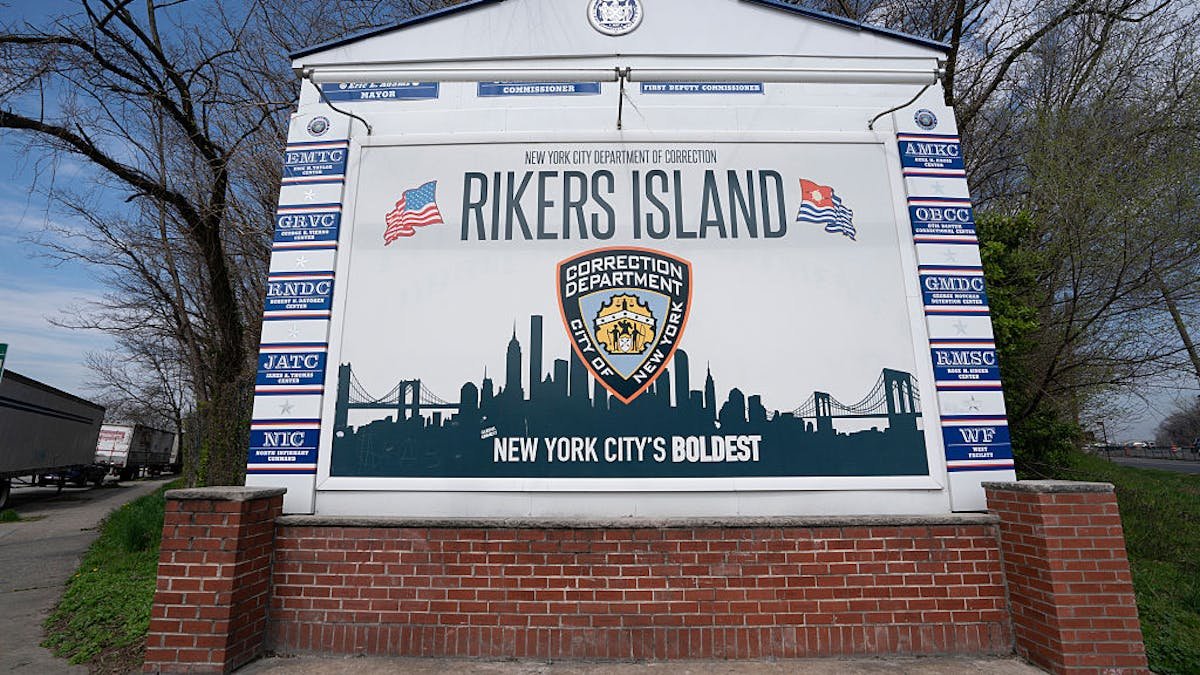
New York City leaders have finally conceded what many have long suspected: the city will not close Rikers Island by the court-imposed 2027 deadline, and Mayor Zohran Mamdani appears to have no clear plan for what happens next.
Dana Kaplan, the city’s “Rikers czar” under Mamdani, acknowledged in late June that “we are not on track to meet” the 2027 cutoff, according to reporting from the Manhattan Institute’s City Journal. Both city officials and council members have admitted that “2027 is just not going to happen,” yet the closure law remains on the books, with no announced legislative fix or new target date.
A Promise Broken
The 2019 city council law mandated that Rikers be shuttered by August 31, 2027, with replacement jails built in four boroughs. But those facilities are years behind schedule and billions over budget. The Brooklyn jail is projected for completion in 2029, the Bronx and Queens facilities in 2031, and the Manhattan site in 2032. City Hall now estimates the total cost at $13.7 billion — nearly 60% more than the 2019 projection — while the previous Adams administration put the figure at $16 billion.
The delays stem from predictable public-works problems, according to Charles Fain Lehman, a senior fellow at the Manhattan Institute and senior editor of City Journal, who wrote the analysis. “In public-sector works, delay and budget overruns are the rule, not the exception,” he observed.
Population Still Above Target
Even if the borough jails eventually open, they may not be enough. The city currently holds over 6,500 detainees at Rikers, including more than 3,600 charged with murder, sex offenses, or other violent felonies. The 2027 closure plan assumed the average daily jail population could be reduced to 3,300 — a figure the New York Times noted in 2019 hadn’t been seen in nearly a century.
But since 2021, despite policy changes like parole reform, the average daily population has climbed. John Jay College’s Data Collaborative for Justice, a pro-closure group, projects the population will remain essentially unchanged in a year absent new policy shifts. Lehman pointed out that no one has articulated what reforms could halve the jail population.

Mamdani’s Stance
Mayor Mamdani, a self-described decarceralist who once endorsed prison abolition, has not wavered in his desire to close Rikers. But critics say he has yet to present a credible path forward.
“The city’s comprehensive failure to meet its own schedule offers an opportunity for a reevaluation,” Lehman wrote. “But now’s a good time to ask: What’s the plan, Mr. Mayor?”
Lehman noted that the closure drive always rested on shaky assumptions. The 2016 commission that recommended closing Rikers reached a “preordained conclusion,” and the de Blasio administration shifted from five jails to four primarily for political expediency, he argued.

Advocates have blamed the pandemic for delays, but Lehman dismissed that excuse now. “It’s implausible to blame the long-gone pandemic today,” he wrote.
What Happens Next
The closure law remains on the books, and city officials have signaled they will seek a deadline extension, but no specific new date has been proposed. The Manhattan Institute analysis suggests the legal timeline will almost certainly have to be pushed past the completion of the borough jails, which won’t happen until at least 2032.
Lehman acknowledged that housing pretrial detainees on Rikers is not inevitable — replacements could be built in the boroughs — but the first attempt has been a failure on cost, schedule, and capacity. “Mamdani seems committed to trying again,” he wrote. “So the question must be asked, again and again, for the next year: Mr. Mayor, what’s the plan?”
This article is based on analysis published by the Manhattan Institute’s City Journal, in collaboration with Daily Wire.
Source: www.dailywire.com — https://www.dailywire.com/news/closing-rikers-island-is-a-reckoning-new-york-cant-avoid