
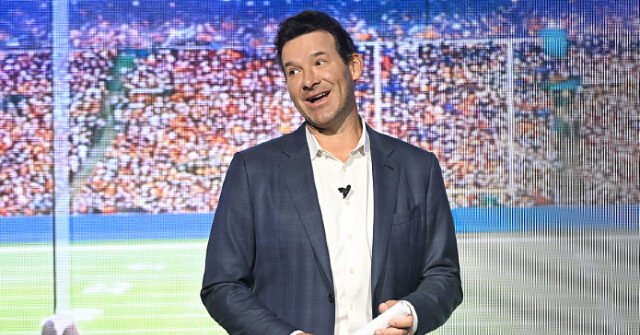
New details have emerged in the drunk-driving case against former Dallas Cowboys quarterback Tony Romo, with court documents reportedly showing his blood-alcohol content was more than double the legal limit at the time of his arrest in Wisconsin this past July.
According to TMZ, the paperwork indicates Romo’s BAC topped .15 — well above the .08 threshold that defines legal intoxication in Wisconsin. Milwaukee outlet WTMJ characterized the reading as just shy of double the state’s legal limit.
The disclosure follows Romo’s announcement Tuesday that he entered a plea of no contest to the operating while intoxicated charge. In a statement, he accepted full responsibility for his actions, according to prior reporting by TMZ.
A Painful Path to Alcohol
Romo has attributed his behavior to a long struggle with pain management. The former quarterback said years of “constant, debilitating pain” stemming from his football career led to a dependence on prescription pain medication. His efforts to wean himself off those drugs, he explained, eventually slid into an over-reliance on alcohol.
The arrest and plea have thrown his broadcasting future into doubt. Romo has been on an indefinite leave from his role as lead NFL analyst for CBS Sports, a position that has made him one of the most recognizable voices in sports media.
CBS Faces Tough Call
Boomer Esiason, the former CBS analyst who now hosts a show on WFAN, suggested earlier this month that Romo’s absence may prove permanent. “If I had to guess, purely speculation given what’s going on right now, I would think it’s over,” Esiason said. “He may end up going somewhere else and getting things straightened out.”
CBS Sports president David Berson has acknowledged the network is weighing its options, noting that a final decision has not yet been made regarding the roughly $72 million remaining on Romo’s contract. The New York Post reports the deal contains an industry-standard morality clause, though it remains unclear whether the arrest would constitute grounds for termination under that provision.
“In making this decision, we have to consider the impact on our image and our brand,” Berson said. “That’s very important to us. The focus should be, and needs to be, on our presentation and this great product, not on any other factors. Fortunately, we have a deep bench, and I’m really proud of the way everybody is stepping up and responding.”
Berson’s comments underscore the delicate position CBS finds itself in. Romo has been the face of its NFL coverage since joining the network in 2017, earning widespread praise for his ability to predict plays and explain the game to viewers. His absence has already forced the network to reshuffle its broadcast teams, with other analysts stepping into prominent roles.
Neither Romo nor his representatives have publicly commented on the newly reported BAC figures or on the status of his CBS contract.
The case has also drawn attention to the broader issue of professional athletes and substance dependence, particularly those who spent years enduring the physical toll of football. Romo’s explanation — that his reliance on alcohol grew out of an attempt to escape painkiller dependency — resonates with a problem that has affected numerous former players.
Romo retired from the NFL in 2017 after a 14-year career, all with the Cowboys. He was known for his gunslinging style and late-game heroics, though a Super Bowl title eluded him. His transition to the broadcast booth was seamless, and he quickly became one of the highest-paid analysts in sports television.
The OWI arrest occurred in Elkhorn, Wisconsin, a small city southwest of Milwaukee. Authorities have not released additional details about the traffic stop that led to the charge.
As Romo awaits sentencing, the legal and professional ramifications remain unresolved. Wisconsin law treats a BAC of .15 or higher as an aggravating factor, which can lead to enhanced penalties. First-time OWI offenders in the state typically face fines, license suspension, and mandatory ignition interlock devices, though specific outcomes vary by court.
For CBS, the decision is as much about branding as it is about legal obligations. Berson’s emphasis on the network’s image suggests that Romo’s future may hinge on whether the company believes his continued presence would damage its reputation with viewers and advertisers.
The situation remains fluid, and Romo has not indicated whether he plans to appeal the plea or seek alternative arrangements. His statement Tuesday, in which he took full responsibility, may be an attempt to demonstrate accountability ahead of any disciplinary action by the network.
In the meantime, CBS is moving forward with its existing roster of analysts. The network’s “deep bench,” as Berson put it, includes a stable of former players and coaches who have filled in during Romo’s absence. Whether that arrangement becomes permanent is a question only time — and the courts — will answer.
Source: www.breitbart.com — https://www.breitbart.com/sports/2026/09/01/tony-romo-was-allegedly-twice-the-legal-bac-limit-during-arrest/