
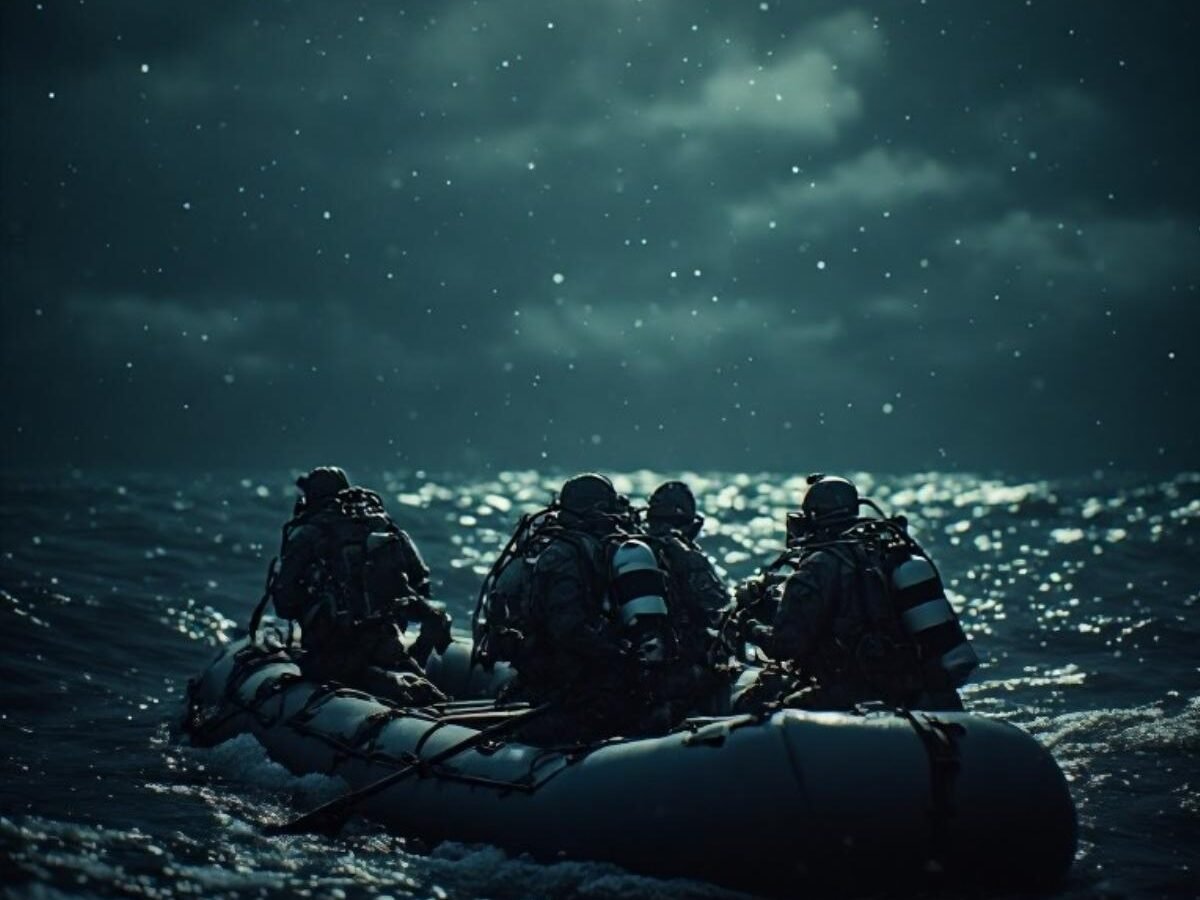
For the past four months, the U.S. Navy has been running a quiet, under-the-radar operation in the Strait of Hormuz — one that reportedly involved Navy SEALs using robot boats and underwater drones to clear mines from the vital waterway, according to reports this weekend.
The operation came to light after President Trump announced that the Navy had cleared all mines from the Strait. That announcement was met with the usual skepticism from legacy media toward anything Trump says, but it was almost immediately verified by the Navy itself. The reported number of mines cleared has varied widely — from a few dozen to eighty to over a hundred — but the core fact of the operation appears to hold.
A New Approach to an Old Threat
The SEALs didn’t rely on traditional minesweepers, which are easily spotted and vulnerable in the narrow, crowded strait. Instead, they developed entirely new techniques built around breakthroughs in UAV and sonar technology. Robot boats and Mk-18 Kingfish underwater drones, towing AQS-20A side-looking sonar arrays, were used to locate the mines — while SEALs followed at a safe distance aboard inflatable rafts, which contain no metal that could accidentally trigger a mine.
Once a mine was located, a SEAL would slip over the side, dive down to the mine, and attach an explosive charge, which would be detonated from a safe distance. It’s the kind of hair-raising mission that has built the SEALs’ legendary reputation.
The use of small units in rubber boats also offered a significant tactical advantage: unlike a conventional minesweeper, these small, low-profile craft would be unlikely to be detected by Iranian forces across the strait. That likely explains why no casualties have been reported.
Skepticism and Partial Verification
The Financial Times reports that industry observers believe the southern routes near the coast of Oman have been cleared, but they remain skeptical about parts of the strait closer to Iran. That may well be true — but shipping isn’t likely to use those Iranian-adjacent routes anyway, so the practical impact may be minimal.
Iran, for its part, has repeatedly claimed that ships have struck its mines in the strait, though no actual evidence has surfaced to support that. In late August, the Navy destroyed several rocket launchers on Larak Island that were preparing to launch mines across the strait. Those mines, weighing about 50 kilograms (110 pounds), would likely cause only minor damage to a large ship. In many ways, they’re more of a nuisance than a serious threat.
Keeping the Oil Flowing
The operation appears to have been aimed at keeping the Strait open for international tanker traffic. According to reports, between 15 and 20 tankers carrying up to 18 million barrels of oil are now clearing the strait each night, escorted by Navy ships.
These reports suggest that a great deal is happening behind the scenes in the ongoing situation with Iran — and that more may become public in the coming weeks.
Source: www.americanthinker.com — https://www.americanthinker.com/blog/2026/09/the-seals-clean-up/