
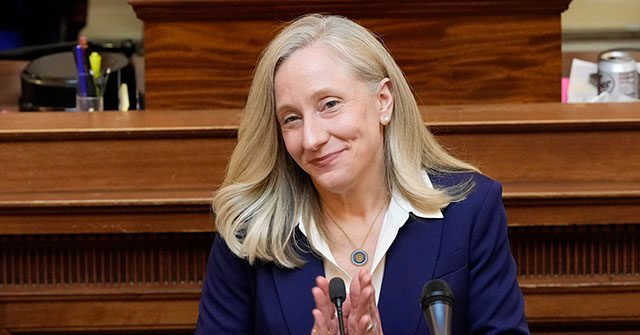
Virginia Governor Abigail Spanberger announced Friday that her administration has restored voting rights to more than 66,000 Virginians with past felony convictions, marking a significant shift from the policies of her Republican predecessor.
The Democratic governor, who campaigned on expanding voting access, used her executive authority to reinstate not only voting rights but also the ability to serve on juries, run for public office, and become a notary public for tens of thousands of residents who have completed their sentences.
“I’m proud that — after contending with my predecessor’s efforts to deny Virginians their fundamental rights — we have restored the rights of more than 66,000 Virginians who have served their time,” Spanberger said in a press release. “These Virginians deserve the right to use their vote, make their voices heard, and be recognized as contributing citizens to our Commonwealth and country.”
Virginia’s Unique Constitutional Restriction
Virginia remains one of only three states in the nation whose constitution permanently disenfranchises citizens with felony convictions. Under current law, the restoration of civil rights lies entirely within the governor’s discretion, creating a system where rights restoration can vary dramatically from one administration to the next.
This constitutional structure has led to sharply different approaches between governors. Former Governor Glenn Youngkin rolled back the automatic restoration process that had been used by his three predecessors, instead reviewing each application on an individual basis. According to Virginia Public Media, Youngkin restored voting rights to fewer than 10,000 Virginians during his tenure.
The contrast between the two administrations highlights how felon voting rights in Virginia have become subject to the political preferences of whoever occupies the governor’s mansion.
Fall Referendum Could Change the System
The timing of Spanberger’s announcement coincides with an upcoming ballot measure that could fundamentally alter Virginia’s approach to felon voting rights. This fall, Virginia residents will vote on a constitutional amendment that would allow automatic restoration of voting rights upon release from incarceration, removing gubernatorial discretion from the process.
Spanberger expressed strong support for the proposed amendment, framing the current system as outdated and unjust. “This fall, voters can cast their ballots for Virginia to no longer strip so many of our neighbors of their fundamental rights — a shameful relic of our Jim Crow past,” she said. “I hope Virginians will join me in voting yes.”
The proposed constitutional change would represent a major shift in Virginia law, standardizing the rights restoration process regardless of which party controls the governor’s office.
A Message of Redemption
In her statement, Spanberger emphasized themes of redemption and second chances, saying she has heard from many Virginians who have shared personal stories of transformation since she became a gubernatorial candidate and took office.
“The right to vote is foundational to who we are as Americans,” Spanberger stated, arguing that restoring civil rights gives formerly incarcerated individuals “their ability to make an impact at the local, state, and national levels” and empowers them to “take hold of their second chance.”
The governor’s approach reflects a broader national debate over felon voting rights, with states taking sharply divergent paths. Some states never strip voting rights from individuals with felony convictions, while others maintain permanent or near-permanent disenfranchisement absent executive action.
Political Context and Implications
The restoration of voting rights to 66,000 individuals represents a substantial addition to Virginia’s electorate. The move is likely to influence political dynamics in the state, particularly as Virginia has emerged as a competitive battleground in recent election cycles.
Spanberger’s explicit criticism of her predecessor’s approach also signals how felon voting rights have become a partisan flashpoint in Virginia politics. While Democrats have generally supported broader rights restoration, Republicans have tended to favor more restrictive, case-by-case approaches.
The fall referendum will test whether Virginia voters support removing gubernatorial discretion from the process entirely. If approved, the constitutional amendment would prevent future governors from reversing course on automatic rights restoration, regardless of their political affiliation.
The outcome of that vote could set the direction for Virginia’s approach to criminal justice and voting rights for years to come, either enshrining automatic restoration in the state constitution or maintaining the current system where each governor can set their own policy.
Source: www.breitbart.com — https://www.breitbart.com/politics/2026/08/02/abigail-spanberger-restores-voting-rights-to-66000-virginians-with-past-felony-convictions/