
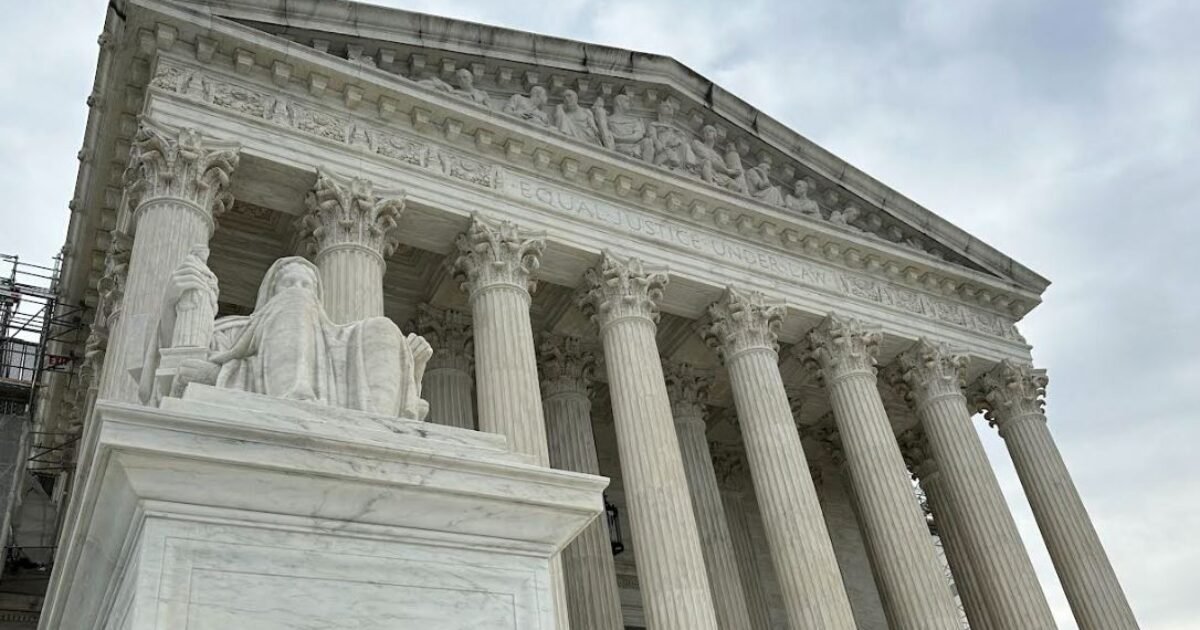
The Supreme Court handed President Donald Trump an interim victory on Monday, pausing a lower court ruling that had blocked key provisions of his executive order restricting mail-in voting just weeks before the November midterm elections.
The Court’s decision, issued over the dissents of the three liberal justices — Sonia Sotomayor, Elena Kagan, and Ketanji Brown Jackson — puts on hold a ruling by U.S. District Judge Indira Talwani in Boston. That ruling had prevented the Trump administration from carrying out portions of the March 2025 executive order involving the U.S. Postal Service and voter eligibility lists.
The high court’s action does not resolve the underlying legality of the order, and it does not immediately clear the way for the new mail-ballot system to take effect. A separate injunction issued by Judge Talwani on August 11 still bars the Postal Service from implementing procedural changes for the November 3 elections, meaning the administration would need to overcome that order as well.
Background of the Executive Order
The case centers on Executive Order 14248, titled “Preserving and Protecting the Integrity of American Elections,” which President Trump signed in March 2025. The order declared that “free, fair, and honest elections unmarred by fraud, errors, or suspicion are fundamental to maintaining our constitutional Republic,” and argued that the federal government had not adequately enforced existing election laws.
The order specifically cited laws prohibiting states from counting ballots received after Election Day and banning non-citizens from registering to vote. It also pointed to federal statutes, including 18 U.S.C. 1015 and 611, which prohibit foreign nationals from registering to vote or voting in federal elections.
The administration sought to impose sweeping new restrictions on the distribution of mail ballots, including through changes to Postal Service procedures and the creation of a federal voter list to verify eligibility.

Lower Court Rulings
Judge Talwani, an appointee of former President Barack Obama, had previously blocked the executive order, specifically the attempt to create a federal voter list. In her ruling, she wrote that “the Constitution does not grant the President any specific powers over elections.”
Earlier in August, she expanded her block, issuing an order on August 11 that barred the U.S. Postal Service from implementing the executive order’s mail-in ballot security measures.
Monday’s Supreme Court action pauses the judge’s ruling on key parts of the order, a significant but partial victory for the administration.
What’s Next
The legal battle is far from over. The Supreme Court’s decision is only an interim step, and the ongoing litigation will determine the ultimate fate of the executive order. The Court’s action does not address the merits of the case, and lower court proceedings will continue.
For now, the administration has cleared one hurdle, but the separate injunction on the Postal Service remains in place. The administration will need to convince the courts to lift that order for the new mail-ballot system to be implemented for the upcoming midterm elections.
This is a breaking story, and the situation could develop further. The Gateway Pundit will provide updates as new information becomes available.
Source: www.thegatewaypundit.com — https://www.thegatewaypundit.com/2026/08/breaking-supreme-court-allows-president-trumps-executive-order/