
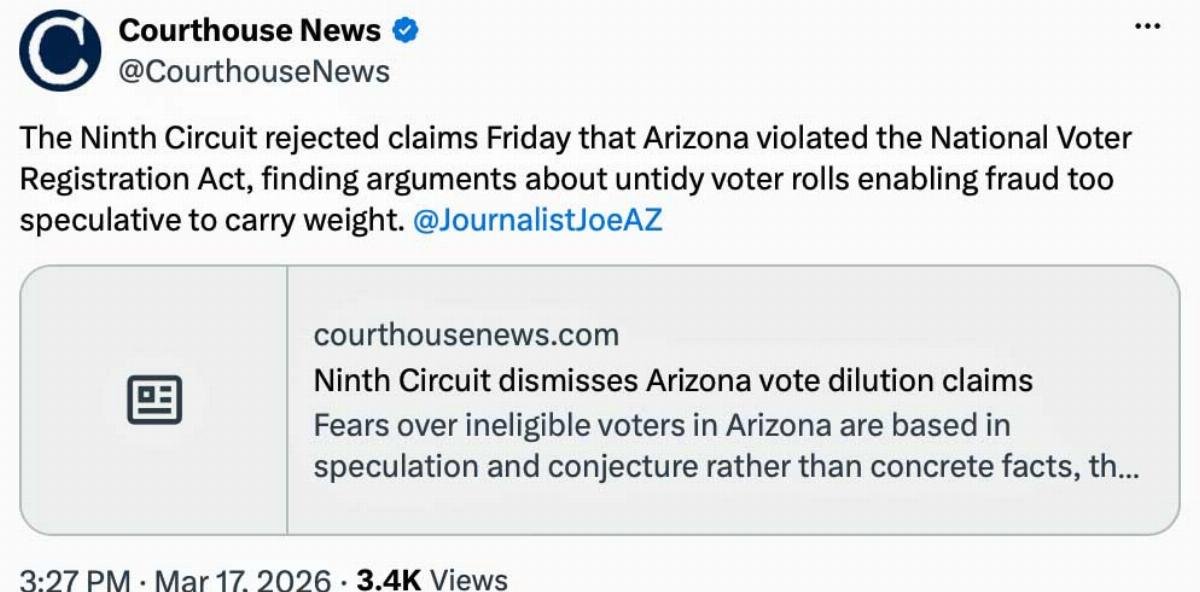
A high-stakes election-integrity dispute is heading to the Supreme Court, and the outcome could reshape how states manage their voter rolls — particularly when it comes to removing noncitizens who should never have been registered in the first place.
At the center of the case is RNC v. Mi Familia Vota, which pits the National Voter Registration Act (NVRA) against state efforts to enforce citizenship requirements for voting. Three secretaries of state have filed a friend-of-the-court brief in support of Arizona’s position, according to a report from American Thinker.
The case hinges on two questions: whether states can require documentary proof of U.S. citizenship to register to vote, and whether they can remove confirmed noncitizens from voter rolls during the 90-day “quiet period” before a federal election — a window established by the NVRA during which routine list maintenance is supposed to be paused.
The secretaries of state argue that the U.S. Constitution’s voter qualification clause gives states the authority to determine who is qualified to vote, and that the Ninth Circuit’s ruling in favor of Mi Familia Vota erases that constitutional boundary. Nebraska Secretary of State Robert Evnen put it bluntly in a statement to The Federalist: “States determine voter qualifications and perform voter list maintenance. Nothing in the National Voter Registration Act changed this longstanding tenet of federalism.”
What Arizona’s Laws Actually Did
Arizona’s election integrity laws allowed applicants to vote in congressional and local races without proof of citizenship, but not in presidential elections or by mail. In 2024, the Supreme Court stayed lower court decisions that would have allowed individuals using the federal registration form to vote in presidential elections and by mail.
But the Ninth Circuit — the most overturned appellate court in the nation — subsequently ruled that Arizona’s laws were unlawful, ignoring the fact that states are the primary arbiters of voter qualification. Critics of that ruling say it effectively overrides state authority under the NVRA, a federal statute that was never intended to force states to keep ineligible voters on their rolls.
The 90-Day ‘Quiet Period’ Misunderstanding
A key point of contention is the so-called “quiet period” — a 90-day window before federal elections during which states are generally barred from making systematic changes to voter rolls. Opponents of Arizona’s law have argued that this provision prevents the removal of noncitizens during that window.
But the secretaries of state and election-integrity advocates say that reading misinterprets the statute. The plain text of the NVRA does not require states to keep an individual registered who was never eligible to be registered in the first place, they argue. An interpretation that would force a state to keep an alien on the rolls — when both state and federal criminal laws bar aliens from registering — would render the NVRA unconstitutional.
In other words, the 90-day limitation does not apply to illegal aliens who were never permitted to register to vote at all and who committed a criminal act by doing so. Such individuals, the argument goes, should be removed from voter rolls immediately, even within the quiet period.
Federal Law Already Bars Aliens From Voting
The legal groundwork for this argument is already in federal statute. Under 18 U.S.C. § 1015(f), it is a felony for an alien to claim U.S. citizenship in order to register to vote or to vote in any federal, state, or local election — including initiatives, recalls, or referendums. A separate statute, 18 U.S.C. § 911, makes it a felony to “falsely and willfully” claim to be a citizen.
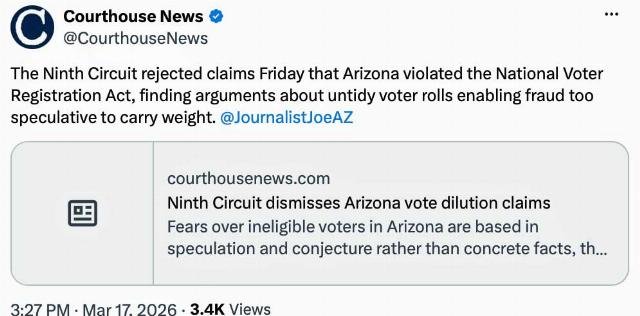
These laws underscore the point: noncitizens are categorically barred from registering or voting in U.S. elections. Yet, the Ninth Circuit’s ruling would require states to maintain registrations for individuals who are, by definition, committing a felony by remaining on the rolls.
What’s at Stake
If the Supreme Court does not clarify that states have the authority to enforce citizenship requirements and remove illegal aliens from voter rolls — even during the 90-day quiet period — then the NVRA itself should be ruled unconstitutional, according to the secretaries of state and their allies.
In their friend-of-the-court brief, the secretaries note that the NVRA was never intended to override the Constitution’s clear allocation of power to states over voter qualifications. They argue that the Ninth Circuit’s interpretation “erased” a constitutional boundary that has been respected for centuries.
While Congress has been slow to act on broader election-integrity measures like the SAVE Act, this case gives the Supreme Court an opportunity to settle the issue. A ruling in favor of Arizona could have national implications, potentially affecting how states across the country handle voter list maintenance and citizenship verification.
For now, the case sits before the highest court in the land. The outcome could determine whether states have the final say over who gets to vote — or whether the federal government, through the NVRA, can override them.
Source: www.americanthinker.com — https://www.americanthinker.com/blog/2026/09/violating-the-constitution-with-the-national-voter-registration-act/