
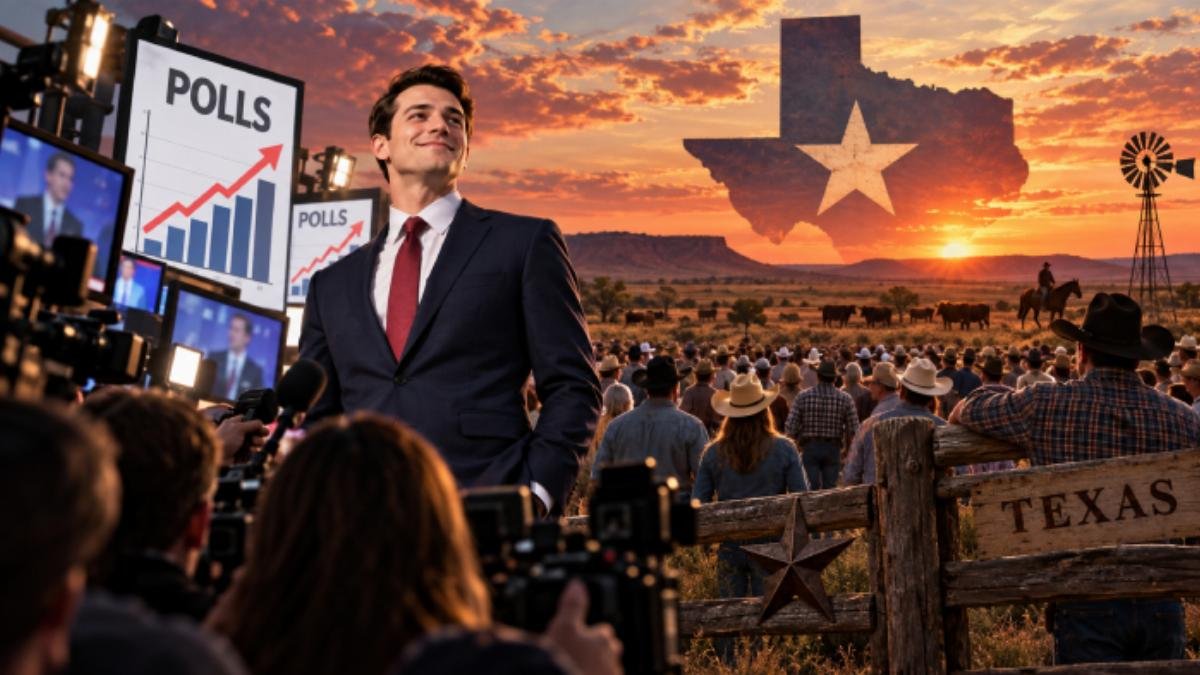
In a blog post for American Thinker, columnist Silvio Canto, Jr. predicts State Rep. James Talarico will not win in Texas, comparing the current political moment to Beto O’Rourke’s failed 2018 Senate bid. Canto argues that despite polls showing a close race or even a Talarico lead, the same dynamic that doomed O’Rourke—rural voters having the final word—will play out again in 2026, perhaps even more decisively.
Canto opens with a flat declaration: “Let’s make this prediction for once and all: State Rep. James Talarico is not winning in Texas. Put me down on that one.” He notes the parallels to O’Rourke, who appeared poised for a strong showing until rural voters turned out in force. Canto believes something similar, “but larger,” is coming in 2026.
To bolster his argument, Canto cites conservative commentator Kurt Schlichter, who recently returned to his Texas home for the fall to assess the political landscape firsthand. Schlichter’s conclusion: the enthusiasm for Talarico that dominates national media and polling does not match what he sees on the ground.
What the Yard Signs Show
Schlichter, according to Canto’s citation, notes that Vice President JD Vance once joked at a midterm convention that he had no desire to see Talarico’s browser history. The line drew laughs, but Schlichter uses it to paint a picture of Talarico as a poor cultural fit for Texas—”a weird, smarmy creepiness thing going on,” combined with “casual blasphemy, a hatred of capitalism, and the sensibilities of a white-wine woman who works in HR and celebrates Kwanzaa.” In Schlichter’s view, Talarico is “a terrible fit for America, and an unimaginable fit for Texas.”
But Schlichter acknowledges that people are imagining it—especially people outside Texas. He points to polling that shows Talarico either neck-and-neck with Attorney General Ken Paxton or beating him handily. Schlichter dismisses the polls with a blunt aside: “If you listen to the pollsters—and you should never listen to the pollsters.” He also pushes back on the idea that Texas is on the verge of turning blue, calling Talarico “less Beto’s heir than Pete Buttigieg’s grinning Mini-Me.”
So Schlichter decided to see for himself. His findings: “Not much. I am not seeing the Talaricomania.” He notes he finally spotted a Talarico yard sign, and it was at the same house that displayed a Harris sign in the previous election. Meanwhile, television is saturated with Paxton ads focused on taxes, voter ID, and border enforcement—issues Schlichter frames as the real dividing lines in the state.
The Core Democratic Misunderstanding
Canto seizes on Schlichter’s conclusion to make his own broader point: Democrats simply do not understand Texas. The state, he argues, is “very conservative, not necessarily Republican.” That distinction matters. A conservative Democrat—of the type that the late Secretary Kennedy once said would not recognize today’s Democratic Party—could win in Texas, Canto suggests. But such a candidate would need a firm line on the border and illegal immigration. They would sound like Rep. Henry Cuellar on social issues and reject the DSA. They would embrace capitalism, free trade, and a traditional foreign policy, much like the late Senator Lloyd Bentsen.
In short, this hypothetical Democrat would not resemble James Talarico at all. And that, Canto concludes, is why Talarico is not winning.
The Polling vs. Ground Game Disconnect
The piece reflects a recurring theme in conservative commentary: suspicion of polling that shows Democratic gains in traditionally red states. Canto and Schlichter both lean on anecdotal evidence—yard signs, TV ads, personal observation—to counter the data. Whether that skepticism proves warranted will not be known until the votes are counted.
For now, the American Thinker post stands as a confident prediction: Talarico’s moment in the national spotlight may be real, but it will not translate into a Texas victory. The argument rests on the idea that rural voters, once again, will have the last word—and that when they do, the polls will look as wrong as they did in 2018.
Canto closes with a brief postscript directing readers to his blog for more content. The piece does not offer new polling data or internal campaign information; it is an opinion column built on the author’s observations and his agreement with Schlichter’s on-the-ground impressions. As such, it is less a report on the state of the race than a statement of political faith—one that will be tested at the ballot box in November 2026.
Source: www.americanthinker.com — https://www.americanthinker.com/blog/2026/09/talarico-is-not-winning-in-texas/