
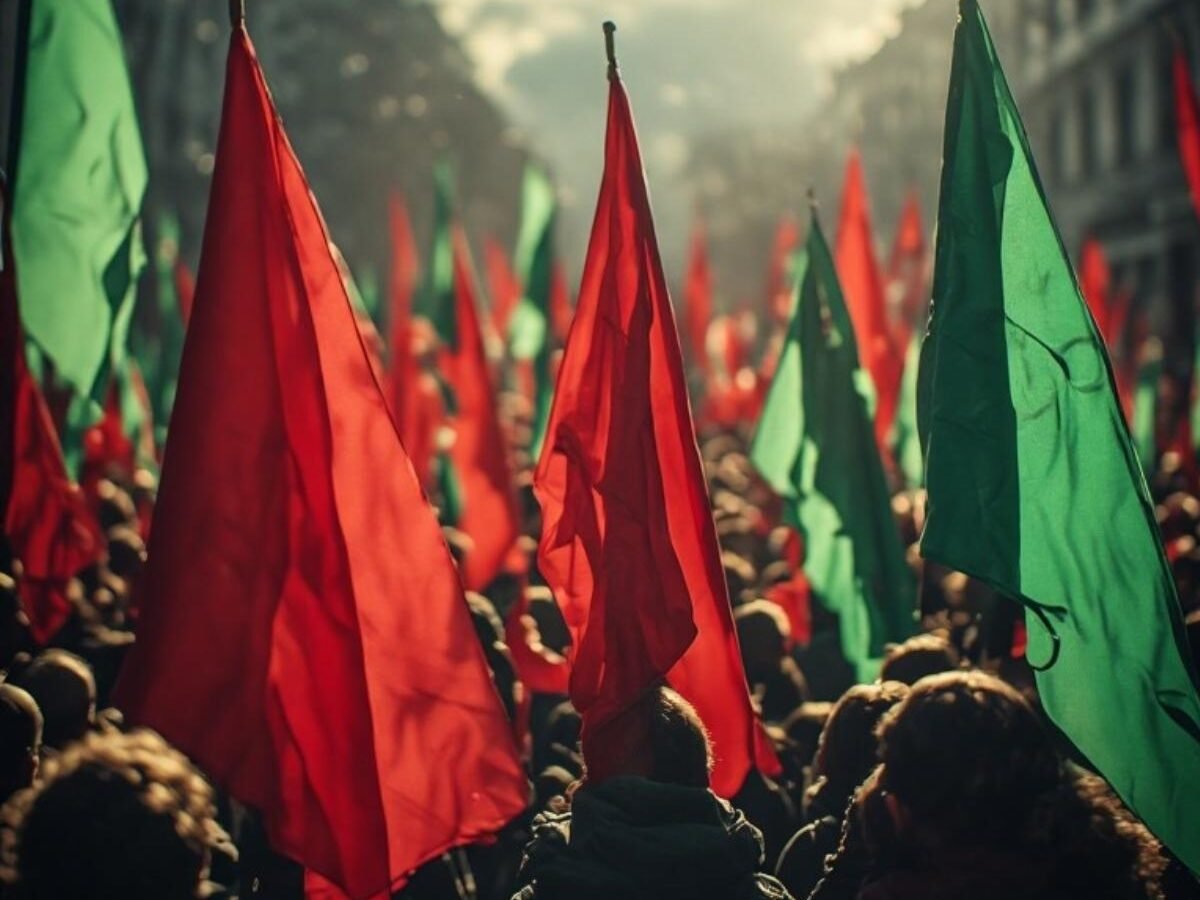
Sun Tzu’s ancient advice—that an army needs direction, not uniformity—has found a modern home in coalition politics, argues a new commentary in American Thinker. But the piece, by writer Luis Gonzalez, warns that the “Red and the Green”—the socialist left and political Islam—may be building an alliance that cannot survive its own victory.
A Coalition of Convenience
Gonzalez concedes the two movements share little on paper: different histories, different ambitions, different ultimate visions for society. Yet they have found common ground in opposing the Democratic establishment—its incumbents, its machine, its money, and its voters. In politics, he writes, coalitions don’t require agreement on the destination, only on the obstacle in the way.
As examples, the piece points to the rise of Zohran Mamdani in New York and Abdul El-Sayed in Michigan, and the support both have drawn from socialist commentator Hasan Piker, who has campaigned for El-Sayed and hosted Mamdani. The overlap, Gonzalez argues, isn’t ideology but shared interest in issues like Gaza, foreign policy, and Islamophobia, and a desire to build a voter base combining progressive activists with organized Muslim communities.

The Cuban Precedent
To illustrate the risks, Gonzalez reaches back to revolutionary Cuba. Castro’s coalition against Batista brought together Marxists, nationalists, and democrats who agreed on little but their enemy. After victory, the coalition collapsed—Camilo Cienfuegos died in a suspicious plane crash, Che Guevara was sent to Bolivia and executed, and the Castro brothers consolidated power. The lesson, says Gonzalez: coalitions that don’t resolve their internal differences often see them resolved later, on someone else’s terms.
Irreconcilable Differences?
The piece argues the Red and Green hold core commitments that are fundamentally incompatible. The American left has spent generations building an identity around autonomy—reproductive rights, gender identity, secularism, and same-sex marriage. Political Islam, by contrast, is organized around restoring a fixed religious order, with mainstream jurisprudence treating homosexuality as forbidden. Two absolutes, Gonzalez writes, do not compromise; they wait.
Should this coalition win, he predicts, the establishment leaders like Jeffries and Schumer would be gone, and the two movements would find themselves needing the other’s core belief to be false for their own to be true. There is no wiggle room, because each side has already spent it building coalitions that work in opposition but fail in government.
A Call for Honesty, Not Panic
Gonzalez is careful to note this is not a prediction of violence—not “firing squads for Sacramento or Dearborn.” The mechanism, he says, doesn’t require brutality; it only requires a coalition reaching power without settling its contradictions. He urges voters to read platforms, watch who campaigns with whom, and follow the money, letting both sides make their cases openly.
But democracy, he argues, depends on voters understanding what they’re voting for, including unresolved parts of a coalition’s future. “The fight everyone can see, against the common enemy, is not the fight that decides what the country becomes,” he writes. “That fight comes after, between the allies, and history suggests it doesn’t end in a treaty.”
In a blunt closing image, he writes that red and green do not blend into a glorious new political color—they make brown, the color of mud and decay, fitting for coalitions that mistake a common enemy for a common cause.
Source: www.americanthinker.com — https://www.americanthinker.com/articles/2026/09/the-red-and-the-green/