
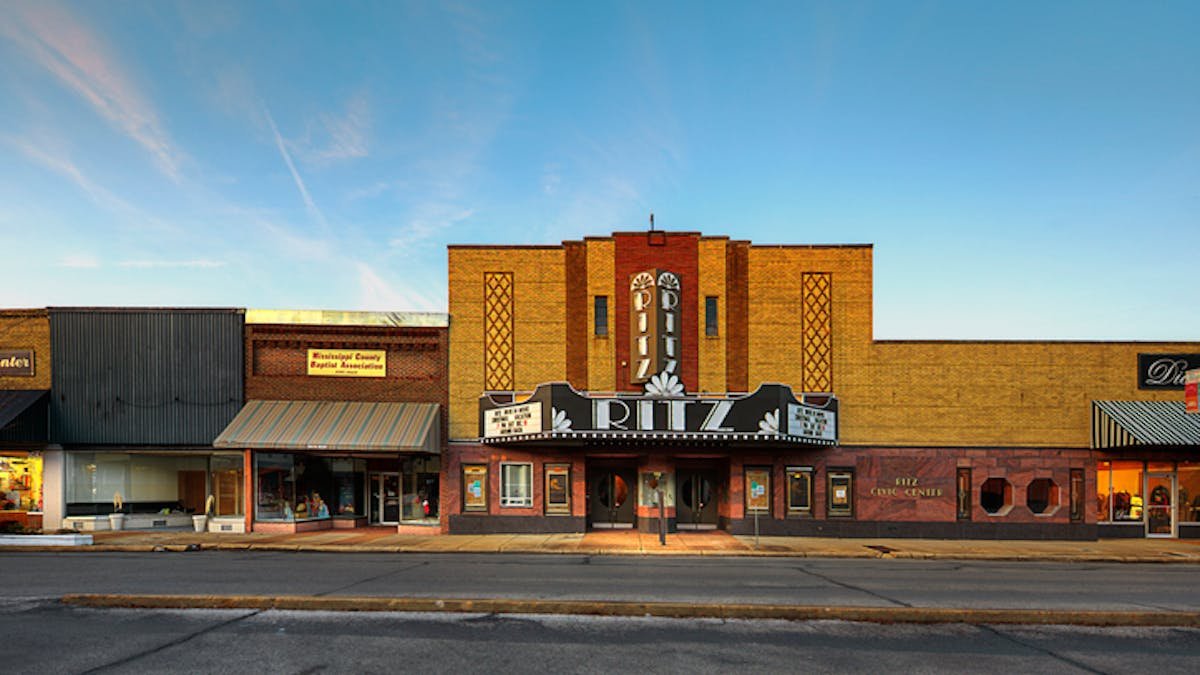
It used to be a ritual: the glow of the big screen, the rustle of popcorn bags, the shared gasp of a crowd. But for many Americans, the trip to the multiplex has become a rare and increasingly unsettling experience, according to a new essay published at The Daily Wire that paints a bleak portrait of abandoned theaters and ‘ghost concession stands.’
The piece, authored by Daniel Payne, a senior editor at EWTN News, argues that the decline of the movie theater is not just about bad movies or high prices—though those play a part—but about something deeper: a society that has traded communal experience for the cold glow of a smartphone screen.
Payne describes the modern cineplex as ‘weird, dark, ghostly husks’—places that feel ‘almost Lovecraftian’ in their emptiness. The essay urges readers to see these hollowed-out spaces not as a harbinger of cultural change, but as a sign that the change has already happened. ‘It is not a harbinger but a harbinged,’ he writes.
By the numbers: The economics of moviegoing collapse
The financial case for staying home has never been stronger, writes Payne. He notes that as recently as 2016, an evening ticket for a first-run film cost around $8. Today, the average ticket runs about $16, roughly double. Add a $15 bag of popcorn and a $13 soda, and a date night can top $60 before dinner; for a family, the tab can exceed $100.
That price surge has coincided with a historic slump in attendance. Payne points to Box Office Mojo data showing that in 1986, the domestic box office topped $3 billion—about $9.3 billion in 2025 dollars. That’s roughly $1 billion more than the domestic box office in 2025, despite far fewer major releases in the 1980s. In other words, theaters used to do more business with less output.
It’s not that no one goes anymore. Payne acknowledges that 2026 has seen big-budget spectacles like The Odyssey, Toy Story 5, and the latest Spider-Man draw huge crowds. Surprise hits like Obsession and Backrooms have also managed to fill seats. But these are increasingly the exceptions that prove the rule.

The ‘ghost concession stands’ of the modern era
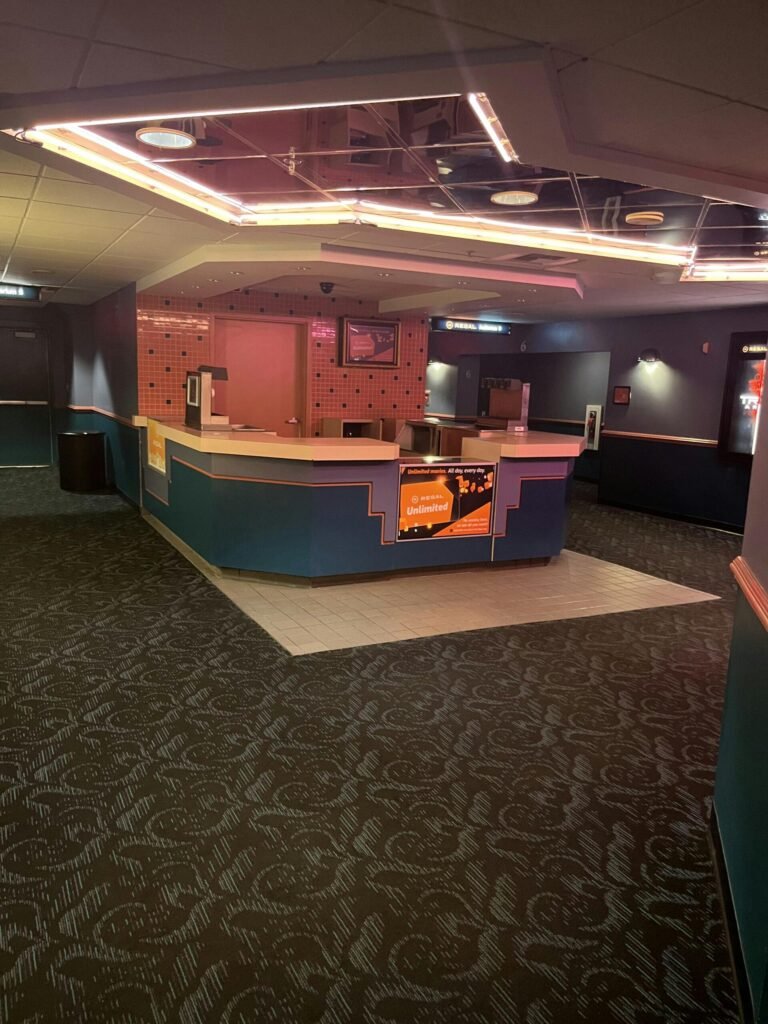
For Payne, the most haunting symbols of this decline are the auxiliary concession stands built into the hallways of many theaters erected in the 1980s and 1990s. These small snack islands were constructed during a more generous era, when crowds were so large that theaters needed overflow capacity for the queues. Today, they sit silent, their candy displays empty, their soda taps dry. Some observers have dubbed them ‘ghost concession stands.’
‘The candy display cases are empty. The soda taps are all dry and have been for years. There aren’t even any napkins or straws,’ Payne writes. Standing in such a theater, he says, feels like being inside an empty airport or a disused hospital wing—’your brain kind of skips a beat in these situations, as if it’s trying to manually fill in the throngs of people it knows should be there.’
A packed theater, by contrast, is ‘full of electric charge… a kinetic experience, active and dynamic and animated in a way that affirms your own essential humanness and your place in a human community.’ An empty one, he writes, is ‘a memento mori with wall sconces.’
A communal loss beyond the cinema
Payne argues that the empty theater is not an isolated phenomenon but a symptom of a broader social unraveling. He points to the ubiquitous presence of smartphones in every public space—restaurants, parks, bookstores, music venues—as evidence that our attention has been captured by digital feeds at the expense of shared experience.
Data cited in the essay suggest most people spend more than five hours a day on their phones—roughly 30% of waking hours. That relentless scrolling, Payne writes, ‘crowds out other, funner things, like movie theaters’ but also ‘better, more vital things, like human connection, communal awareness, a sense of place, a sense of belonging in one’s own neighborhood or city.’
He also laments the erosion of manners: it’s now unremarkable, he notes, to see someone pull out a phone and give it full attention mid-conversation. ‘Everything is subordinate to the phone,’ he writes.
The essay closes with a challenge: ‘Think about this the next time you pull out your phone, or the next time you see one of those ghost concession stands sitting dusty and empty and forgotten.’
Source: www.dailywire.com — https://www.dailywire.com/news/how-the-smartphone-crowded-out-the-cineplex