
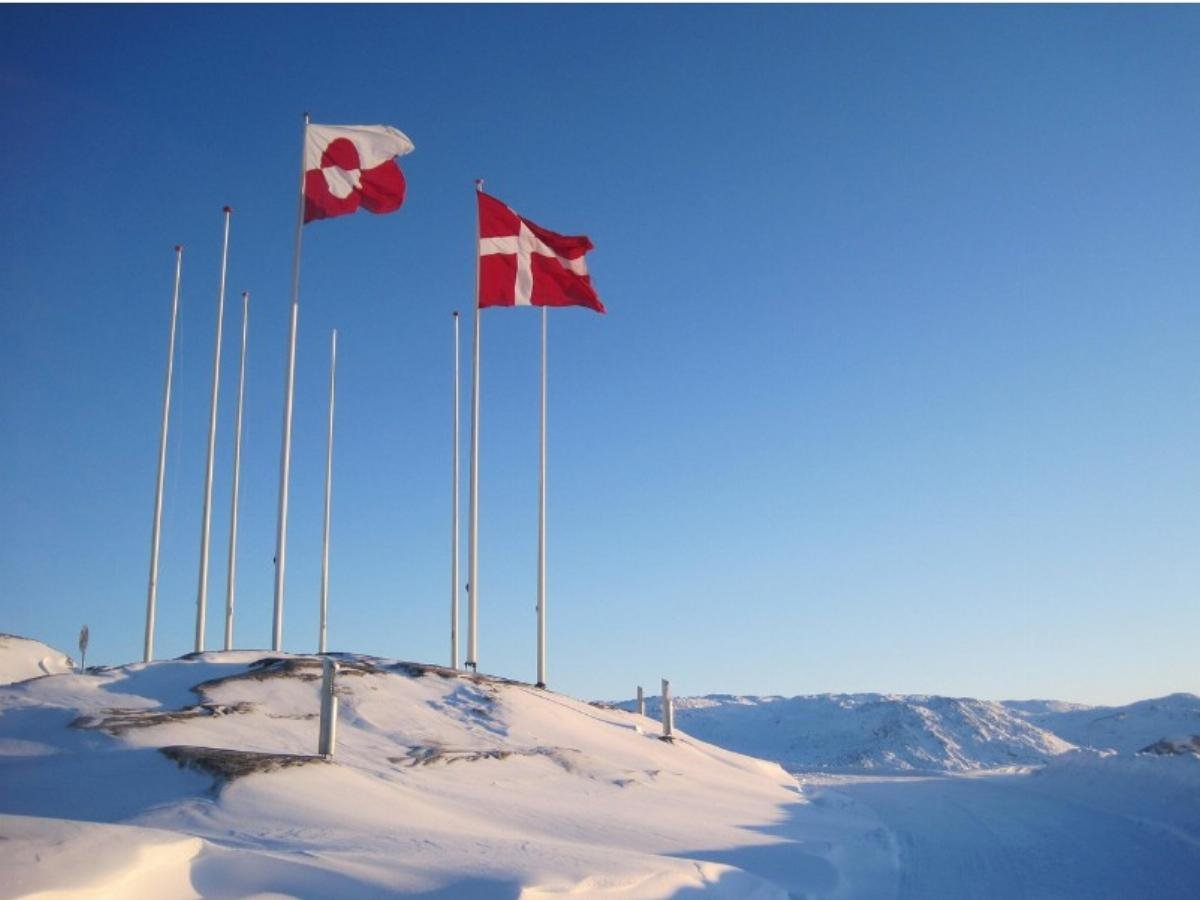
President Trump used his own platform, Truth Social, to announce what he called a “historic deal” with Denmark and Greenland on Arctic security and the American military presence on the island — and, in the same stretch of days, said he would bar CNN, MSNBC and Politico from the White House press room. Retired career diplomat Stephan Helgesen, writing in American Thinker, treats the two moves as less contradictory than they first appear: both, in his reading, are attempts to route public attention around news organizations he argues have cast every administration action as anti-democratic or authoritarian.
Helgesen writes from Denmark, where he now lives after 25 years in the Foreign Service, and his vantage point shapes the piece. He is not cheering the deal so much as refusing to assume it exists in final form. His verdict, borrowed from his own closing line, is that the Greenland saga has taught everyone to never count their ice cubes before they are frozen.
What Trump actually said
According to Helgesen, the president’s Truth Social post describes an agreement to be signed next week at the United Nations with Danish Prime Minister Mette Frederiksen. The post, as Helgesen quotes it, promises that the United States will “FOREVER have the complete ability to do what is necessary in Greenland in order to secure and defend the security of Greenland, and the United States of America,” and that no U.S. adversary will be able to establish a base, maintain a military presence, or make sensitive investments there “without our express written approval.”
The same post, Helgesen notes, says Washington will “immediately begin the process of developing a large Military presence in the appropriate part of Greenland, of which there are many.”
Helgesen’s assumption — and he flags it as an assumption — is that this would be another revision of the bilateral arrangement first struck in 1951 and amended in 2004. That military agreement gave the United States the right to expand its base presence on Greenland, but only after “consultations” with the Danes. Article 3(c), he writes, left the meaning of “consultations” deliberately vague; it never specified whether Copenhagen held a veto over American plans for expanded or newly sited bases. That ambiguity, in his view, is precisely the point that needs clarifying.
If Trump’s language holds, Helgesen argues, the 2004 framework would be elevated to something considerably more sweeping, opening a new military, geopolitical and commercial path for the United States in the Arctic and a larger strategic footprint on the island.
The Danish side has been playing a long game
What the administration has to reckon with, Helgesen writes, is two years of sparring over Greenland that have left Danes and Greenlanders warier of American intentions. Copenhagen, in his assessment, has played its cards carefully. It has drawn in EU and NATO neighbors through high-level meetings, public declarations and joint military exercises. Danish politicians across the spectrum have closed ranks around their stewardship of the territory and its people. The government has also shored up support with Greenland’s new administration and pursued a communications strategy that, by Helgesen’s account, has worked to Denmark’s advantage.
That context matters for anyone reading the Truth Social post as a done deal. A small, allied country that feels cornered has options — allies, institutions, public opinion — and Denmark has spent two years using them.
Behind the scenes, and the press fight
Helgesen allows that much has happened out of public view in Washington and Copenhagen, and that more would unfold over the weekend. His caution is not that the deal is fake but that the details could still undo it — that the devil may prevail and the agreement could be put on hold until outstanding questions are resolved.
He ties the announcement to the simultaneous press-room ban, describing a media landscape he regards as ideologically siloed and increasingly prone to conflating reporting with commentary. CNN’s Jeff Jarvis, he notes, argued on air the same day that the First Amendment answer to the removal of those outlets was for other news organizations to walk out of the briefing room in solidarity. Helgesen dismisses that, insisting the deeper problem is a press that has used its hostility to the president to advance its own political agenda — and that now competes for survival against podcasters, influencers and social media.
He also waves away the polling narrative that Americans have developed buyer’s remorse and want Trump gone, asking sardonically what the press expected — Millard Fillmore? Calvin Coolidge? — and noting the approach of what he calls “Black Tuesday” on Nov. 3.
Why it matters beyond one island
Greenland is three times the size of Texas and sits astride the Arctic routes and resources that both Washington and Moscow have been positioning around for years. An agreement that locked adversaries out of basing or sensitive investment there would be a genuine strategic shift, not a rhetorical one. But the operative word, in Helgesen’s telling, is “would.” The 1951 and 2004 texts left consultation undefined for a reason: ambiguity lets both sides claim compliance while disagreeing about what was promised. A new agreement that resolves that ambiguity in Washington’s favor would be a real concession by Copenhagen — and concessions of that size rarely arrive without visible political cover at home.
That is the gap between a Truth Social post and a signed document. Helgesen, who has negotiated from the American side of the table for a quarter century, is not predicting failure. He is pointing out that the announcement and the agreement are different objects, and that Denmark has spent two years making sure the second one cannot simply be declared into existence.
The deal may be signed at the UN next week. Or the details may get in the way, as they usually do. Either way, Helgesen’s closing image does the work his essay is built on: ice cubes, counted before they are frozen.
Source: www.americanthinker.com — https://www.americanthinker.com/blog/2026/09/greenland-never-count-your-ice-cubes-before-they-are-frozen/