
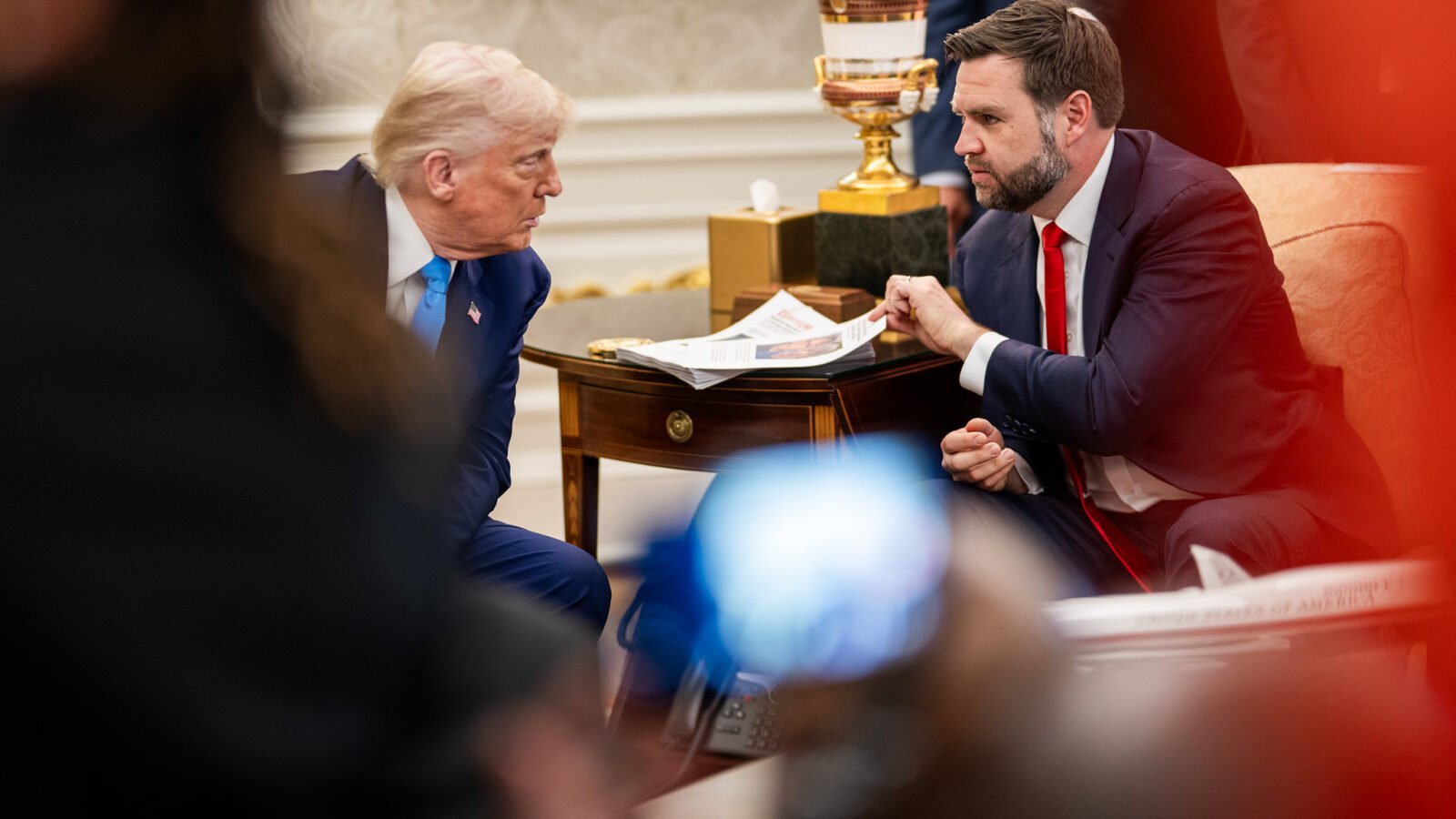
The Trump administration is drafting a rule that would make some low-income, married, stay-at-home parents eligible for federal childcare subsidies that have historically flowed to single parents or two-income households, according to New York Times reporting cited by The Federalist. The proposal is being described internally as part of a broader push to end what supporters call government discrimination against parents who choose to leave the workforce to raise children, with Vice President J.D. Vance identified as its leading champion.
The idea has drawn sharp criticism from some corners of the right, including free-market groups such as Americans for Tax Reform and the Competitive Enterprise Institute, who question whether an expanded subsidy amounts to bigger government. Writing for The Federalist, American Principles Project president Terry Schilling argues that the debate over the proposal’s ideological label — whether it is “big government,” “postliberal,” or “socialism” — misses the point.
A Voting Bloc the GOP Has Been Losing
Schilling’s argument rests on data his organization published in a 2019 report titled “Family First: Reclaiming the GOP’s Forgotten Constituency,” which examined voter patterns from the 2018 midterms. The report found that marital status, more than race or sex, was the strongest predictor of whether a voter backed a Republican or a Democrat.
Among voters aged 20 to 65, the report said, the GOP lost married voters by five points in that cycle, but fared far worse with divorced voters (a 19-point deficit), cohabiting voters (44 points), and never-married voters (45 points). Black and Hispanic married voters were more than twice as likely to support Republican candidates as their unmarried peers, according to the analysis, and the pattern extended to children from intact families. Schilling writes that the same divide showed up on social issues including abortion, marriage, transgender policy, and pornography, and that the marital-status gap persisted through the 2024 election.

That leads him to a blunt conclusion: Republicans should not spend their energy chasing demographics that reject them by 45 points, but should instead focus on persuading and turning out married voters — a group that, in his telling, is most animated by the cost of living and by the goal of giving their children a better life.
Affordability and the American Dream
Schilling points to a recent Wall Street Journal-NORC poll finding that faith in the American Dream is on life support, with nearly 70 percent of respondents saying the idea that hard work leads to getting ahead either no longer holds true or never did. He argues that market-oriented conservatives who respond to that pessimism with nothing but tax cuts, deregulation, and bootstrap messaging are failing to address the moment, and that the alternative is to reorient the economy, the government, and the tax code around family formation.
Public opinion polling, he notes, consistently shows support for policies that make it easier for parents to stay home. One AP-NORC survey found that 79 percent of respondents considered it a high or moderate priority for the federal government to make it easier for parents to leave the workforce to raise their children. A separate poll from a year earlier found 63 percent of voters believe families are better off when one parent stays home.
If money is the main obstacle keeping families from having a stay-at-home parent, Schilling writes, then removing that obstacle clears one of the biggest hurdles to strong family formation — and with support that broad, it is little surprise the administration is stepping in.
An Early Proposal, and a Longer Wish List
The Federalist piece acknowledges that the subsidy rule is still an early concept that has not been shaped by Congress, and that critiques of its cost and design are fair game. But it argues the direction is right, framing the move as one families will feel for generations in a crucial election year.
Schilling lists further items on the pro-family agenda — reworking the tax code in the same direction, expanding child tax credits, providing baby bonuses, and eliminating marriage penalties — while calling the stay-at-home parent provision an enormous step toward letting parents raise their own children rather than relying on a strained daycare system.
The objections from fiscally conservative groups suggest the fight is not over inside the Republican coalition. For now, the proposal remains a draft, and its scope — including how many families would qualify and at what cost — is likely to be settled in the same congressional pressure cooker that Schilling says will ultimately determine its final shape.
Source: thefederalist.com — https://thefederalist.com/2026/09/16/gop-contempt-for-trump-helping-married-families-is-political-and-civilizational-suicide/