

President Trump’s promise to send a $5,000 check to every adult in the country if Republicans hold Congress in November has set off a familiar round of outrage. The mainstream media and what American Thinker’s Eric Utter calls “far-left hucksters” have branded it an outright attempt to bribe the American people.
Utter, writing for American Thinker, doesn’t buy that framing — at least not as the accusation is typically leveled. His argument, whatever one makes of it, is worth following because it turns the bribery charge back on the accusers.
The Quid Pro Quo Problem
The core of Utter’s case is definitional. A bribe, he notes, requires a quid pro quo — an explicit exchange where someone does something specific in return for the money. Trump, as Utter describes the proposal, isn’t demanding that. Recipients wouldn’t have to vote a particular way, or vote at all. Even people who cast ballots for Democratic candidates — including candidates affiliated with the Democratic Socialists of America — would, as far as anyone currently knows, still receive the payment.
Utter points out that even the New York Times, which he characterizes as far-left, has acknowledged there’s no quid pro quo at work here. That concession, in his reading, undercuts the bribery charge before it gets off the ground.
Whataboutism, or a Fair Point?
From there, Utter pivots to a broader claim: that everything Democrats promise and do is essentially a bribe, and that his critics on the left simply never say so. Bigger government itself, he writes, functions as a bribe. His paraphrase of the Democratic pitch goes something like: elect us and we’ll provide government-subsidized grocery stores, free buses, free Medicare, free higher education, free health care, and free everything else — with “free Palestine” thrown in for good measure.
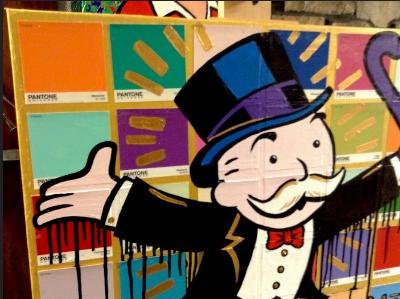
That’s a polemical rendering, and Utter doesn’t pretend otherwise. But his underlying claim — that both parties traffic in promises designed to win votes — is the kind of argument that tends to land differently depending on which side is making it.
He goes further, arguing that some on the left have moved beyond bribery into coercion, implying or outright stating that disagreement carries consequences — cancellation, attacks, or worse. He cites the killing of Charlie Kirk and what he describes as three assassination attempts on Trump as evidence that threats have been added to the mix.
Utter also takes aim at the welfare state, describing it as “one massive bribe presented as a much-needed social contract” — one that, in his telling, requires voting a certain way to maximize benefits.
Not a Fan
Here’s where the piece gets more interesting than a straightforward defense of the president. Utter isn’t sold on Trump’s plan.
His objection is fiscal. The country is $40 trillion in debt, he writes, and a tax refund would be a better approach than direct payments. He also suggests Trump had to know Democrats and their media allies would go ballistic and use the promise as yet another cudgel — though he adds that one more weapon in that arsenal probably doesn’t matter much at this point. If the president and his advisers didn’t anticipate the reaction, Utter writes, that would be concerning.

Still, he sees a possible upside. Everyone predisposed to hate Trump already does, so the promise isn’t likely to cost him anything with that crowd. But it might resonate with some independents and get them thinking about inflation and taxes during the previous administration. That’s a political calculation, not a policy one — and Utter seems to recognize it as such.
The Eligibility Unknown
A significant practical question remains unanswered: what would the eligibility criteria actually look like? At this point, nobody knows. Utter raises the question without resolving it, which is fair, because the details simply haven’t been specified.
He does offer one comparison to suggest the payment could motivate behavior. In cities like Los Angeles and Portland, he writes, homeless individuals have reportedly been offered two or three dollars for a chance to “earn” money in exchange for voting for progressive candidates — a practice he says has been documented. If a few dollars can move votes, he reasons, the thought of five thousand might be a motivating factor for some.
That analogy is doing a lot of work in the argument, and readers will judge for themselves whether it holds. The alleged practices he describes are small-scale and localized; a universal payment to every adult in the country is a different category of thing entirely.
The Closing Volley
Utter wraps with a blunt assessment: Trump can be “a bit of a blowhard,” but Democrats, in his view, are “hypocrites, liars, and frauds” who pose a far greater danger to the country than Trump ever could. That’s the kind of line that will read as either cathartic or overheated depending on where you sit, and Utter isn’t trying to reach the unconvinced with it.
The piece is best understood as an argument aimed at people already inclined to agree with its premises — that the bribery charge against Trump is selective, that Democratic promises deserve the same scrutiny, and that the $5,000 proposal is a flawed but not disqualifying idea. Whether it persuades anyone outside that audience is another question. The larger point Utter seems to be making is that the rules of political criticism should apply evenly. That’s a claim worth taking seriously even when the examples used to support it are chosen for effect.
Source: www.americanthinker.com — https://www.americanthinker.com/blog/2026/09/the-5-000-question-promise-dividend-or-bribe/