
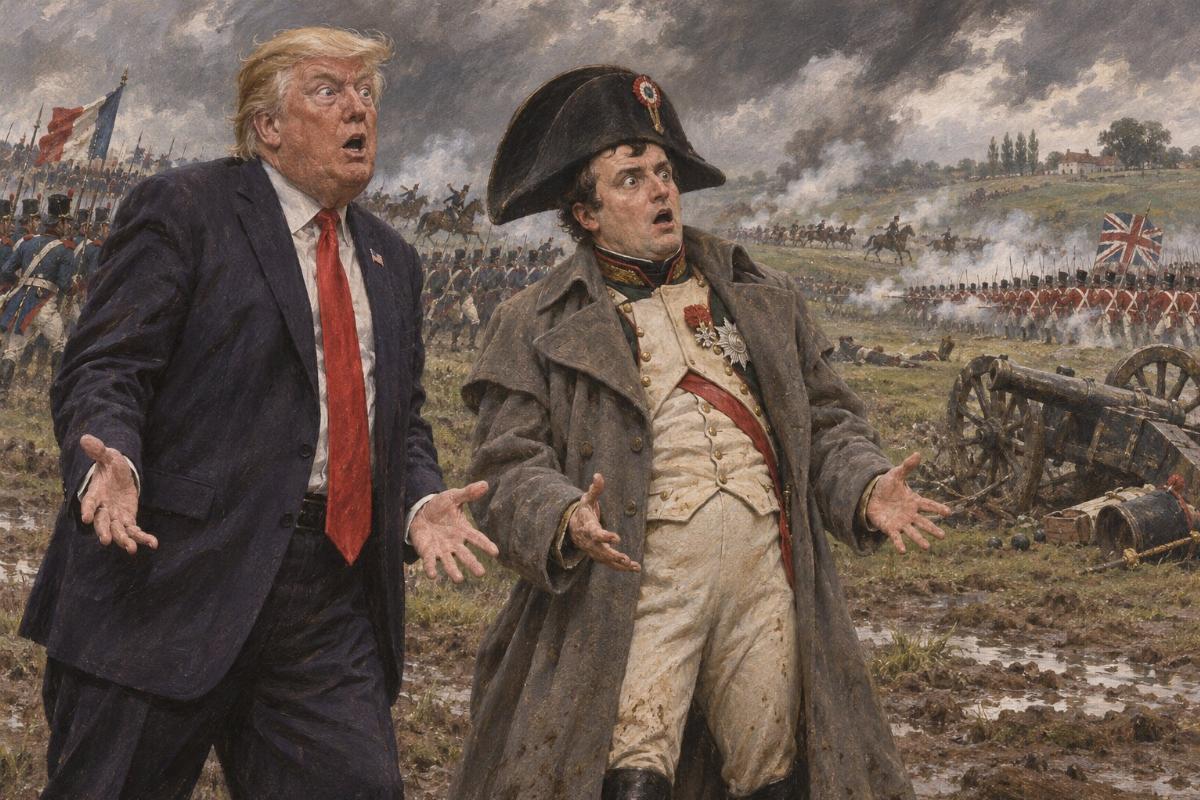
The 2026 midterm elections weren’t just a rejection of Trumpism — they were America’s verdict on a disastrous war with Iran that never should have been fought. That’s the damning conclusion of Michael C. Hurley’s blistering American Thinker op-ed, which compares Donald Trump’s fateful miscalculation to Napoleon’s decisive defeat at Waterloo.
The Unraveling of a Midnight Threat
Hurley traces the conflict’s origins to a 3 a.m. tweetstorm in January 2026, when an emboldened Trump — fresh off the success of the Venezuela operation — vowed military intervention if Iran cracked down on protesters. When Tehran called his bluff, the administration scrambled to justify action by suddenly resurrecting Iran’s supposedly ‘obliterated’ nuclear program. The resulting half-hearted campaign left U.S. forces bogged down chasing shifting objectives while conservative media peddled false hopes of imminent victory.
Eerie Parallels to Iraq
The parallels to Bush’s Iraq disaster are unmistakable: intelligence failures (Hurley cites Powell’s memoir about the fabricated ‘Curveball’ WMD claims), mission creep, and political leaders refusing to admit error. Just as Republicans spent years defending the Iraq invasion to their electoral peril, Hurley warns the party risks repeating history by circling wagons around Trump’s Iran debacle.
The 2028 Litmus Test
Hurley’s prescription is stark: the next GOP standard-bearer must emulate Trump’s own 2016 honesty about Bush’s mistakes. ‘The America First movement needs leaders willing to say Trump was wrong on Iran,’ he argues, noting how Trump gained credibility by breaking with party orthodoxy on Iraq. With the 2028 primaries looming, this contrarian conservative insists the road back to power runs through painful truth-telling — not doubling down on failed maximalism.
Source: www.americanthinker.com — https://www.americanthinker.com/articles/2026/11/welcome-to-waterloo-mr-president/
Background and context
The latest developments around Trump’s Iran War Blunder Was His ‘Waterloo’ — And the GOP Must Admit It come amid a broader debate over opinion, institutional accountability, and the policy choices that shape everyday life. Understanding the immediate facts is only the first step; the wider impact depends on how officials, institutions, and the public respond in the days and weeks ahead.
FedFront’s coverage focuses on verifiable details, identifiable sources, and the practical consequences of political decisions. Readers should review official statements, primary documents, and court or agency records before drawing final conclusions about any disputed claims.
Why it matters
Stories like this can influence legislation, regulatory enforcement, public trust, and the balance of power between government institutions. Even when the immediate headline fades, the underlying policy, legal, or political questions often continue to shape future decisions.
What to watch next
- Official responses, statements, or policy changes
- Legislative, regulatory, or court action
- Follow-up reporting and independent verification
- Public reaction and broader political fallout
FedFront will continue monitoring this story and update coverage as new information becomes available.
Source: www.americanthinker.com
Related coverage
- Macron Slams ‘So-Called American Free Speech,’ Says EU Censorship Should Be ‘Much Faster, Much More Forcefully’
- American Thinker Essay Argues Israel Can’t Conquer Because Judaism Forbids Murder
- American Thinker Columnist Praises Black Male Juror as ‘Sole Objector’ in Lindsay Clancy Trial, Calls Coverage a ‘Circus’
- GOP Senators Face Voter Backlash After Failing to Deliver on Conservative Promises