
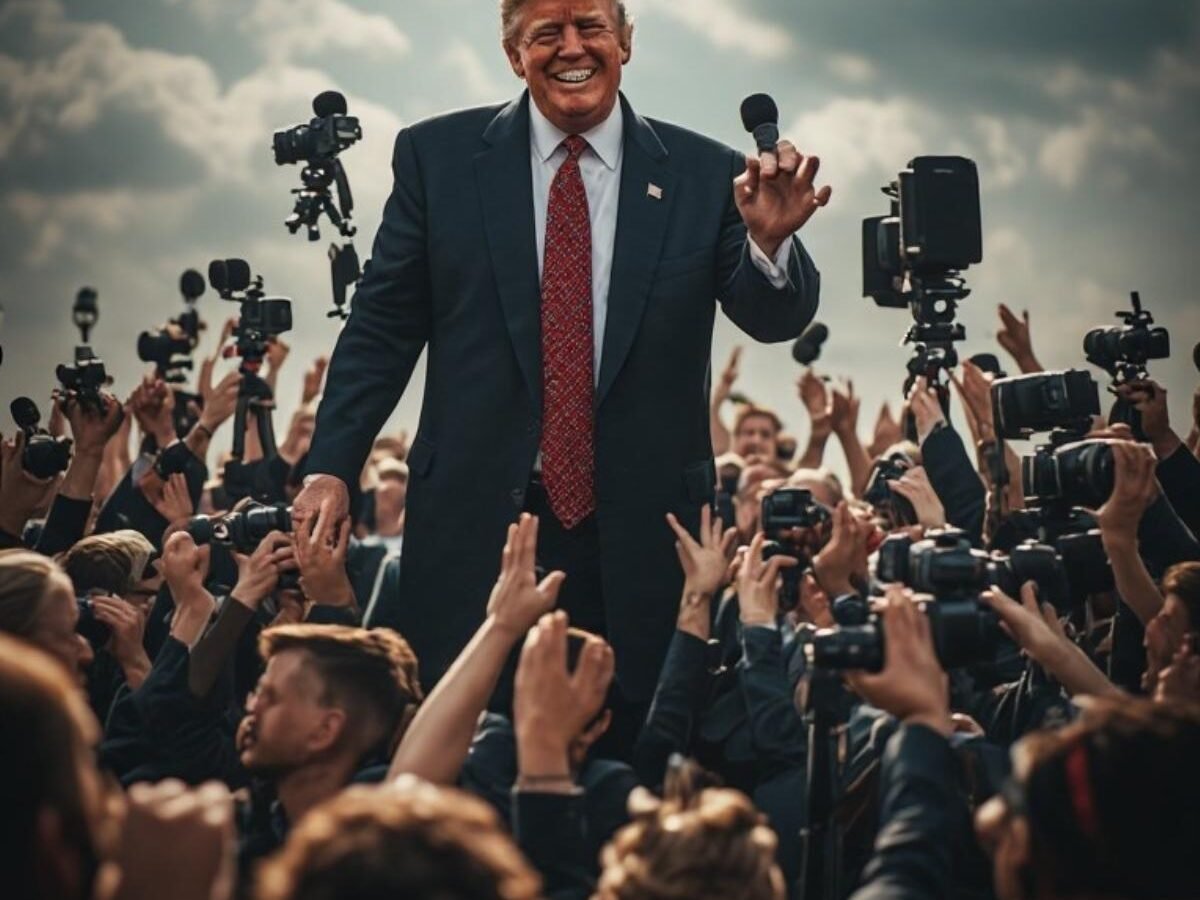
President Trump’s decision to remove MSNOW, CNN and Politico from the White House press corps looked, at first glance, like a gift to the ACLU and the Democratic National Committee — a free-speech fight handed to his opponents on a platter. Writing in American Thinker, commentator Marly Hornik argues that reading misses the point. In her telling, the move was not a fit of pique but a deliberate setup, one crafted to provoke a lawsuit with the right facts and the right parties to reach the Supreme Court and take down a six-decade-old precedent.
Hornik, who describes the removal as happening “on a whim,” frames it as part of what she calls Trump’s pattern of acting as “the tip of the spear in a strategic defense of originalist constitutional principles.” Whether the White House itself sees the episode that way is another matter — but the argument is worth taking seriously on its own terms, because it rests on a real tension in First Amendment law that courts have wrestled with since the founding.
A free press, but not an unconstrained one
Hornik’s central claim is that the phrase “freedom of the press” has drifted far from its original meaning. At the founding, she writes, a free press was not understood as an unconstrained one. She points to the Alien and Sedition Acts of 1798, passed amid what she describes as “persistent attempts to separate Americans from their Government” by various actors. The most contested section of the Sedition Act criminalized the writing, printing or publishing of “any false, scandalous and malicious writing” against the U.S. government, Congress or the president, with the intent to defame them, bring them into contempt or disrepute, or stir up sedition.
That law, Hornik notes, raised an obvious problem: which official’s judgment would determine whether something was false or malicious? It was widely viewed as unconstitutional, she writes, helped cost John Adams the presidency in 1800, and expired in 1801. What replaced it was not a blank check for the press but a shift in responsibility — criminal sedition prosecutions went away, while libel claims remained available. The burden of integrity in reporting, in her framing, moved from the government back to journalists rather than disappearing altogether. She quotes Justice Joseph Story’s view that liberty of speech and of the press “has nothing to do with” libel and is therefore “not endangered by the punishment of libelous publications.”
From there Hornik moves to the modern target of her argument: New York Times v. Sullivan, the 1964 ruling that set the “actual malice” standard for defamation claims brought by public officials. That decision, she writes, “reduced a general duty of press honor to the nebulous standard of proving ‘actual malice’ in the publication of falsehoods.” The practical effect, as she describes it, is that a lie is no longer judged by whether it was a lie but by whether an outlet can be shown to have acted with reckless disregard for the truth — a far higher bar than ordinary negligence. In plain language, she argues, Sullivan has granted the press “the license to lie.”
The plaintiffs’ burden
Hornik sketches out what a legal challenge would look like if the ejected outlets sue. To prevail on their free-speech claims, she suggests, the plaintiffs would have to prove three things: that they did not invite their own exclusion through a decade of what she calls well-documented false reporting; that they received no warning despite years of being labeled “fake news” for what she characterizes as harmful choices; and that Sullivan should stand rather than be overturned. That framing is her own, not a legal filing, but it captures the shape of the argument Trump’s defenders would make if the case lands in court.
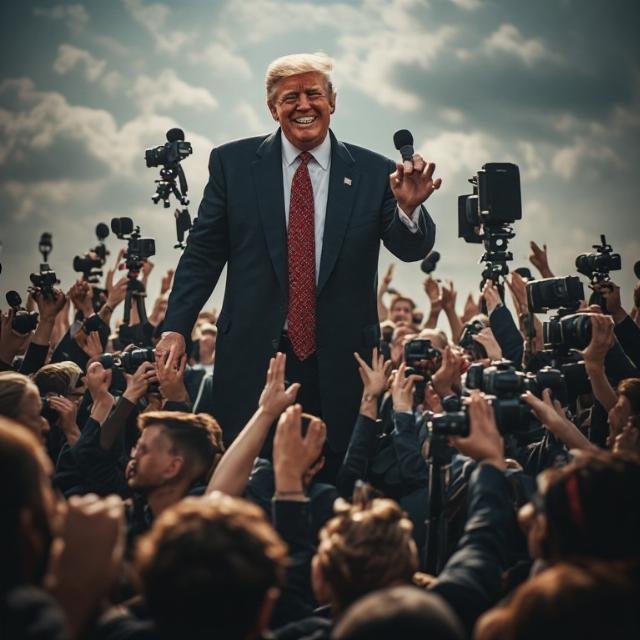
She also draws a parallel she considers telling: just as modern reporting has blurred the line between lawful assembly and violent rioting, she writes, it is in the media’s legal interest to argue that the Constitution grants an absolute right to lie. That position, she contends, is “inane, dangerous, and causes the exact separation of Americans from their government that Congress attempted to resolve in 1798.”
There is an irony Hornik leans into hard. The same outlets now protesting their exclusion, she writes, took direction from the Biden White House on censoring Americans over COVID, the January 6 investigations and the 2020 election. Their sudden conversion to free-speech absolutism, in her telling, is less principle than position. “Apparently, Fir$t Amendment rights are valuable after all,” she writes, stylizing the word to make a point about institutional incentives.
It is worth being clear about what this argument is and is not. Hornik is a commentator, not a neutral observer of the litigation; she is the CEO of RealAmerica.Vote and a fellow of The Meyers Report, and she appears frequently on Newsmax, News Nation, NTD News and Fox DC. Her essay is advocacy — a case for why Sullivan should fall and why Trump’s press-corps decision should be understood as a means to that end rather than a temper tantrum. Readers who disagree with her conclusions will find plenty to push back on, starting with whether the founding-era history she cites supports the weight she places on it, and whether a president’s decision to bar specific outlets from White House access is properly analyzed as a defamation question at all.
The Constitution on the 2026 ballot
What makes the piece notable is not its conclusion — that Sullivan is bad law is a long-standing position on the right — but its insistence that the press-corps purge was instrumental rather than impulsive. If Hornik is right, the ejection of MSNOW, CNN and Politico was never really about those three outlets. It was about manufacturing a case with sympathetic defendants, a sympathetic record and a path to the high court. If she is wrong, the episode is simply what it looked like on day one: a president picking a fight with the press, and the press happily taking it.
Either way, Hornik ends with a line that doubles as a warning to her own readers. “Americans who value liberty would be wise to observe that, while it is not on the 2026 ballot, the Constitution is.” For a commentary written in the fall of 2026, that is less a prediction than an invitation — to watch the courts, not just the campaign trail, for the next round of this fight.
Source: www.americanthinker.com — https://www.americanthinker.com/blog/2026/09/not-tired-of-winning-msm-v-trump/