
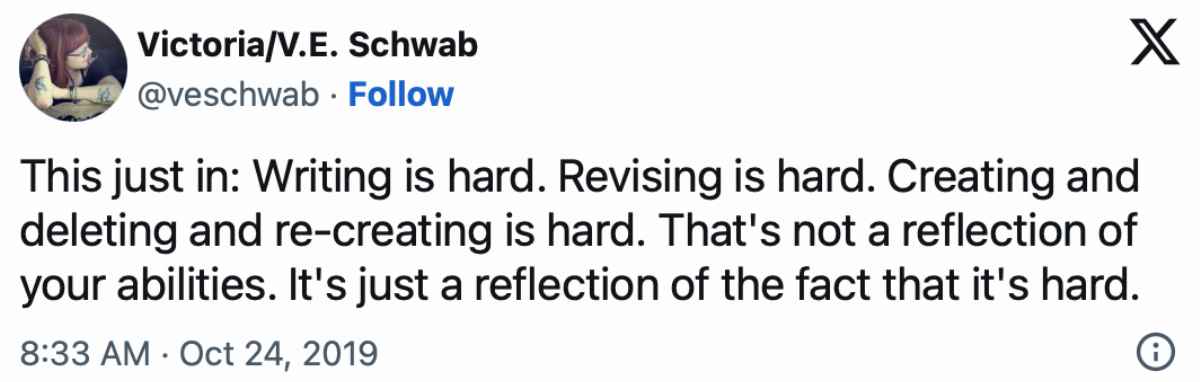
Writing is hard. That’s not a revelation; it’s a truth every student, teacher, and working professional eventually confronts. But for a generation of teachers, the real difficulty isn’t the writing itself—it’s that many never learned how to teach it in the first place.
That’s the argument at the heart of a recent American Thinker essay by Mike McDaniel, a veteran high school and college English teacher, who highlights the story of a young, enthusiastic first-year English teacher in New York City. The teacher, whom McDaniel identifies only as Hunt, walked into a classroom of high-poverty, low-achievement students and quickly realized he had no idea how to help them write.
Hunt was a product of what education reformers often call the “facilitator” school of teaching: the belief that traditional instruction is “inauthentic” and “oppressive,” that teachers should not be “the sage on the stage,” and that students should essentially guide their own learning and let their “inner brilliance” blossom. That philosophy was on full display in his master’s program at Columbia’s Teachers College, where he enrolled in a course called The Teaching of Writing, expecting to learn the craft of instruction.
A Class on Power, Identity—But Not Paragraphs
Instead of lessons on topic sentences, transitions, or effective feedback, Hunt found that “every class discussion found its way to the subjects of power and identity,” he wrote. There was a course called “Writing As Social Action,” but nothing on how to comment on a student essay in a way that actually improves it.
His professor and peers treated “literacy” as a vague, flexible concept that could be “bolted onto any domain or concept,” leading to endless talk of “digital literacy, critical literacy, media literacy, and something we talked about ad nauseam called racial literacy.” Traditional literacy—the kind that lets a student read a dense text and write a clear, organized response—was dismissed as outdated and even oppressive. Graphic organizers and rubrics, the professor explained, were “bludgeons used against disadvantaged students.”
The five-paragraph essay, a staple of writing instruction for decades, was derided as “formulaic and inauthentic,” “Eurocentric,” and even “carceral.”
For McDaniel, that’s a problem. The five-paragraph essay is a basic, beginning scaffold—not the only way to write, but a useful one, especially for students who need structure. Hunt saw it in action when his students, after three weeks of discussing a single poem, turned in what he called a “jumbled mess” of essays. He made a pitch for coherence: “Topic sentences. Supporting details. Transitions. Shouldn’t our students learn how to do all this?”
“There is not one way to write,” the professor replied. The real challenge, he said, was for teachers to “question our deficit mindsets, especially about particular populations of students”—a response Hunt read as a thinly veiled suggestion that his expectations for his own students were part of the problem. The professor added, “Based on some things you’ve shared, I do wonder how you see the children in your classroom.”
Hunt’s reply, McDaniel notes, might well have been: as kids who desperately needed structure, clear examples, and a steady hand.
Self-Taught by Trial and Error
In the end, Hunt taught himself. He borrowed from colleagues, made mistakes, and eventually found methods that worked. But he argues that teacher-preparation programs should be doing that work—that there exists a “coherent body of research-informed principles and techniques” that could be called the Science of Writing. “It’s not as if this doesn’t exist,” he wrote. “It does. Very much so.”
McDaniel, who spent his own career teaching English, knows what that looks like in practice. He describes starting each course with handouts laying out criteria for intelligent writing in different genres—film, poetry, literature. To teach essay structure, he showed his students Plan 9 from Outer Space, the famously awful Ed Wood film, and asked them to identify how badly it violated those criteria. They took notes, discussed examples, and then wrote their first essays.
He returned each essay the next morning, fully edited. Then he handed out a sample essay that exemplified the criteria, and students revised their own work. They could keep the grade or try again for more credit. The serious ones, he writes, always took the option.
Teaching writing, McDaniel argues, is like teaching a sport: it’s a step-by-step process, each skill building on the one before. It takes time and effort—but so does anything worth doing.
The Case for the Nuts and Bolts
The broader lesson is one that resonates far beyond a single classroom in New York. Over the past two decades, education schools have increasingly emphasized social justice and de-emphasized craft. But Hunt’s experience suggests that the pendulum may have swung too far. Teachers who enter the profession with passion and idealism but without practical tools are left to improvise—and their students, often the most disadvantaged, pay the price.
McDaniel is blunt about what good writing instruction requires: a teacher who believes improvement is possible, provides consistent and clear guidance, demonstrates what good writing looks like, and keeps political or ideological indoctrination out of the room. Rapid feedback is essential—he calls quick editing turnarounds “essential”—and so is a willingness to let students revise and try again.
He also reminds us of something we often lose in the debate over pedagogy: that great writers are rare, and most are born with talents that confound the rest of us. But better writers are made. “On our first class day, I used to tell my students that if they paid attention and worked hard, I could help them all to become better writers,” he writes.
That’s a promise that requires more than ideology or self-directed discovery. It requires teachers who know their craft—who can explain a topic sentence, model a transition, and give feedback that actually moves a student forward. Whether that means returning to the five-paragraph essay or finding new, evidence-informed methods, the goal is the same: give every student the tools to write with clarity and confidence.
As Hunt discovered, sometimes the most radical thing a writing class can do is teach writing.
Source: www.americanthinker.com — https://www.americanthinker.com/blog/2026/09/yes-there-are-nuts-and-bolts-to-teaching-writing/