
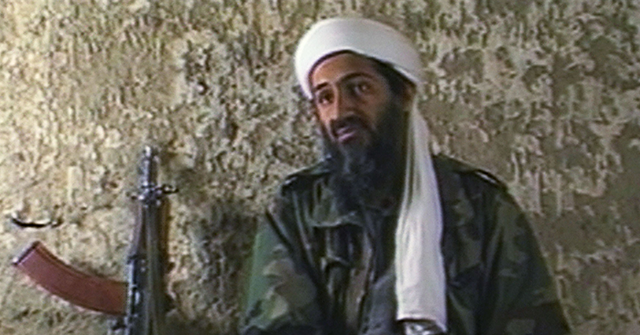
Twenty-five years after the September 11 attacks that killed nearly 3,000 Americans in 102 minutes across New York, Washington, D.C., and a field in Shanksville, Pennsylvania, a senior White House counterterrorism official is offering a blunt verdict on the Global War on Terror: the jihadists are losing, and losing badly.
Sebastian Gorka, Deputy Assistant to President Trump and Senior Director for Counterterrorism on the U.S. National Security Council, made that case in a Breitbart essay published on the anniversary of the attacks. In it, Gorka disclosed that in the past eighteen months, U.S. warfighters have “permanently removed 1,081 jihadists from the battlefield” — a figure he said he could reveal publicly for the first time.
Gorka also credited President Trump with securing the release of 110 Americans who had been held hostage or wrongfully detained by what he described as jihadi sympathizers, including the Taliban. Some of those released appeared at the Republican National Convention the previous evening, he wrote, sharing their experiences and expressing gratitude to the president.
Measuring success against the jihadists’ own goals
Rather than judge the war on terror purely by the absence of another mass-casualty attack on U.S. soil, Gorka took a different approach: he asked whether the jihadists themselves had accomplished their objectives since 2001. Drawing on what he called an analysis by a colleague in government, he laid out a list of strategic goals that modern Islamist movements — from al Qaeda to ISIS to Hamas — share, all rooted in the writings and public pronouncements of ideologues including Sayyid Qutb, Abdullah Azzam, S.K. Malik, Osama bin Laden, and Ayman al-Zawahiri.
On each count, he argued, they have failed.
The first goal, according to Gorka, is the toppling of Arab monarchies in the Middle East, which jihadist groups deem un-Islamic, beginning with Saudi Arabia because of its role as home to Mecca and Medina. That effort has collapsed, he wrote, pointing to the Abraham Accords — a signature Trump foreign policy achievement — and recent Iranian drone and missile attacks that he said have pushed the Gulf States closer to Washington than at any point since World War II.
A second objective — the destruction of Israel and the destruction or subjugation of the United States — has likewise fallen short, in Gorka’s assessment. He described Israel as a vibrant and powerful nation, “the freest nation of the Middle East,” which despite enduring its own equivalent of 9/11 on October 7, has dealt death on a massive scale to Hamas and its Iranian backers.
The third goal, eliminating Western influence globally, has also failed, Gorka wrote. He credited Trump’s return to the White House with restoring a posture of “Peace Through Strength,” sovereignty, borders, and Judeo-Christian values, describing America as the strongest nation the world has ever seen and a leading force among Western nations.
Finally, Gorka addressed the ultimate jihadist ambition: re-establishing what he called an Islamofascist Caliphate — a global theocracy for the Muslim ummah in which all must worship Allah or be relegated to second-class status or slavery. That, too, has failed, he argued, noting that although ISIS established what he termed a neo-Caliphate in Iraq and Syria during Barack Obama’s presidency, Trump’s military campaign destroyed it within months.
A caveat about continued vigilance
Gorka was careful not to declare permanent victory. As long as there are “men with evil in their hearts,” he wrote, Americans are not permanently safe, and the nation must remain vigilant — and, if necessary, use violence to stop them from harming the innocent. But the overall trajectory, he insisted, favors the United States.
He closed by honoring the memory of those killed on “that sunny Tuesday morning twenty five years ago,” quoting President Trump’s official proclamation for the anniversary: “They sought to divide us — they could not. They sought to make us afraid — instead, they awakened the mightiest force for justice the world has ever known.”
Who is Sebastian Gorka?
Gorka’s essay carries weight because of his position on the National Security Council, where he serves as a senior adviser on counterterrorism under President Trump. His public comments blend policy disclosure with political messaging, and Monday’s essay — published on Breitbart, a conservative outlet long aligned with Trump — is consistent with that approach, framing the anniversary through the lens of Trump-era military and diplomatic achievements.
The 1,081 figure is notable because U.S. officials do not routinely release running counts of enemy fighters killed. Independent verification of the number is not possible from public sources, and the timeframe of “the last eighteen months” roughly corresponds to a period of heightened U.S. military activity against militant targets in the Middle East and beyond.
Likewise, the 110 Americans cited as rescued from hostage or wrongful-detention situations represents a specific claim about the scope of U.S. hostage-recovery operations. Gorka linked that number to the Taliban and other jihadi sympathizers, and said some of those freed had told their stories at the Republican National Convention — a detail that ties the anniversary essay to the domestic political calendar.
The broader argument
Anniversary moments inevitably invite score-keeping, and Gorka’s essay is an entry in a longer-running debate about whether the Global War on Terror has been won, lost, or merely transformed. Critics of the war on terror have long argued that the 2001 invasion of Afghanistan and the 2003 invasion of Iraq created new recruitment opportunities for jihadist groups, and that the threat evolved rather than disappeared. Gorka’s framing sidesteps that debate by measuring outcomes against the jihadists’ declared objectives rather than against U.S. costs.
By that yardstick, his conclusion is unambiguous: the groups that carried out the September 11 attacks have not achieved a single major strategic goal. Saudi Arabia remains a U.S. partner. Israel remains standing. Western influence endures. And the caliphate that ISIS declared was dismantled on the battlefield.
Whether that adds up to victory may depend on the reader’s definition. Gorka himself stopped short of declaring an end to the conflict. But his message on the 25th anniversary was clear — the enemy has fallen short of every objective it set for itself, and, in his telling, the United States is back in the business of counterterrorism under Trump.
Source: www.breitbart.com — https://www.breitbart.com/politics/2026/09/11/sebastian-gorka-have-we-defeated-the-jihadists/