
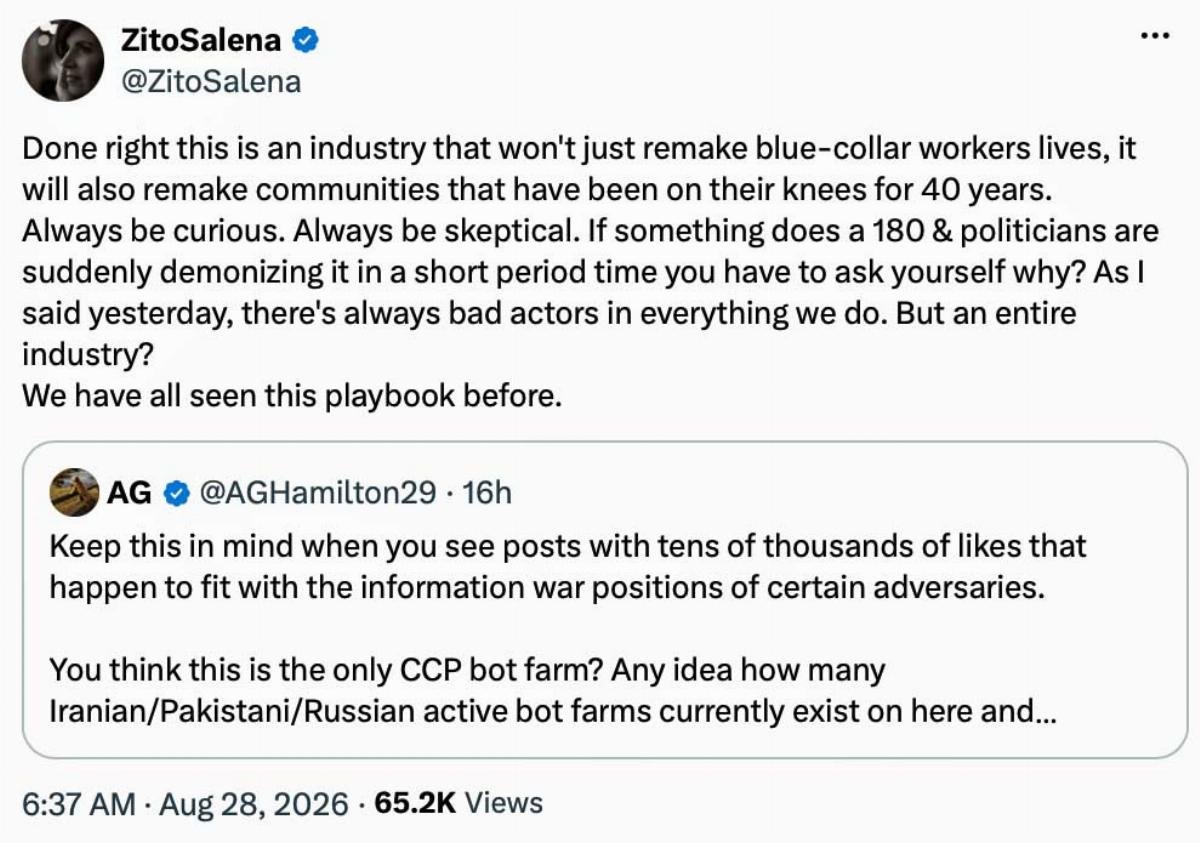
There’s a groundswell of opposition to data centers sweeping across the country, and if you listen to American Thinker’s Mike McDaniel, it’s not just concerned citizens worried about the environment. It’s a coordinated attack by America’s geopolitical adversaries — with a little help from homegrown “useful idiots.”
In a recent column titled “Data Centers: our domestic and foreign enemies are lying to us,” McDaniel, a USAF veteran and retired police officer, argues that the burgeoning “debate” over data center construction is, in his words, a “Communist Chinese psyop” designed to cripple America’s technological edge.
McDaniel points to Wyoming, the least populous state in the nation with around 600,000 residents and vast open land. Many companies are looking to build data centers there, drawn by the space and resources. Most proposals have been welcomed, he notes, but opposition persists — largely fueled by concerns about water usage and, to a lesser degree, electricity availability.
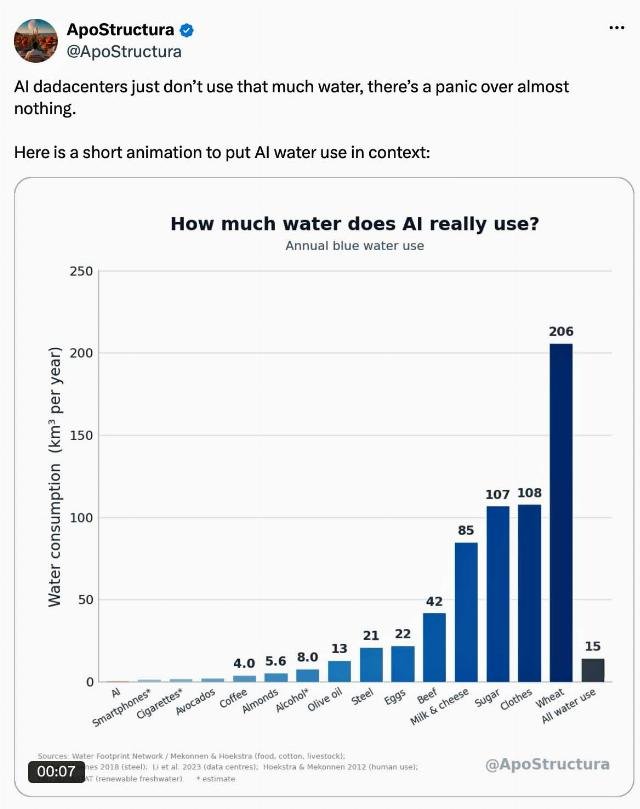
The electricity concern, he concedes, is being addressed by developers who are building their own power plants, including mini nuclear reactors. But the water issue? McDaniel calls it “totally contrived,” arguing that golf courses and other traditional water users demand far more than data centers, which can recycle much of the water they use.
Cui Bono: Who Benefits?
McDaniel’s central analytical framework is the ancient legal principle of cui bono — who benefits? In this case, he suggests the answer is clear: China.
“Our primary geopolitical enemy is manipulating public opinion for their benefit, knowing America is just full of useful idiots,” he writes, name-dropping Senator Bernie Sanders as an example. McDaniel alleges that Chinese Communist Party bots are actively spreading misleading information about data centers, including claims that “data-center operators [are] enriching themselves at the public expense.”
To McDaniel, that’s not a scandal — that’s just capitalism. “People who can put together enough money can build industries that employ great numbers of people to build, operate, and maintain them, which also provides jobs for their suppliers and the suppliers of the suppliers, and so on,” he explains. “Sure, the capitalists who operate those industries make a lot of money, but the alternative is communism and the misery, shared poverty, and mass death it causes.”
The column takes a particularly sharp turn when McDaniel highlights the case of a journalist he identifies only as “Hao,” who apparently produced bogus water data about data centers before moving to Hong Kong in late 2025. McDaniel notes that he only learned of this “little tiny error” through a colleague sharing a link on X (formerly Twitter), not through any mainstream media source. The data center controversy, he notes, didn’t gain real traction until the summer of 2026 — months after Hao’s mistake was “discovered” in November 2025.

He quotes an account called Blume Industries, which posted: “Just gonna remind you the journo who produced the bogus water data for data centers now lives in Hong Kong. I’m sure you’re smart enough to figure it out from there.”
For McDaniel, this is all the evidence he needs. “Something stinks,” he writes.
A Useful Idiots’ Guide to Subversion
McDaniel’s broader argument extends well beyond data centers. He portrays the Chinese as having “infiltrated our universities, industries, and even our government, stealing all manner of secrets they’re using to fuel their military buildup.” He cites a 200,000-bot plot that X supposedly discovered, calling it certainly not the only bot farm dedicated to “crippling American progress.”
“There’s no need to see commies under every bed,” McDaniel writes, “but Communists are masters of propaganda and espionage, and among Democrats, and even credulous Republicans, find a more than willing cohort of useful idiots.”
The stakes, in his view, could hardly be higher. Data centers are not just about enabling the AI boom — they’re a matter of national security. “Our technological and economic superiority over China and our other enemies” depends on building them out, he argues.
While McDaniel acknowledges the need to ensure sufficient energy and water resources “for our current and future needs,” he insists that intelligent planning — coupled with an awareness that “our foreign and domestic enemies are actively working to destroy us” — can accomplish both goals.
Questioning the “Psyop” Narrative
Not everyone will find McDaniel’s framing persuasive. The notion that all opposition to data centers is a foreign-backed conspiracy risks dismissing legitimate local concerns about resource allocation, environmental impact, and community character. While his column makes a provocative case for examining the sources of anti-data-center messaging, the leap from “a journalist made an error” to “it’s a Communist psyop” is a substantial one.
Still, McDaniel’s piece reflects a growing sentiment in some conservative circles that the fight over data centers — and AI infrastructure more broadly — is not merely a local zoning dispute but a front in a larger geopolitical struggle. Whether that framing helps or hurts the cause of building out America’s digital future is a question that readers will have to decide for themselves.
As McDaniel himself puts it: “Understanding enemy tactics is the first step to defeating them.” Whether the enemy is foreign, domestic, or merely a figment of inflamed imagination is the question that will continue to divide observers.
Source: www.americanthinker.com — https://www.americanthinker.com/blog/2026/08/data-centers-our-domestic-and-foreign-enemies-are-lying-to-us/