
Texas Democratic gubernatorial candidate James Talarico is leaning hard into a populist, tax-the-rich message as his campaign tries to break out of a polling plateau — and conservatives are already drawing unfavorable comparisons to a similar effort in Florida.
According to a recent column in American Thinker, Talarico’s support has topped out in polls, and some fellow Democrats doubt his ability to energize minority communities. In response, he’s now openly campaigning on raising taxes on wealthy Americans.
“I’ve told every wealthy person I’ve come across in this race: If you are ok with getting taxed more, if you’re ok with me limiting your influence in politics, you are welcome to join this movement that we are building,” Talarico said, thanking billionaire entrepreneur Mark Cuban for being part of it.
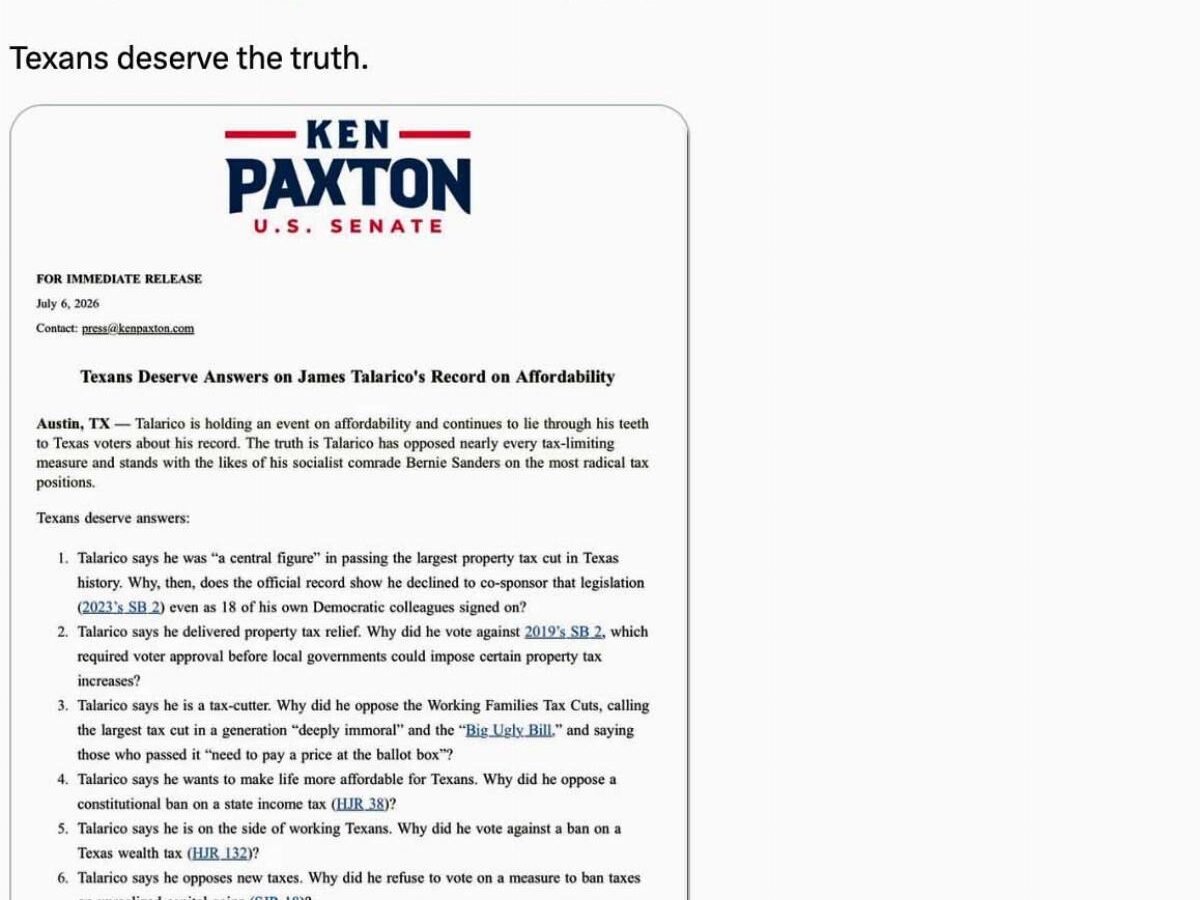
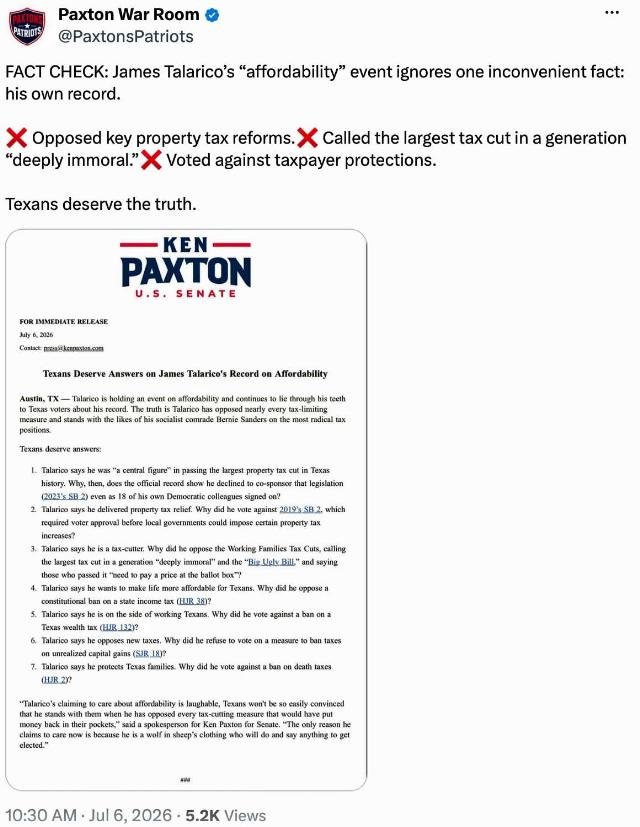
The candidate’s platform calls for what he describes as a “fairer” tax system. His campaign website says he wants to make “billionaires pay their fair share in taxes,” including by “imposing a higher tax on their income and capital gains and ending the dubious ‘buy, borrow, die’ loopholes that billionaires use to grow untaxed wealth.” He also supports raising the corporate tax rate.
But critics argue this is a familiar tune that hasn’t produced results. American Thinker columnist Silvio Canto, Jr. invoked the memory of a video showing a mayor raising taxes on the rich — a move that, he suggests, didn’t work out well, especially for Florida realtors.
“Maybe Mr. Talarico should take his act to the West Coast and run there,” Canto writes, referencing the influx of businesses and residents fleeing high-tax states like California for Texas.
The core criticism: Talarico is blaming an “affordability” crisis on the wealthy instead of examining the cost of government itself. Canto asks pointed questions about what taxpayers actually get for their money — pointing to crumbling streets and failing schools as examples of government inefficiency, regardless of how much is spent on them.
“Yet, he won’t say a word about the cost of government in our family budgets,” Canto writes. “How much is government costing you, and what benefits are you getting from that investment? You pay higher taxes, but the streets are in bad shape, and the schools can’t teach.”
Talarico’s campaign also casts his tax proposals as a way to “cut taxes for working families and small businesses,” a promise that Canto and other critics say leftists often make but rarely deliver on for hardworking Americans.
In addition to tax hikes, Talarico has positioned himself against what he describes as “attacks against SNAP and WIC” — programs he says need protection. However, the columnist notes that the Trump administration’s actions in this area are actually aimed at rooting out fraud, waste, and abuse.
“Fair share? Raise the corporate tax? Where have we heard that nonsense before?” Canto asks, adding a dismissive reference to a “ugly not beautiful” bill.
The political landscape in Texas is shifting. Businesses from high-tax states are moving to Texas, bringing jobs and taxpayers. They leave places like California to seek a more business-friendly environment. The question, as Canto frames it, is whether Talarico wants to turn Texas into California.
Mark Cuban’s involvement is notable. The Dallas Mavericks owner and billionaire has been a prominent voice in Texas politics, and his willingness to be part of Talarico’s movement could lend credibility among some voters — but it also gives critics a target. “Maybe Mr. Talarico should take his act to the West Coast and run there. And take Mark Cuban with him,” Canto quips.
The tension highlights a broader debate within the Democratic Party about how to address economic inequality in a state that has long prided itself on low taxes and limited regulation. Talarico’s approach may resonate with progressive donors and activists, but it risks alienating moderate voters and business interests who have made Texas a magnet for economic growth.
Recent history suggests that tax-the-rich campaigns can energize a base, but they often run into trouble when confronted with the reality of legislative opposition and the threat of capital flight. The Florida comparison may not be entirely fair — Texas has no state income tax and a different political culture — but it underscores a concern that raising taxes on the wealthy could have unintended consequences for a state economy that thrives on attracting investment.
As the campaign progresses, Talarico will need to persuade voters that his plan is more than rhetorical. His website offers specifics — a higher tax rate on income and capital gains, closing the “buy, borrow, die” loophole, and increasing the corporate rate — but critics remain skeptical that any such proposals would survive contact with the Texas Legislature.
For now, the question is whether Talarico can expand his appeal beyond the progressive base that has fueled his campaign so far. With polls showing his support has topped out, and fellow Democrats doubting his ability to reach minority communities, the tax message may be his best shot — or his biggest gamble.
“We’ve seen this movie before,” Canto concludes, suggesting that the promise of taxing the rich rarely leads to the middle-class relief that voters are promised.
Source: www.americanthinker.com — https://www.americanthinker.com/blog/2026/09/talarico-goes-mamdani/