
The Supreme Court’s next term will bring a pivotal Second Amendment showdown over so-called assault weapon bans, and the central question is deceptively simple: what does “in common use” really mean? According to a recent analysis in American Thinker, the Court’s Heller and Bruen decisions established that the right to keep and bear arms is not a second-class right and that gun restrictions must withstand strict scrutiny, the highest standard of judicial review. Now, with bans on AR-15-style rifles heading to the justices, that standard is being put to the test.
At the heart of the debate is the “in common use” test first articulated in Heller and reinforced in Bruen. As the Bruen opinion noted, the historical record does not show “a tradition of broadly prohibiting the public carry of commonly used firearms for self-defense.” That phrase has become a legal linchpin for gun rights advocates, who argue that firearms widely owned by law-abiding Americans are constitutionally protected.
The Dangerousness Debate
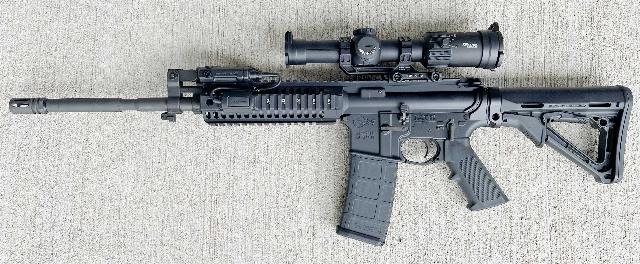
Proponents of assault weapon bans argue that rifles like the AR-15 are uniquely dangerous and that public safety justifies their prohibition. But critics, including the American Thinker piece, contend that the term “assault weapon” is a political invention, not a technical classification. It conflates fully automatic military rifles with semiautomatic civilian firearms that merely resemble them. AR-15s, they note, fire an intermediate cartridge, not the “high-powered” rounds often claimed by advocates of restrictions.
The practical reality, according to recent survey data, is that these rifles are anything but rare. A second iteration of the National Firearms Survey conducted by Prof. William English at Georgetown University’s McDonough School of Business found that Americans own approximately 461 million guns, including more than 40 million modern semiautomatic rifles — most of which are presumed to be AR-15 variants. The survey also indicated that at least 25 percent of gun owners possess an AR-15-type rifle, and nearly 30 percent of American adults — roughly 26.4 million people — own at least one firearm in either the AR-15 or similarly styled semiautomatic category.
For gun rights supporters, those numbers are decisive. If “in common use” means what it says, then a firearm owned by tens of millions of Americans is by definition common — and therefore constitutionally protected.
A Potential Gap in the Standard
Yet some Second Amendment advocates worry that the “common use” test may be too rigid — or too vague — to protect future innovations. Consider a hypothetical new firearm that promises to be immensely popular but has not yet achieved widespread adoption. How could it ever reach “common use” if the government bans it before it has a chance to catch on?
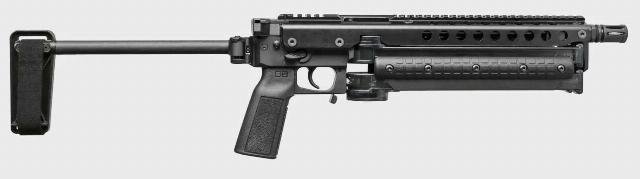
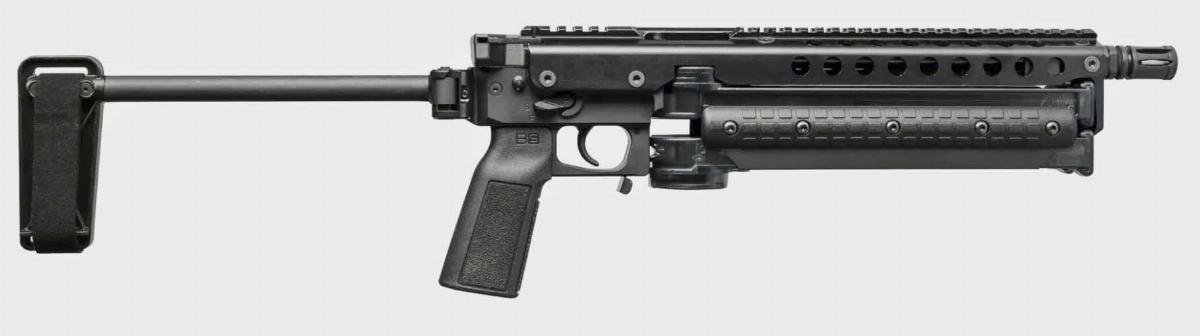
The American Thinker piece raises this exact concern, pointing to the recently invented KelTec KP-50 braced pistol as a possible example. This semiautomatic firearm fires an even less powerful cartridge than the AR-15, but if it were banned early in its life cycle, it might never have the opportunity to become commonly owned. The question becomes: does the Second Amendment’s protection depend on the number of a given weapon in circulation? And if so, what is the minimum threshold?
That uncertainty, the piece acknowledges, is real — but it may not matter much in the upcoming cases. With 40 million modern semiautomatic rifles already in American hands, the “common use” test is likely to be satisfied regardless of where the line is drawn.
Survey data, of course, is not foolproof. Many gun owners are understandably wary of participating in surveys about their firearms, given the shifting political landscape and the possibility that disclosed information could later be used against them. That reluctance, the piece argues, may mean actual ownership numbers are even higher than reported.
What the Court Might Do
Given the current makeup of the Court, the American Thinker piece predicts that the three female justices — described as “leftists” — will vote to uphold the bans, while the conservative majority is likely to strike them down. “The Court majority will hold the bans unconstitutional, defeating another attempt by anti-liberty/gun cracktivists to ban any class of gun, thereby establishing precedent for banning them all,” the author writes.
That outcome, the piece suggests, would be a victory not just for gun owners but for the broader principle that constitutional rights should not be subject to the whims of political fashion. It closes with a stark warning about contemporary political turmoil and the specter of “internal Communists,” asserting that Americans might need every firearm they can get. As the writer puts it, “The truism that you can vote your way into communism, but must shoot your way out, holds true.”
While that framing is deeply partisan, the legal issue at stake is substantive: whether the “in common use” standard remains a workable test for assessing gun restrictions in a nation with hundreds of millions of firearms. The Supreme Court’s ruling, expected in the coming months, will have profound implications for the future of gun policy in America.
Source: www.americanthinker.com — https://www.americanthinker.com/blog/2026/09/second-amendment-does-in-common-use-mean-in-common-use/