
Democrats are intensifying their outreach to rural America ahead of the 2026 midterms, and a recent analysis in The Federalist argues that the party’s strategy relies on blurring the lines between moderate-sounding campaign rhetoric and the progressive policies its candidates have long championed.
At the center of that critique are two Senate hopefuls: James Talarico in Texas and Abdul El-Sayed in Michigan. Both have drawn scrutiny for shifting their public personas as they seek support in conservative and small-town areas, according to the outlet.
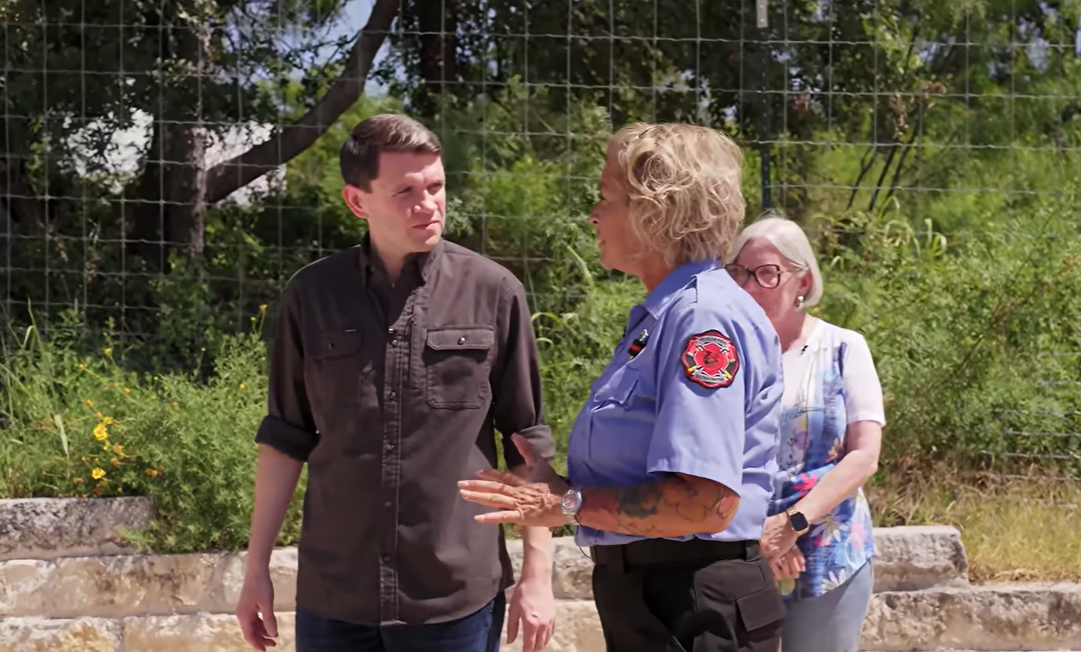
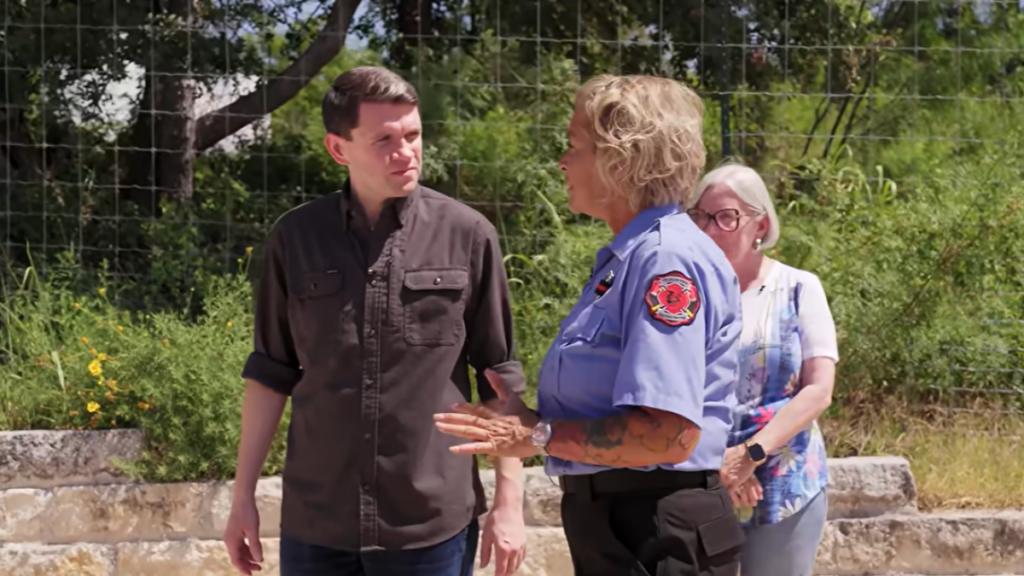
The Federalist reported that Talarico’s spiritual mentor, a preacher named Babs Miller, was caught on hidden camera saying the candidate would “change his tune” on transgender politics once elected. The outlet framed the remark as evidence of a broader pattern of candidates downplaying their positions to win over rural voters.
A Strategy Rooted in Rural Resistance
The push is not accidental. Longtime Democratic Socialists of America activist Bhaskar Sunkara has described rural America as “the wall the American Left keeps hitting,” according to the outlet. Sunkara has advocated for what he calls “progressive populism,” delivered with what he terms “rhetorical discipline.”
The Federalist characterizes that discipline as a form of propaganda designed to keep the party’s base energized while making inroads with voters who might otherwise reject progressive policies outright.
Part of that effort, the outlet claims, involves pushing back against narratives that hurt the party’s brand in rural areas. It points to what it describes as a manufactured “Farmageddon” storyline — the idea of a farmer revolt against President Trump and Republicans — as an example of messaging crafted to reshape rural perceptions.
If the DSA ever succeeded in enacting its full platform — which the outlet says includes abolishing the Senate, the Supreme Court, the Electoral College, the presidency, and the Constitution itself — such careful messaging would be unnecessary. Until then, The Federalist argues, the goal is to persuade rural voters to support candidates whose long-term aims they may not fully recognize.
Hiding in Plain Sight
The outlet outlines what it calls a five-part playbook: hide, deny, re-identify, coopt, and speak “country.”
One tactic it highlights is the use of the “independent” label in red districts. In Shenandoah County, Virginia, a leftist candidate running as an independent lost a close 2019 race for county supervisor. After the loss, he blamed the district’s “deplorables” in a hot mic Facebook post, according to The Federalist.
Candidates also lean on traditional-sounding identities — “veteran,” “small business owner,” “family man,” or, in Talarico’s case, “religious” — to build trust with voters who might not otherwise support their platforms.
El-Sayed, meanwhile, was caught on a hot mic saying he couldn’t praise the U.S. elimination of Iran’s supreme leader without alienating “my constituency,” The Federalist reported. He has since described himself as “as American as anyone else.”
The outlet also notes that El-Sayed has had to address past remarks that could alienate voters, including a suggestion six months earlier that a terrorist attack on Temple Israel in Detroit was justified. He later offered what the outlet calls an “apology-not-apology” — expressing regret “to anyone who feels like my comments might have been hurtful.” The Federalist adds that even after calling Jews “a light onto the world,” El-Sayed has not disavowed his ties to podcaster Hasan Piker, whom the outlet describes as a brazen antisemite.
Talarico’s record in the Texas legislature is also cited. He once stated that understanding the convergence of white supremacy, capitalism, and climate change would help dismantle those “evil institutions.” He now calls himself “a proud capitalist.” Similarly, he has walked back past statements calling Texas’s oil and gas industry “dying” and comparing it to 1980s cassette tapes, saying it must be dismantled.
In Nebraska, Democrat Senate candidate Dan Osborne was recorded saying, “I have people recording me, so I can’t say I want to abolish ICE,” according to the outlet.
From Prague to the Prairie
The Federalist draws a historical parallel to 1968 Czechoslovakia, when reformers sought “socialism with a human face” — a movement crushed by Soviet tanks. Today, the outlet argues, DSA candidates are selling something akin to “socialism with a Southern drawl.”
It points to El-Sayed posting a video of himself mimicking country singing and dancing while promoting “Medicare for all.” The outlet compares such efforts to Michael Dukakis riding in a tank in 1988 or Pete Buttigieg campaigning in a hard hat, calling it “plain folks propaganda” updated for the cyber age.
Talarico, described by the outlet as the “poster boy” for the leftward drift of some Christian denominations, has told Texans that “God is non-binary” and that the Bible says nothing about abortion or gender transitions for minors. A DSA “rural organizer” quoted by The Federalist wrote that the group believes “it is important to use religion where we can to agitate for a Christian socialism.”
The outlet condemns that effort as “Satanic liberation theology repackaged for elections,” pointing to 1960s Latin American priests who promoted a Marxist view of Jesus to build support for communist governments.
Whether such messaging can work remains uncertain. The Federalist notes that many American voters are not deeply engaged with religious doctrine or church attendance, and that mainline Protestant denominations and the Vatican have moved left in recent decades with media support. Still, a DSA rural organizer acknowledged that the group simply “does not know how to relate to” rural Americans.
A Ground Game That Could Matter
A 2020 DSA blog post, “How to Organize Rural America,” offers tactical advice: contact local allies, prioritize conversation, show respect. For socialists, The Federalist argues, the purpose is to use deception to build trust and advance a socialist agenda.
The outlet also points to the Rural Urban Bridge Initiative, a Democrat-aligned advocacy group that tells activists to “Think Different. Talk Different. Act Different,” and distributes a booklet titled “Talk Like a Neighbor.” Other groups, such as the Center for Rural Strategies, produce podcasts through The Daily Yonder focused on housing, public education, and health care — issues where they believe rural voters are most persuadable. Its Rural Assembly program promotes “diversity” and “storytelling” in rural areas, alongside a Rural Faith Initiative and Living Traditions program.
Despite their alleged contempt for rural voters, Democrats recently scored an upset win in a Pennsylvania statehouse district that voted overwhelmingly for Trump in 2024. Journalist Salena Zito described the August 18 special election in mostly rural Butler County as a blueprint for Democrats hoping to compete in deep-red territory.
The Federalist concludes that while Democrats may have a messaging problem in rural America, they do have a ground game — one that could, in its view, render traditional rural voters irrelevant in future elections.
Source: thefederalist.com — https://thefederalist.com/2026/09/21/democrats-aim-to-win-rural-voters-by-lying-about-moderation/